Jonah and the reversal



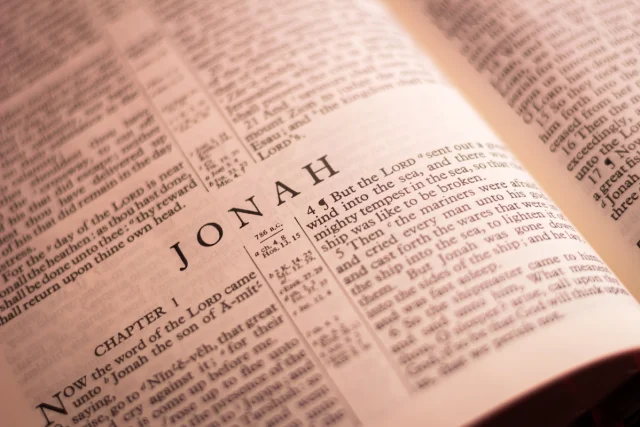
"Forty days more, and Nineveh is overthrown!" (Jonah 3:4)
These are the words that Jonah spoke over three days as he walked through the city of Nineveh—just five words in Hebrew. Jonah makes no mention of Nineveh’s sin, preaches no sermon of repentance, nor does he even name the Lord. Jonah said the absolute minimum. Yet, through this brief message, God produced a monumental outcome.
The verb הפך (hafakh), translated as "to overthrow," is particularly interesting. It can refer to destruction, as it did with Sodom and Gomorrah, but it can also mean to turn around, to transform, or to convert. The word thus holds prophetic depth: Nineveh will either be overthrown by judgment, or turned around inwardly through repentance. In the end, Nineveh was not destroyed because it was truly "turned around." The 40 days represented a period of grace.
A Spectacular Turnaround
"The people of Nineveh believed in God..." (Jonah 3:5).
This is a spectacular reversal, characteristic of God! The first person to be caught off guard was Jonah himself. He knew that God is "a gracious and compassionate God, slow to anger and abundant in lovingkindness" (4:2)—yet there are truths we know about God that we still find difficult to truly accept. Looking at Jonah, we can hardly say he was jumping for joy... Five Hebrew words were enough to bring a king and an entire city to their knees, leading these "pagans" to recognize the God of Israel! It was hard for Jonah to accept that divine justice and mercy extend to everyone—even to Israel's enemies.
The people of Nineveh believed in God. The Hebrew phrasing is powerful: the verb stems from the same root as emunah—faith, trust, and steadfastness. The Ninevites did not merely fear judgment; they took the message seriously as a word coming directly from God. The contrast with Jonah is striking: the prophet knows the Lord, hears His word directly, and resists Him; the Ninevites hear only a single sentence spoken by a complete stranger, and they immediately turn to God.
Although Jonah may not have known Isaiah’s words about Israel being "a light to the nations," he certainly knew Israel’s calling: "All peoples on earth will be blessed through you" (Genesis 12:3, 22:18), according to God's promises to Abraham. Jonah knew this calling, yet he resisted it. As a prophet of Israel, he understood the Abrahamic promise and Israel’s priestly mission; his struggle was accepting that this grace could extend to a violent, enemy nation.
A People of Chamas
Jonah could likely conceive of Israel enlightening well-disposed nations, but it was far harder to accept Israel becoming the instrument of Nineveh’s salvation. Yet that is the ultimate irony of the book: Jonah fulfills Israel’s vocation despite himself. Through him, pagan sailors discover the fear of the Lord, the Ninevites hear the word of God, and a foreign city turns away from its violence—chamas. One cannot ignore the striking connection to the Hamas of Gaza (the Islamic Resistance Movement), and to all who threaten and terrorize the world through violence.
Let Us Be Turned Around!
It is now our turn to be transformed! How easy it is to settle into moral and spiritual complacency. Like Jonah, God calls us to step out of our comfortable routines, relinquish our rigid certainties, and truly place our faith in the God of the impossible. Head knowledge is not genuine belief; intellectual understanding alone cannot save us. The Word must descend into the heart to transform our lives: "The word is very near you; it is in your mouth and in your heart so you may obey it" (Deuteronomy 30:11-14). Moses foretold this very shift: "The Lord your God will circumcise your hearts... so that you may love him with all your heart and with all your soul" (Deuteronomy 30:6).
Jonah’s message challenges us today: let us expect great things in a time when the world is sinking deeper into unbelief, immorality, and violence. God can not only use a "great fish" to fulfill His plans, or command a worm to wither Jonah’s plant, but He can also "flip" human hearts on a massive scale.
Let us wait upon the mercy of the God of Jacob... The rain in Jerusalem on the first Shabbat of Ellul is a welcome sign, and the Feasts of Tishrei are near. Let us discern the voice of the Shofar.
You might also like to read this: