Australia reportedly withdraws from UK-led coalition targeting Judea and Samaria settlements



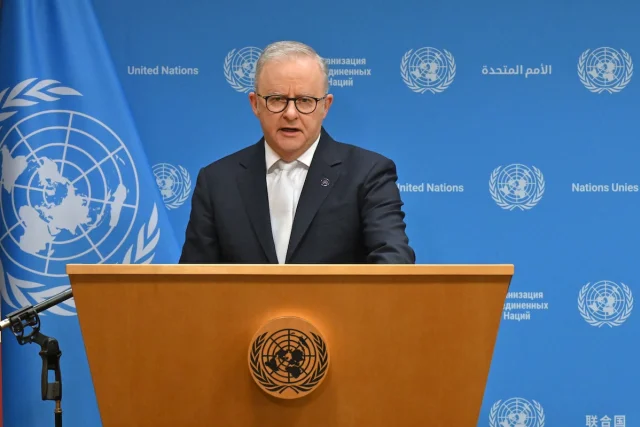
Australia reportedly withdrew from a British-led coalition of 12 Western governments planning to impose trade restrictions on Israeli settlements in Judea and Samaria, the Australian Broadcasting Corporation (ABC) reported.
Like much of the international community, Australia officially regards Israeli communities beyond the Green Line as illegal settlements on what it considers occupied territory. Israel disputes this position, stressing that the Jewish people have historical ties to Judea and Samaria (West Bank) and regards the territories as legally disputed.
According to sources who spoke to ABC on condition of anonymity, the Australian government was initially open to supporting stronger measures against Israeli communities but eventually decided not to join the UK-led initiative. European Union officials reportedly tried unsuccessfully to persuade Australia to join the initiative.
The 12 governments that issued the Sept. 8 statement were Canada, Denmark, Finland, France, Iceland, Ireland, Norway, Poland, Portugal, Spain, Sweden and the United Kingdom. They said they intended to introduce or support European restrictions on trade in goods from Israeli communities in Judea and Samaria. Canada ultimately became the only non-European country to join the group, while Australia withdrew late in the process, according to diplomatic sources cited by ABC.
While declining to join the trade restrictions, Australia’s Department of Foreign Affairs and Trade stressed that Australia and its allies were “working closely together towards the same objective, even if we are not all taking exactly the same measures at the same time.”
“We are concerned blanket import bans present practical challenges, including how to ensure they do not inadvertently harm Palestinian businesses, workers and livelihoods. The UK government has acknowledged these challenges as they work on their legislation over the next year,” the Australian foreign affairs department said in an official statement.
“In the meantime, Australia is pursuing further targeted measures, in coordination with international partners, to deter illegal settlements and settler violence,” it added.
Relations between Australia and Israel have deteriorated since the Hamas Oct. 7, 2023, attack. In September 2025, Australia joined Britain and Canada in formally recognizing a Palestinian state, despite objections from Washington and Jerusalem. The Australian government said the move was intended to promote a two-state solution and followed its longstanding policy supporting Palestinian statehood.
Australia has also faced a sharp rise in antisemitism since Oct. 7. According to data cited by Israel’s Diaspora Affairs Ministry, 1,654 antisemitic incidents were recorded in Australia between October 2024 and September 2025, approximately four times the annual average before Oct. 7.
In December 2025, 15 people were killed in a terrorist shooting targeting a Jewish Hanukkah celebration at Sydney’s Bondi Beach. Australian authorities said the attack targeted the Jewish community.
European officials were reportedly “surprised” by Australia’s decision not to join the British-led trade restrictions. Some diplomatic sources suggested the decision may have been influenced by domestic political considerations, while Jewish Australian organizations have accused the government of adopting policies that have contributed to a more hostile climate for Australian Jews.
Australian Foreign Minister Penny Wong said last week that Canberra was “pursuing further targeted measures in coordination with international partners to deter illegal settlements and settler violence.”
Wong said that Australia was “ready to take more action if the Government of Israel does not take urgent steps to address the situation on the ground.”
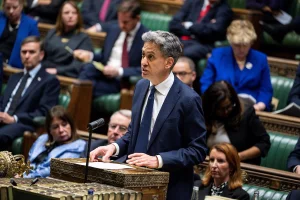
The British government announced earlier this month that it would ban imports of goods produced in Israeli communities in Judea and Samaria. British Foreign Secretary Ed Miliband also accused Israeli settlers of carrying out what he described as “ethnic cleansing” against Palestinians in the West Bank. The UK's import ban is expected to take six to nine months to come into effect.
The Israeli government condemned the British decision and responded by closing the British consulate in Jerusalem, which serves as London’s diplomatic mission to the PA, headquartered in Ramallah. The British embassy to Israel is located in Tel Aviv.
“A boycott of goods from Judea and Samaria is a despicable practice that harms hard-working, law-abiding citizens. The Labour Government has decided to employ this practice of boycotts and BDS only against the Jewish state,” Israeli Foreign Minister Gideon Sa’ar stated.
You might also like to read this: