ANALYSIS Arab League breaks with Hamas: A new era of Middle East politics
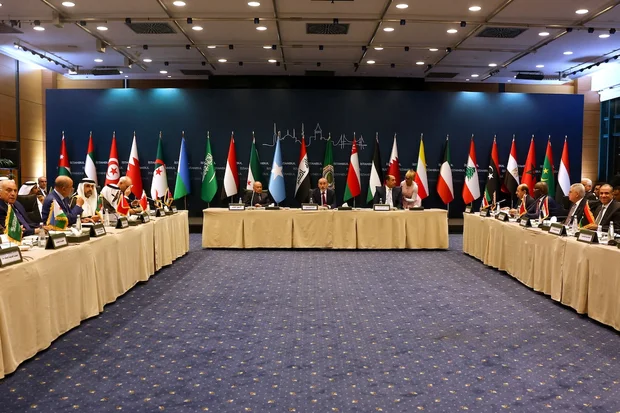
The joint declaration from the Arab League, for the first time explicitly condemning Hamas’s October 7, 2023, attack and demanding the group disarm and end its rule in Gaza, is far more than a diplomatic footnote. It represents a tectonic shift in the Arab world’s relationship with the Palestinian cause and with Israel. After decades of either overt support or strategic silence, the majority of Arab nations have now decisively turned their backs on the armed faction of the Palestinian national movement. This isn’t just a change in rhetoric; it’s a strategic realignment that could fundamentally reshape the political landscape of the Middle East.
This dramatic pivot is rooted in several key factors, chief among them being the renewed, albeit fragile, push for a two-state solution. For years, Hamas’s control of Gaza and its charter calling for Israel’s destruction have been a primary obstacle to any meaningful peace process. Now, the Arab League is making it clear: a viable Palestinian state can only exist with a single, unified government under the Palestinian Authority. The message is unambiguous – Hamas’s continued rule and military capabilities are seen not as a form of resistance, but as an existential threat to the very idea of a sovereign Palestinian nation. The Arab League has, in essence, chosen the path of political statehood over armed struggle, signaling a profound strategic choice.
The public condemnation of the October 7 attack itself is a watershed moment. While many Arab nations initially issued carefully worded statements, the sheer scale of the brutality and the subsequent catastrophic war in Gaza have changed the calculus. The Arab League’s declaration is an acknowledgment that the attack was a strategic failure that not only failed to advance the Palestinian cause but actively set it back. This public disavowal of Hamas’s actions represents a break from a long-standing, unwritten rule in Arab politics: that Palestinian resistance, regardless of its methods, would not be openly criticized. This move suggests that Arab states are now prioritizing regional stability and their own national interests over ideological solidarity with a militant group.
This reorientation is also deeply tied to the broader trend of normalization with Israel. The Abraham Accords demonstrated that key Arab states are willing to build diplomatic and economic ties with Israel, often in a bid to counter Iranian influence and foster regional stability. The October 7 attack brought this process to a screeching halt. By demanding Hamas’s disarmament and the end of its rule, the Arab League is effectively removing one of the last major impediments to future normalization efforts. This move signals a collective desire to get back on the path of regional integration and cooperation, a path that many influential Arab nations believe is essential for their long-term security and prosperity.
The catastrophic humanitarian crisis in Gaza has also exerted immense pressure on Arab governments to act. The war, sparked by Hamas’s attack, has led to widespread suffering, displacement, and a humanitarian crisis. The Arab League’s declaration, while also condemning Israel’s actions, focuses on Hamas’s role in perpetuating the conflict. The call for Hamas to hand over power is framed as a necessary step toward ending the war and allowing for the full-scale delivery of humanitarian aid, reconstruction, and a path to a more stable future for the people of Gaza. This emphasis on the humanitarian imperative reflects the deep concern felt throughout the Arab world about the immense suffering in Gaza and the desire to find a way out of the current crisis.
Finally, the joint declaration places significant pressure on countries that have been historical backers of Hamas, most notably Qatar and Turkey. These nations, which have often served as mediators, are now part of a collective Arab position that directly opposes Hamas’s continued rule and armed status. This new alignment may compel these nations to use their influence to pressure Hamas to accept the terms of the declaration or risk being out of step with the broader Arab consensus.
In conclusion, the Arab League’s pivot against Hamas is a multi-faceted development driven by a pragmatic reassessment of the past. It is rooted in a desire to salvage the two-state solution, a recognition of the destructive consequences of the October 7 attack, an appetite for regional stability and normalization with Israel, and a deep concern for the humanitarian crisis in Gaza. This historic turn represents a potential turning point in the Israeli-Palestinian conflict, one that could fundamentally reshape the political landscape of the Middle East.
This article originally appeared on ALL ARAB NEWS and is reposted with permission.
Popular article:

interview Easter message of resurrection hope amid war at Jerusalem's Garden Tomb

biblical commentary Let my people go: a Passover message for today

4 IDF soldiers killed, 2 wounded in fighting in southern Lebanon, as Israel eliminates dozens of Hezbollah terrorists

Receive latest news & updates
A message from All Israel News
Help us educate Christians on a daily basis about what is happening in Israel & the Middle East and why it matters.
For as little as $10, you can support ALL ISRAEL NEWS, a non-profit media organization that is supported by readers like you.
Latest articles:

1969 Dutch Eurovision winner Lenny Kuhr moves to Israel – cites antisemitism, family ties

Israel bars French far-left leader Mélenchon in response to France's entry ban on settlement leader

Change Bloc divided over coalition with Arab or ultra-Orthodox parties after week of negotiations

Huckabee fires back as Senate Democrats target US-Israel intelligence ties: 'Shocking!'

Israeli blood test detects early breast cancer with 95% accuracy, assesses recurrence risk