$1 billion to protect US houses of worship: Jewish leader reveals Speaker Mike Johnson’s surprising response to security bill
A billion-dollar plan to protect America’s synagogues, churches and other houses of worship is making its way through Congress. But will Republican House Speaker Mike Johnson give it the green light?
One prominent Jewish leader from Michigan recently met with Johnson face-to-face in Washington, hoping to convince him that the time for action is now. What happened during that meeting left him genuinely surprised.
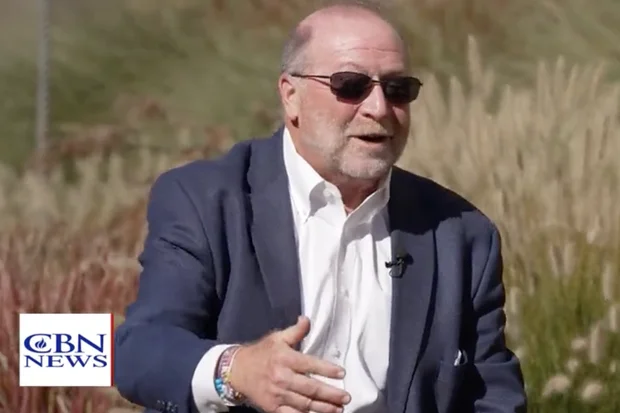
Dennis Bernard, the National Chair of Government Relations for the Jewish Federation of North America, told me during an exclusive interview in suburban Detroit that he’s been working closely with Johnson’s office for months.
At issue is the Jewish American Security Act, bipartisan legislation that would dramatically increase federal security funding for religious institutions while strengthening efforts to combat antisemitism.
But Bernard says the legislation’s name doesn’t tell the whole story.
“The most ill-named bill I know is the Jewish American Security Act,” Bernard told me. “But it really isn’t. It’s faith-based because it applies to all faiths.”
In other words, this isn’t simply about protecting Jews. It’s about protecting Americans of every faith. “Churches, mosques, temples, synagogues. Doesn’t matter. Doesn’t matter.”
The legislation would authorize $1 billion annually for the federal Nonprofit Security Grant Program from fiscal years 2027 through 2031, compared with the $300 million available in 2026.
The program helps vulnerable religious institutions and other nonprofits purchase security cameras, reinforced doors, access-control systems and other protective equipment.
But demand has become overwhelming. “There’s so much demand that only 23% of the submitted requests can be funded,” Bernard explained.
The legislation would also expand flexibility for hiring security personnel, streamline applications and improve the reimbursement process. That’s particularly significant in Michigan.
On March 12, a heavily armed attacker drove his truck into Temple Israel in West Bloomfield Township, outside Detroit, while approximately 140 children were inside its early childhood center.
Security personnel confronted the attacker, preventing what could have been a devastating massacre. The FBI subsequently described the attack as Hezbollah-inspired terrorism targeting the Jewish community.
For Jewish leaders, it’s a chilling reminder that the threat isn’t theoretical. It’s happening in their own neighborhoods.
In addition, the security bill goes further than physical protection. It would strengthen federal efforts to address antisemitism on college campuses and require greater transparency from major social media platforms about antisemitic content.
Bernard says he’s been meeting with Johnson and his staff for months, hoping to secure a vote on the legislation. During their meeting in early October, Bernard brought something beyond statistics and political talking points – scripture.
“I was giving him quotes from Torah, from the New Testament,” Bernard recalled. His goal was to make the moral argument that protecting religious communities isn’t simply a Jewish concern. It’s a fundamental American responsibility.
But according to Bernard, Johnson had a surprise of his own. “And the speaker turned it on me,” he said. Johnson reportedly brought up one of the most important documents in American Jewish history: George Washington’s 1790 letter to the Hebrew Congregation of Newport, Rhode Island.
In that historic correspondence, America’s first president promised religious liberty to Jewish Americans and expressed his hope that everyone could live safely under their own vine and fig tree, with nobody making them afraid.
Bernard says Johnson actually keeps a copy of that historic correspondence in his office. When Bernard pressed Johnson about bringing the legislation to a vote, the speaker returned to Washington’s words.
According to Bernard, Johnson emphasized that every American faith deserves to worship safely and that protecting citizens is among the government's most fundamental responsibilities.
The exchange made a powerful impression. “He was warm. He was educated on it. He was passionate,” Bernard told me.
Johnson’s response apparently caught this veteran Jewish leader off guard. “I was a little taken back,” Bernard acknowledged.
For Bernard, the speaker’s reaction wasn’t merely political. He viewed it as a deeply personal response rooted in Johnson’s Christian faith. But did Johnson actually promise a vote? Not exactly.
Bernard described an encouraging conversation, but no firm commitment or timetable. Still, he believes the legislation is approaching a pivotal decision.
So where does the Jewish American Security Act stand? It was introduced in the Senate on May 19 by Democratic Senator Jacky Rosen of Nevada and Republican Senator James Lankford of Oklahoma.
Its House companion legislation, introduced on June 9, is led by Democratic Representative Dan Goldman and Republican Representative Mike Lawler, both from New York.
As of Oct. 22, the House legislation has attracted 99 co-sponsors from both parties. The Senate version has 23 co-sponsors.
Right now, the legislation remains in committee. The House bill’s latest recorded action came on July 7, when it was referred to Homeland Security subcommittees. The Senate version remains before the Homeland Security and Governmental Affairs Committee. Neither chamber has passed the bill.
Johnson’s involvement could prove crucial. As speaker, he has considerable influence over which legislation ultimately receives a House floor vote.
Bernard left his meeting encouraged, but the question remains whether Johnson’s words will translate into congressional action.
For Jewish communities spending increasing amounts of money on armed guards and security precautions, the stakes are enormous.
For Christians, Muslims and other religious Americans, the implications extend far beyond the Jewish community. Bernard believes protecting religious freedom should transcend political divisions.
His conversation with Johnson reinforced that conviction. After describing the speaker’s knowledge, warmth and personal commitment to religious liberty, Bernard offered one final reflection. “I’m a hardened guy,” he admitted.
Then came four words that perhaps best summarized the entire encounter. “I was moved.”
Now comes the real test. Will Congress be moved enough to act?
Help more people find our reporting from Israel! Leave a quick Google review of our website HERE .
Popular article:

interview Easter message of resurrection hope amid war at Jerusalem's Garden Tomb

biblical commentary Let my people go: a Passover message for today

4 IDF soldiers killed, 2 wounded in fighting in southern Lebanon, as Israel eliminates dozens of Hezbollah terrorists

Receive latest news & updates
A message from All Israel News
Help us educate Christians on a daily basis about what is happening in Israel & the Middle East and why it matters.
For as little as $10, you can support ALL ISRAEL NEWS, a non-profit media organization that is supported by readers like you.
Latest articles:

IDF conducts broad counter-terror operation in Judea & Samaria following Hebron attack
October Council holds massive rally in Tel Aviv's Hostages Square ahead of elections

Political storm after Netanyahu suggests cryptocurrency could help circumvent sanctions

Israel denies report that Netanyahu ordered shift in Falkland Islands stance

explainer Israel’s Election System 101: All you need to know from voting to coalition governments