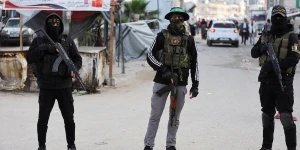
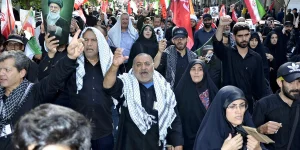
Why have Hezbollah and its allies launched a vicious smear campaign against Morgan Ortagus, a trusted Trump diplomat? Follow the money – an ALL ARAB NEWS and ALL ISRAEL NEWS investigation



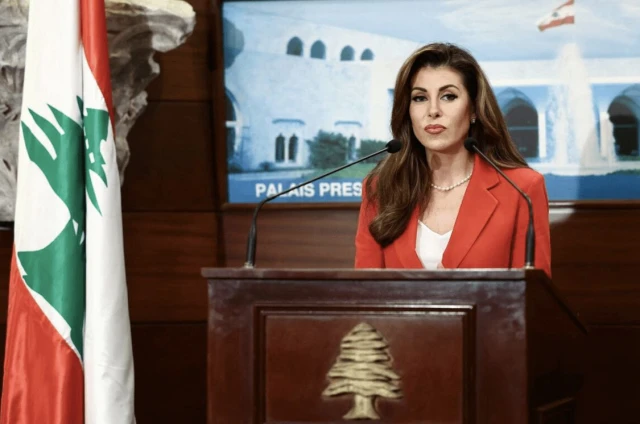
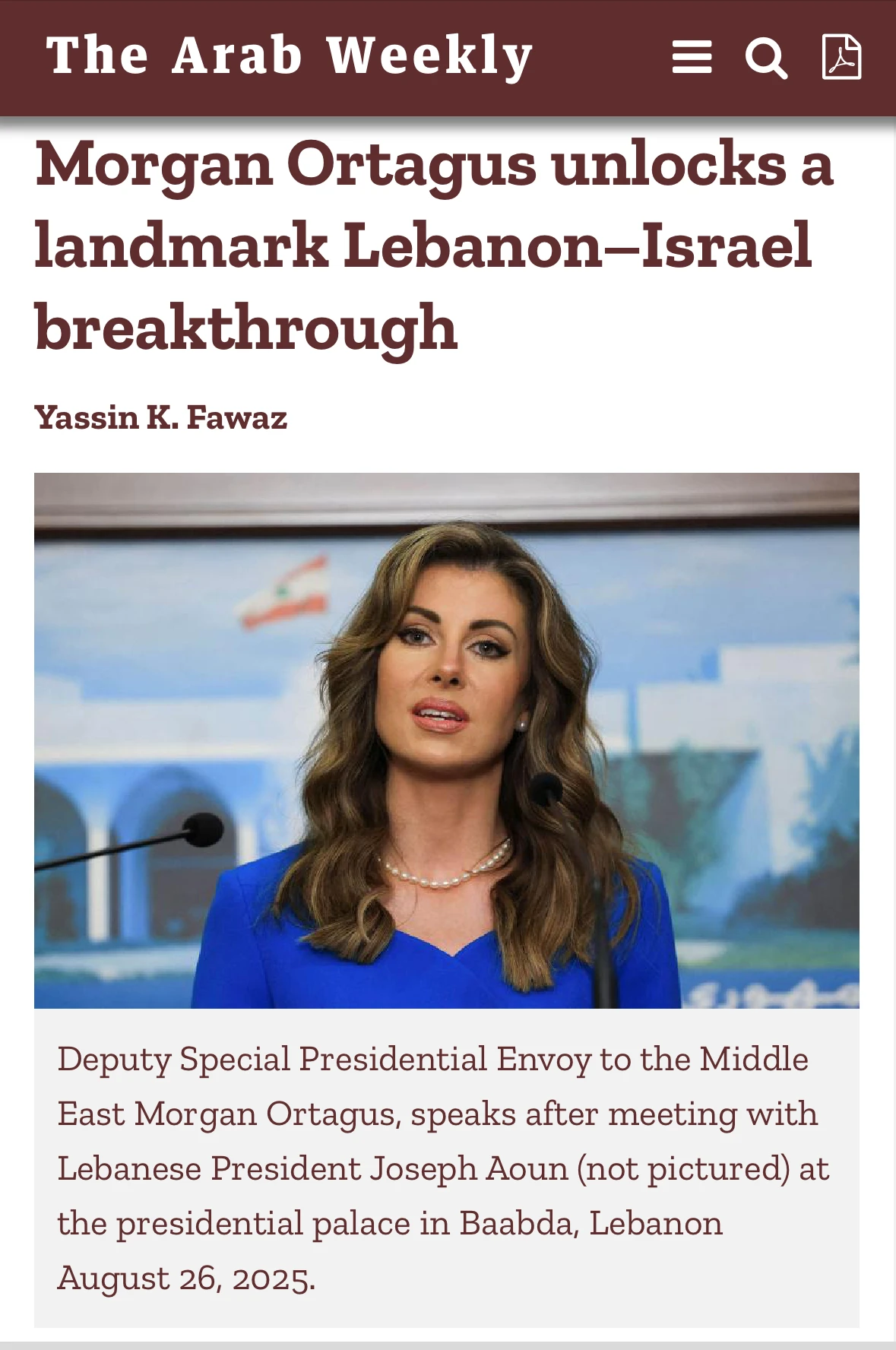
Morgan Ortagus is a prominent and trusted diplomat in the Trump administration, known for her staunch opposition to the Iranian regime and the Iran-funded Hezbollah terrorist organization.
She has played a key role in the normalization of Israel with the Arab world since 2019, including implementation of the Abraham Accords, along with the first civil dialogue between Lebanon and Israel.
Last April, for example, Ortagus publicly blasted Hezbollah, calling it a “cancer” that is killing the Lebanese government and people and saying that the group must be disarmed and defanged as rapidly as possible.
“When you have cancer, you don't treat part of the cancer in your body and let the rest of it grow and fester,” she told Al-Arabiya, the Saudi-owned satellite news channel.
“When you have cancer and you want to be a whole patient, you cut the cancer out.”
Amen.
But not surprisingly, this strong woman with strong views on how to advance peace and security and American interests in the Middle East is making enemies.
WHY IS ORTAGUS BEING TARGETED?
Ortagus, after all, is not a policy wonk or a pundit.
She’s a key player in a strategic position of influence.
She “was sworn in as President Trump’s Deputy Special Presidential Envoy to the Middle East on Jan. 20, 2025, under Ambassador Steve Witkoff,” according to her official State Department bio.
“She previously served in the first Trump Administration as the Spokesperson for the Department of State. Ms. Ortagus is an active U.S. Navy Reserve Intelligence Officer, serving in the Secretary of Defense’s Naval Reserve Unit.”
But recently, Ortagus, 43, has found herself the subject of attacks on Hezbollah-affiliated social media accounts, as well as on various “mainstream media” news sites.
WHO IS ANTOUN SEHNAOUI?
Why?
Because she is dating a wealthy Lebanese Christian businessman who also strongly opposes radical Islamist terror states and groups.
For Hezbollah and its allies, Ortagus and her boyfriend are a dangerous combination.
So, they are working overtime to attack the couple in the hopes of getting both discredited in Washington and throughout the Middle East.
“Ortagus, a U.S. diplomat closely associated with President Donald Trump, has divorced her Jewish husband and begun a romantic relationship with Lebanese tycoon Antoun Sehnaoui,” reported Ynet, a leading Israeli news site, which has picked up on these growing attacks.
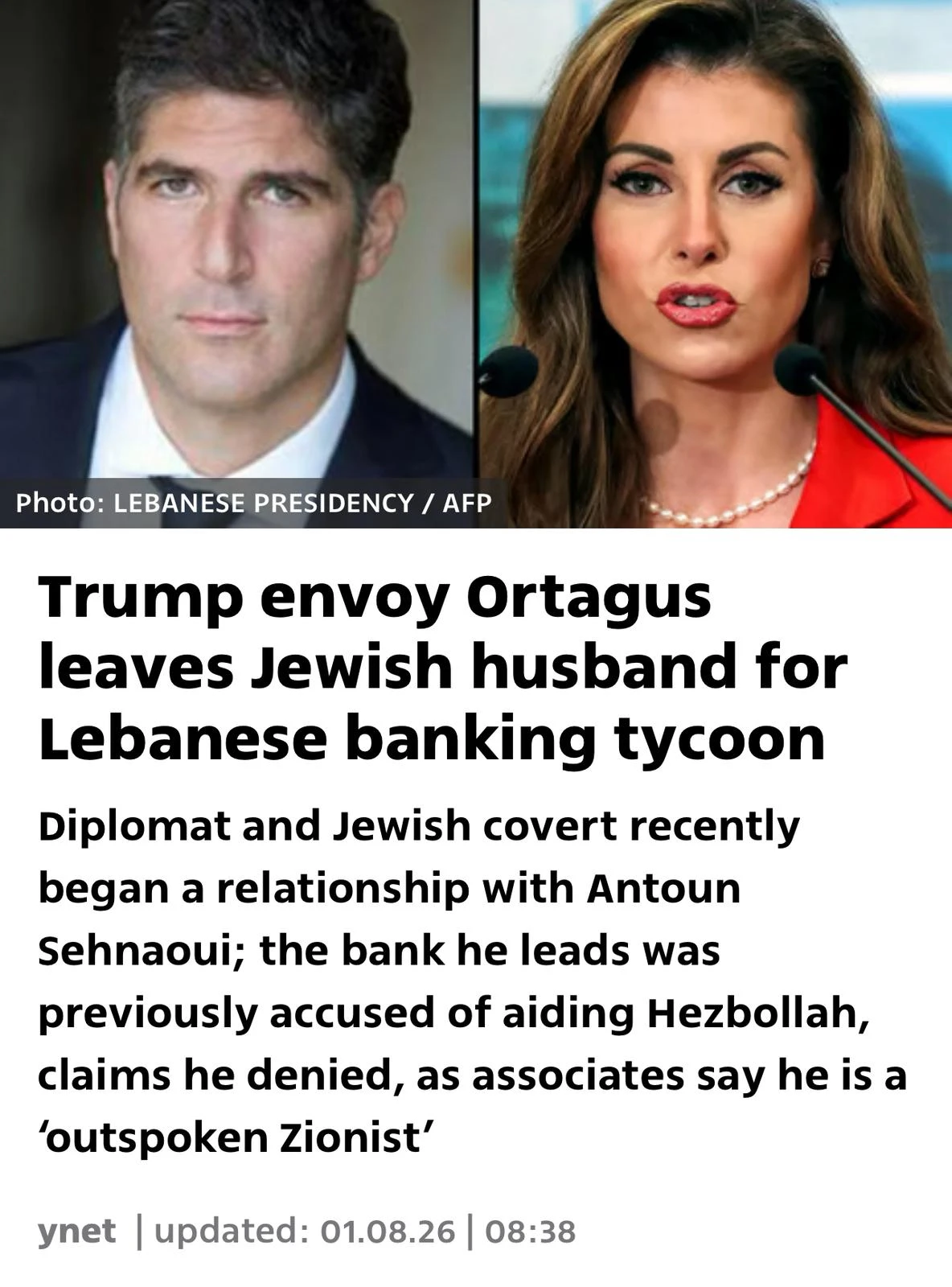
Sehnaoui’s bank “was previously accused of assisting Hezbollah,” Ynet notes.
“The claims of links between the bank and the terrorist group appeared in the Daily Mail, which later corrected its report and stressed that Sehnaoui denied the allegations.”
“The diplomat finalized her divorce in November,” the Ynet report continued, explaining that “Ortagus is now in a relationship with Antoun Sehnaoui, 53, an economist, film producer, and publisher who serves as chairman of banks in Lebanon, Cyprus, Jordan, and Monaco. A source close to Ortagus said the relationship began after the separation and was disclosed through appropriate channels in accordance with government regulations.”
Watching these attacks intensify over the holidays, my ALL ARAB NEWS and ALL ISRAEL NEWS colleagues and I began investigating.
What’s crazy about these attacks is that according to our sources, “Sehnaoui is one of the most prominent private-sector figures at the forefront of efforts against Hezbollah and illicit financing.”
Sehnaoui, we’ve learned, is a “Lebanese Christian from a family known to support Israel for generations,” as well as “a senior figure in Lebanon’s financial system and the owner of several banks, including SGBL.”
“For many years, he has been openly critical of Hezbollah and Iran, advocating Lebanon’s integration into the Western axis and promoting an economic vision aligned with the United States and the West,” one Western diplomatic source told me.
“A strong supporter of the Abraham Accords, he views Lebanon’s inclusion as essential to regional stability and economic reconstruction.”
Sehnaoui’s moderate, anti-radical, pro-peace, pro-American perspective and history are precisely why he is hated and opposed by Hezbollah and those in Lebanon who support Hezbollah and the Iranian regime.
It’s also why Ortagus is being unfairly and viciously attacked.
These attacks represent a systematic attempt to silence two significant voices advocating for American involvement, regional normalization, and the dismantling of Hezbollah.
WHAT HAS OUR ALL ARAB NEWS INVESTIGATION UNCOVERED?
As our investigation continued, two things have become increasingly clear.
One is that Hezbollah is becoming increasingly desperate – it can see that the Iranian regime could soon be toppled, and that Israel is actively considering a massive new military attack to crush Hezbollah’s capabilities once and for all.
Second is that, in its desperation, Hezbollah fears that the Trump administration is going to give Israel the green light to decimate the terror group – soon – and then the White House and State Department will actively encourage the Lebanese government to make peace with Israel and join the Abraham Accords.
WHAT’S REALLY GOING ON? FOLLOW THE MONEY
As we’ve been talking to regional diplomatic and intelligence experts, we’ve been learning much more about how Hezbollah is trying to control Lebanon’s banking and financial sectors.
A week after the deadline for Hezbollah to disarm had passed at the end of 2025, experts and policymakers have been examining the emerging threat posed by the Shiite terrorist organization.
Israeli strikes have killed a number of Hezbollah commanders and have severely damaged its military capabilities.
This has had a domino effect leading to the collapse of Bashar al-Assad’s regime in Syria, as the Shiite terrorist organization has been unable to send reinforcements to the former Syrian dictator.
As a result, Iran has lost its strategic hold on Syria and is now unable to provide Hezbollah with the weapons and money it needs through the war-torn nation.
With Iranian assistance, Hezbollah has managed to create a financial system that allows it to maintain its power, secure the support of the population, and finance operations both inside and outside Lebanon.
WHAT IS THE CONNECTION BETWEEN LEBANON, HEZBOLLAH, AND VENEZUELA?
For more than two decades, Hezbollah has built financial and logistical networks around the world, especially in South America, where Venezuela has become a key hub.
Under the leadership of Hugo Chávez and then Nicolás Maduro, the alliance between Venezuela and Iran created a favorable infrastructure for Hezbollah’s illegal financial activities, including money laundering, drug smuggling routes, and sanctions evasion mechanisms linking South America, the Middle East, and West Africa.
In the Lebanese domestic arena, Hezbollah’s economic strength is anchored primarily in the “Al-Qard Al-Hasan” institution, a bank-like entity operating outside the framework of state supervision and providing a variety of services such as loans, cash, and social assistance to the organization’s supporters.
In this way, the organization allows itself independence from the collapsing banking system in Lebanon.
Al-Qard Al-Hasan and other Hezbollah-linked financial technology platforms have created a parallel financial system – essentially a “shadow economy.”
This economy maintains cash liquidity, facilitates remittances, provides welfare services, and strengthens loyalty among Hezbollah’s support base.
All of this significantly erodes the effectiveness of regulation in Lebanon and the impact of international sanctions.
These structures not only serve as a cover for terrorist activities but also function as an actual financial system integrated into the management of the state’s finances.
The governor of the Central Bank of Lebanon, Karim Soueid, is leading a determined effort against this parallel criminal network.
Since his appointment in April 2025, Soueid has worked to reestablish the authority of the central bank, restore public confidence in the banking system, and re-submit financial activity to state regulation.
At the heart of this effort is a comprehensive strategy to reduce Hezbollah’s economic independence by tightening supervision, enforcing procedures, and strengthening ties with the international community led by the United States.
This is in tandem with the efforts of those in the private sector, including Antoun Sehnaoui.
This process, led by individuals like Soueid and Sehnaoui, is being carried out both domestically and internationally.
In the domestic arena, this is reflected in the application of regulatory pressures, tight supervision of non-bank financial entities, and attempts to return financial activity to a reformed banking system.
HOW CAN HEZBOLLAH’S FUNDING BE SHUT DOWN?
In the international arena, the effort involves cooperation with the U.S. government, regulatory bodies, and financial institutions to ensure Lebanon’s compliance with international standards for anti-money laundering (AML) and counter-terrorism financing (CFT).
The ultimate goal is to dismantle or severely restrict Hezbollah-affiliated financial arms such as Al-Qard Al-Hasan and reestablish a transparent and controlled financial system that can serve as the foundation for economic growth.
These steps have been met with fierce opposition.
Hezbollah, its local and international partners, and a host of economic and political actors who benefit from the shadow economy have consistently worked to undermine the status of the reform camp.
This opposition has been expressed through political pressure, legal setbacks, media campaigns, and personal attacks aimed at deterring, tarnishing, and neutralizing the leaders of the reforms that threaten Hezbollah’s financial power centers and funding routes.
The ongoing events in Lebanon are not limited to a political or security conflict but constitute a fundamental battle over regulation, economic sovereignty, and Hezbollah’s influence over them.
The results of this economic battle will determine whether Hezbollah will be able to continue operating as an independent political entity within Lebanon, or whether the country will begin the arduous process of restoring sovereignty over its institutions and economy.
In this context, recent events in Venezuela have given the intra-Lebanese financial struggle an opportunity of sorts: they are driving a broad international movement to close channels for circumventing sanctions, tighten controls on illicit financial flows, and weaken global Iranian networks of influence.
As pressure mounts on external havens like Venezuela, the battle for financial control in Lebanon is becoming more critical, and the country’s economic arena is emerging as one of the last fronts in Hezbollah’s struggle for financial independence.
The current situation pits a “state within a state” mechanism, relying on international criminal networks from Beirut to Caracas, against a fragile but determined attempt to reestablish financial sovereignty, transparency, and Western orientation.
The outcome of the campaign will shape not only Lebanon’s economic future but also the balance of power on Israel’s northern border and across the entire region.
Even more so, it is important to protect constructive and courageous diplomatic actors such as Morgan Ortagus from Hezbollah-linked smear campaigns.
Want to help more people find our reporting from Israel? Leave a quick Google review of our website HERE .
You might also like to read this: