ANALYSIS Whatever happens next, Israeli democracy has already won
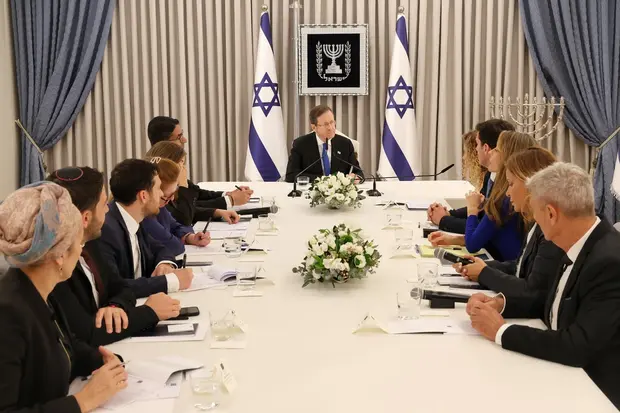
President Isaac Herzog tapped Gadi Eisenkot on Sunday to form Israel's next government.
Eisenkot now has a few weeks to negotiate with the various parties and attempt to put together a coalition. During that time, there will likely be dozens of technical and political analyses about Israel's electoral system, whether Eisenkot can form a stable government and what the results mean for the country's future.
But beyond the question of whether Eisenkot will succeed, the fact that Israel has held an election with such high participation, and that the democratic process is moving forward despite three years of war and political division, is something positive that deserves to be celebrated.
Nearly 78% of Israelis turned out to vote, a remarkable figure. In the first election since Oct. 7, 2023, Israelis have shown that they still care deeply about their country and its future. That in itself is worth celebrating.
“Israelis care that Israel is a strong, healthy democracy, and that they care deeply about the future of this country,” Gil Hoffman, a political analyst for i24NEWS, told ALL ISRAEL NEWS. “You've got cities in America with absentee ballots and the turnout is half as much as we had here in one day, and it crossed sectors. Every sector had high turnout.”
Hoffman, who is also the author of the book “The Blood Libel Machine,” said that although the ultra-Orthodox parties lost seats, they still received more votes than in the previous election. The same was true of Likud, which also lost seats despite receiving more votes.
“This was a vote of confidence in Israel's future,” Hoffman added. “People talk about how people are leaving the country, the brain drain, and whatever. Look, even the people who don't live here made a point of coming to vote.”
Some 67,000 Israelis living abroad, including well-known actress Gal Gadot, made a point of returning to Israel to cast their ballots and have a say in the Jewish state's future. While in the country, Gadot said she hoped to move back to Israel one day.
Moreover, although voter turnout was generally higher across the country, it was particularly strong among parties in the change bloc compared with those supporting the incumbent government. Voters on the conservative and further-right sides of the political spectrum turned out at lower rates than those seeking change, suggesting that many Israelis understood their votes could make a difference.
Arab voters also turned out in higher percentages than in previous elections, highlighting, according to Dr. Dan Diker, president of the Jerusalem Center for Security and Foreign Affairs, a growing understanding that they can achieve more through political participation than by staying on the sidelines.
“The Arab Israeli community wants integration, not separation,” Diker told ALL ISRAEL NEWS. “That is positive for democracy… One of the main issues for them was crime in the Arab sector, and a demand that it be confronted much more aggressively.”
Over the past week, Herzog held consultations with all the factions that won seats in the 120-member Knesset. In total, 67 members of Knesset recommended that the president tap Eisenkot to form the next government, compared with 46 who recommended Prime Minister Benjamin Netanyahu. One faction, United Torah Judaism, with seven members, chose not to recommend anyone.
However, the 67 recommendations do not necessarily translate into a governing majority. Nineteen came from Arab-led parties, while several of Eisenkot's potential coalition partners have ruled out sitting in a government with those parties. That means Eisenkot still faces a difficult task in assembling a coalition that can command the support of at least 61 members of Knesset.
On Sunday, when Herzog formally tasks Eisenkot with forming a government, he will have 28 days to do so, with the possibility of an additional 14 days if the president authorizes an extension.
Already, parties are beginning to move toward one another in an effort to make change possible.
For example, Yisrael Beytenu leader Avigdor Liberman announced that he would reconsider one of his election promises and entertain the possibility of sitting in a coalition with the ultra-Orthodox parties. Such a move could make it easier for Eisenkot to assemble a government.
Of course, the willingness to compromise during coalition negotiations does not guarantee that Eisenkot will succeed in forming a government, much less that the coalition will remain stable once it takes office.
The differences between the parties are real, and some of the most contentious issues facing Israel, from the future of ultra-Orthodox military service to national security and the economy, will not disappear simply because the election is over.
But for now, there is reason to be encouraged.
After three years of war, political division and uncertainty about the country's future, Israelis turned out in extraordinary numbers to make their voices heard. They demonstrated that they still believe their votes matter and that they have a role to play in shaping the country they want to live in.
Whatever happens in the coming weeks, that is a victory for Israeli democracy worth celebrating.
Popular article:

interview Easter message of resurrection hope amid war at Jerusalem's Garden Tomb

biblical commentary Let my people go: a Passover message for today

4 IDF soldiers killed, 2 wounded in fighting in southern Lebanon, as Israel eliminates dozens of Hezbollah terrorists

Receive latest news & updates
A message from All Israel News
Help us educate Christians on a daily basis about what is happening in Israel & the Middle East and why it matters.
For as little as $10, you can support ALL ISRAEL NEWS, a non-profit media organization that is supported by readers like you.
Latest articles:

Eisenkot promises ‘creative, unconventional political moves’ to form emergency gov’t

MLB legend Reggie Jackson condemns rising antisemitism in Pennsylvania ahead of protest targeting Jewish businesses
‘They sent us missiles, we sent them a bill’: Bat Yam mayor serves Iran with $78 million lawsuit

Following reported explosions on 3 ships in Strait of Hormuz, IRGC threatens vessels operating outside Iranian route
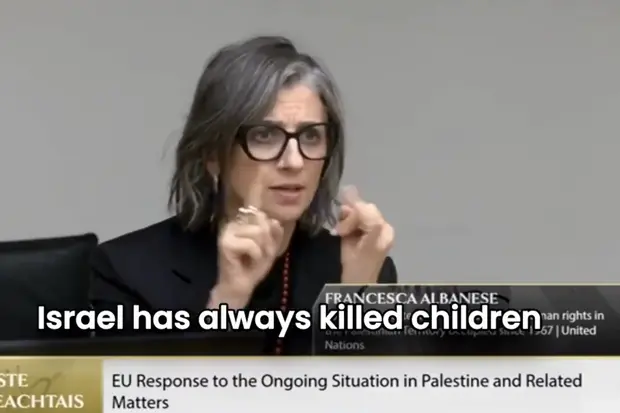
UN’s Francesca Albanese condemned after accusing Israel of rape, torture and killing children in Irish parliament