Watchdog warns foreign-run social media accounts seek to influence Israeli election


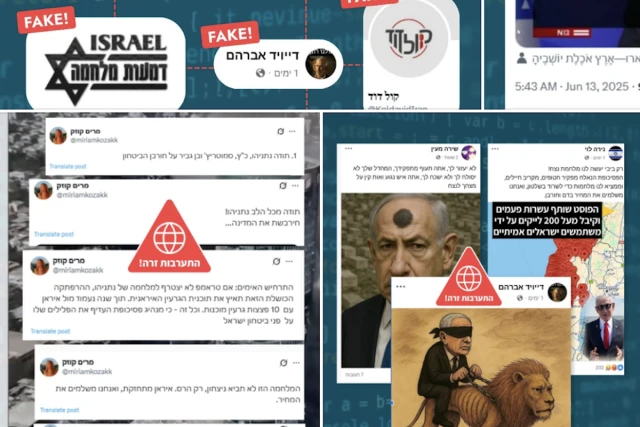
The Israeli disinformation watchdog FakeReporter warns that foreign-controlled social media “sleeper cells” seek to influence Israel’s upcoming election, which are scheduled to be held in 2026. The watchdog is specifically addressing the threat of hostile countries such as Iran using AI-powered influence networks of “sleeper cells”, that are designed to mimic real accounts, to influence Israeli voters.
These networks also include fake “supporter” pages managed by foreign entities pretending to speak on behalf of various Israeli politicians or parties.
Nir Rozen, FakeReporter’s CEO, explained that the current threat has expanded beyond “primitive bots” used in the past.
“We have delivered a serious warning to members of Knesset. We have seen strong democracies fall victim to foreign influence operations, and that’s why we are raising a red flag now. The data is alarming and demands immediate action,” Rozen warned. “These are not hypothetical scenarios, this is reality."
The watchdog stressed that foreign actors deploy increasingly sophisticated psychological warfare measures with the aim to undermine Israel’s democratic system and institutions through carefully planned disinformation campaigns. By appearing to be authentic, the foreign-controlled social media cells gain and influence followers who are not aware that they are being manipulated by foreign actors with hostile intentions.
For instance, Israeli lawmaker Naama Lazimi of The Democrats party contacted the watchdog after she became suspicious of an alleged Facebook fan group operating in her name.
The social media fan group succeeded in attracting thousands of Israeli members. An investigation later concluded that the Facebook group was created by an Iranian operator pretending to be Israeli.
The aim of this and other Iranian-run social media groups is to deepen political divisions in Israeli society by posting content that inflames supporters and radicalizes public discourse.
Iranian-linked cyberattacks against Israel have increased dramatically since the Hamas Oct. 7 attack in 2023. Microsoft’s Digital Defense Report 2025 warned in October that the Jewish state had become the third most targeted country in the world measured by cyberattack volume.
The United States was ranked first, followed by the United Kingdom. The report noted that Iran and its allies were responsible for some two thirds (64%) of all cyberattacks on Israeli targets. The remaining third of the attacks were mainly linked to Russia and independent criminal ransomware gangs.
Western nations are facing similar threats. The Chinese-run “Spamouflage” network has spread divisive content on social media platforms against the United States. Meanwhile, Russia has managed a “Doppelganger” campaign with fake European news sites that seek to deepen political divisions in European countries through deliberate disinformation campaigns.
In June 2024, the director of the Israel National Cyber Directorate (INCD), Gaby Portnoy, warned that the Iranian cyber threat had become a global security threat.
“We have identified that Iran is attacking its allies and other countries for information extortion and damaging digital services,” Portnoy revealed at the Cyberweek annual conference held at Tel Aviv University.
“The information stolen from government systems is then used for Iranian cyberterrorism,” he warned.
You might also like to read this: