US intelligence officials say Iran is behind Trump campaign hack
Gov't warns ‘Iran seeks to stoke discord and undermine confidence in democratic institutions’
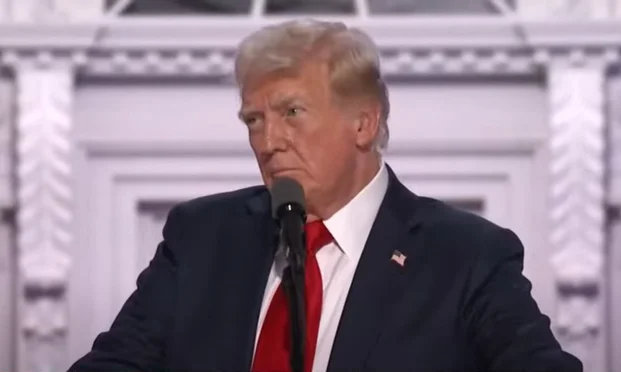
U.S. intelligence agencies on Monday said that Iran was responsible for hacking into former President Donald Trump’s campaign network.
While Iran was suspected to be the source of the recently discovered hack, it was the first time government officials confirmed the regime's involvement.
In a joint statement, officials from the FBI, the Office of the Director of National Intelligence, and the Cybersecurity and Infrastructure Security Agency stated, “Iran seeks to stoke discord and undermine confidence in our democratic institutions.”
“We have observed increasingly aggressive Iranian activity during this election cycle, specifically involving influence operations targeting the American public and cyber operations targeting Presidential campaigns.”
The officials also noted that the Iranian regime has “demonstrated a longstanding interest in exploiting societal tensions through various means.”
The intelligence agencies said the Iranian hackers used “social engineering” to gain access to the presidential campaign network. Social engineering refers to attempts to gain access to desired information, systems, or even facilities through the use of psychological manipulation, often including subterfuge.
Several days ago, Roger Stone, a Trump advisor for many years, revealed that several of his email accounts had been compromised, allowing hackers to impersonate him. The hackers were then able to gain access to additional emails of the Trump campaign.
The announcement reignited public attention on the subject of election interference by foreign intelligence agencies.
During the 2016 and 2020 elections, U.S. officials and campaign leaders repeatedly warned about “disinformation” efforts by foreign national groups to increase political polarization and sow distrust.
Iran’s Permanent Mission to the UN denied the accusations.
“The Islamic Republic of Iran harbors neither the intention nor the motive to interfere with the U.S. presidential election,” Iran’s mission to the UN said in a statement.
“Should the U.S. government genuinely believe in the validity of its claims, it should furnish us with the pertinent evidence – if any – to which we will respond accordingly.”
In their statement, U.S. intelligence officials said the technique of “social engineering” is not new. It has been used successfully by various hacking groups, including state-sponsored hackers.
“It is important to note that this approach is not new,” they wrote. “Iran and Russia have employed these tactics not only in the United States during this and prior federal election cycles but also in other countries around the world.”
The officials said that Iran is concerned the current U.S. elections could be “particularly consequential in terms of the impact they could have on its national security interests.”
While they did not cite any specific incidents, they believe Iranian hackers also attempted to hack into the Harris campaign network.
Popular article:

interview Easter message of resurrection hope amid war at Jerusalem's Garden Tomb

biblical commentary Let my people go: a Passover message for today

4 IDF soldiers killed, 2 wounded in fighting in southern Lebanon, as Israel eliminates dozens of Hezbollah terrorists

Receive latest news & updates
A message from All Israel News
Help us educate Christians on a daily basis about what is happening in Israel & the Middle East and why it matters.
For as little as $10, you can support ALL ISRAEL NEWS, a non-profit media organization that is supported by readers like you.
Latest articles:

1969 Dutch Eurovision winner Lenny Kuhr moves to Israel – cites antisemitism, family ties

Israel bars French far-left leader Mélenchon in response to France's entry ban on settlement leader

Change Bloc divided over coalition with Arab or ultra-Orthodox parties after week of negotiations

Huckabee fires back as Senate Democrats target US-Israel intelligence ties: 'Shocking!'
Israeli blood test detects early breast cancer with 95% accuracy, assesses recurrence risk