








US House approves $1.15 trillion defense bill, including expanded US-Israel security cooperation
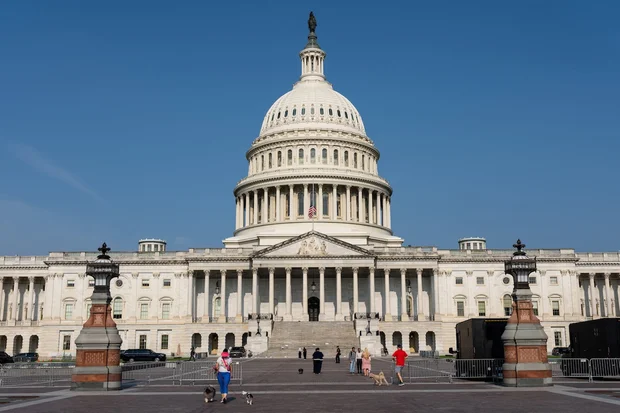
The U.S. House of Representatives approved a sweeping defense spending bill on Wednesday that includes $750 million in funding for security cooperation with Israel.
The fiscal 2027 National Defense Authorization Act (NDAA), which authorizes funding priorities for the U.S. military, passed by a narrow vote by lawmakers (216: 212). The overwhelming majority of Republicans backed the bill while most Democrats opposed it. However, seven Republicans opposed it while six Democrats voted in favor.
The American Israel Public Affairs Committee (AIPAC) group highlighted several provisions in the legislation supporting U.S.-Israel security cooperation, including “$500 million for missile defense, $100 million for counter‑unmanned systems, $100 million for subterranean operations, and $50 million for emerging technologies." In addition, the bill also extends the War Reserves Stockpile Authority–Israel.
AIPAC said the provisions would strengthen U.S. national security interests and deepen cooperation between Washington and Jerusalem.
“We applaud the inclusion of a new provision that will help keep America safe and bolster our strategic capabilities – the United States-Israel Defense Technology Cooperation Initiative. This authorizes the Pentagon to work even closer together with Israel in the strategic arenas that will define 21st-century warfare, ensuring American troops have a greater edge over our adversaries,” AIPAC stated.
The defense cooperation provisions faced opposition from some progressive Democrats, who criticized expanded U.S.-Israel security ties and argued against closer coordination between the two countries.
The newly-approved bill also secures $73 billion for the U.S. military forces and intelligence services, which includes financing the ongoing military operations against the Islamic Republic of Iran.
The U.S. Pentagon estimates that the ongoing war with Tehran has so far cost Washington approximately $37.5 billion.
The bill also included a $12 billion compensation package to U.S. farmers impacted by U.S. President Donald Trump’s trade wars with countries worldwide.
House Speaker Mike Johnson said the bill “puts Congressional Republicans on a path to enacting two fundamentally simple and crucial goals: securing American elections and strengthening our homeland.”
House Budget Committee Chairman Jodey Arrington, a Republican from Texas, said the funds would be used for “supporting our troops in their time of need: Just baseline battlefield readiness, bullets and bombs to finish the job and to come home safely and victoriously.”
Some Democratic lawmakers opposed the legislation, raising concerns about increased military spending and the impact of federal expenditures on domestic priorities.
Democratic Representative Rosa DeLauro opposed the bill, arguing the Trump administration was directing resources toward costly conflicts in the Middle East instead of addressing economic challenges facing Americans at home.
“The American people do not want more open-ended, aimless, expensive, and deadly wars in the Middle East. They want the price of basic necessities like food, housing, healthcare, childcare, and gasoline to go down,” she said.
Senior Brendan Boyle (D-PA) also criticized the bill, arguing that the spending package would add nearly $100 billion to federal deficits. The U.S. national debt is reportedly approaching $40 trillion.
“Nothing to lower gas prices. Nothing to lower food prices… just more spending on the most unpopular war in American history,” he said.
Some progressive Democrats have increasingly voted down U.S. military assistance to Israel. In July 2025, the Senate rejected resolutions introduced by Senator Bernie Sanders (D-VT) that sought to block certain U.S. arms sales to Israel.
Popular article:

interview Easter message of resurrection hope amid war at Jerusalem's Garden Tomb

biblical commentary Let my people go: a Passover message for today

4 IDF soldiers killed, 2 wounded in fighting in southern Lebanon, as Israel eliminates dozens of Hezbollah terrorists

Receive latest news & updates
A message from All Israel News
Help us educate Christians on a daily basis about what is happening in Israel & the Middle East and why it matters.
For as little as $10, you can support ALL ISRAEL NEWS, a non-profit media organization that is supported by readers like you.
Latest articles:

North American Jewish organizations to recruit 100 professionals to combat antisemitism

‘No need’ for pre-election Iran strike, IDF chief says as gov’t, opposition trade blame for potential escalation – report

terror attack 2 Israeli soldiers killed, 2 terrorists eliminated in Hebron shooting; IDF says much larger attack was prevented

analysis A people dwelling securely? Israel’s strategic standing, 3 years after Oct 7

Hamas on wheels: What I found in Dearborn reveals a troubling history and a battle over Israel