










The last day of Sukkot and the waters of life
It was on “the last and greatest day of the feast” that Jesus made a major announcement in Jerusalem, according to the Apostle John. The last day of Sukkot is the pinnacle of the joyous festival.
While the subject of the feast has several different names, such as Tabernacles, Booths and Sukkot – all of which refer to the temporary shelters the people of Israel are commanded to live in for a week – the last day of the Jewish holiday is known by two names.
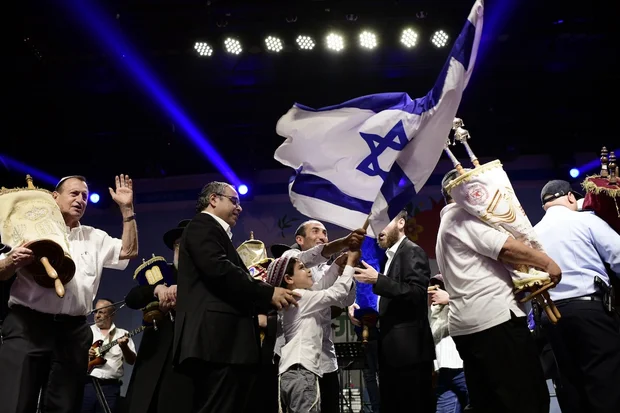
One is “Shemini Atzeret,” meaning the "Eighth Day of the Assembly" and the other is “Simchat Torah” which means the "Joy of the Torah." Outside of Israel, these are two different events on separate days, however, within Israel, they are one and the same.
In the Bible, the feast is described as being a week-long, yet with an eighth day.
“For seven days you are to bring an offering by fire to Adonai. The eighth day will be a holy convocation to you, and you are to bring an offering by fire to Adonai. It is a solemn assembly – you should do no laborious work” (Leviticus 23:36).
By the Second Temple period, a water libation ceremony had been included in the festivities, and it was called the “Simchat Beit Hashoavah” or the "Water-drawing Festival." To celebrate, a golden vessel was filled with water from the pool of Siloam in the City of David and the priests would take it up through the Water Gate to the temple. Shofars would be blown as the procession went up, and the water would be poured all over the altar, mixed with wine from another bowl. This begins the prayers for rain, as Israel comes into the rainy season after a long dry summer, and has always been a time of great rejoicing.
The water libation ritual is described in the Talmud as follows:
“He who has not seen the rejoicing at the place of the water-drawing has never seen rejoicing in his life. At the conclusion of the first festival day of Tabernacles, they descended to the court of the women where they had made a great enactment. There were the golden candlesticks with four golden bowls on the top of each of them and four ladders to each, and four youths drawn from the priestly stock in whose hands were held jars of oil… there was not a courtyard in Jerusalem that was not illumined by the light of the place of the water-drawing. Men of piety and good deeds used to dance before them with lighted torches in their hands, and sing songs and praises. And Levites without number with harps, lyres, cymbals and trumpets and other musical instruments were there upon the fifteen steps leading down from the court of the Israelites to the court of the women, corresponding to the fifteen songs of ascents in the psalms…” (Babylonian Talmud, Tractate Sukkah 51a and 51b).
Each of the seven days is intended to be a day of rejoicing like this, but the peak of “the season of our joy” is on the last day. Seven (7) is the number of completion, of perfection, and eight (8) is the number that represents new beginnings and eternity.
It is believed the tradition of reading set “Torah portions” each week developed during the time of Nehemiah, after the Babylonian exile, when there was a great need to reacquaint the people with the word of God. The Torah was divided into set portions starting in Genesis and ending with Deuteronomy to be read throughout the year, with the cycle ending and restarting at the end of Sukkot. To mark the beginning of the new cycle, there are celebrations with ornately covered Torah scrolls, often with parades in the streets, music and dancing.
It was on this special day, the glorious finale of the week of feasting, that Hamas swooped down to attack last year on Oct. 7.
Like the beginning of the 1973 Yom Kippur War, Israel was in holiday mode and unprepared for the surprise invasion and the extreme violence designed to cause terror and kill as many Israelis as possible. It was the very day after the 50th anniversary of the start of the Yom Kippur War, surely not a coincidence.
The attack was named the “Al Aqsa Flood” by Hamas terrorists, referring to the Al Aqsa Mosque on the Temple Mount in Jerusalem. Today the Jordanian Waqf oversees the Temple Mount, when Israel relinquished control as a gesture of peace after the Six Day War of 1967.
That tiny piece of real estate is an epicenter of the spiritual battle and likely the most contested piece of land on earth.
In 2006, in Damascus, Syria, Hamas leader Khaled Meshaal declared: “By Allah, you will be defeated in Palestine. Then our nation will sit on the throne of the world.”
What is the throne of the world? The answer can be found in Ezekiel 43:6-7, where God says, “Son of man, this is the place for the footstool of my throne on earth. Here will I dwell forever among the Israelites.”
Therefore, it is significant that it was during the water libation festival at the temple that Jesus stood up and shouted: “If anyone is thirsty, let him come to Me and drink. Whoever believes in Me, as the scripture says, ‘out of his innermost being will flow rivers of living water” (John 7:37-38).
While Israel’s enemies planned the Al-Aqsa Flood last Oct. 7, bringing death and destruction on the last day of the Jewish feast, Jesus (or Yeshua, which means "Salvation" in Hebrew) stood in that pivotal place offering the water of life to all who are thirsty. His offer stands even now.
“Behold, God is my salvation; I will trust, and will not be afraid; for the Lord God is my strength and my song, and he has become my salvation.” With joy, you will draw water from the wells of salvation” (Isaiah 12:2-3).
Popular article:
interview Easter message of resurrection hope amid war at Jerusalem's Garden Tomb
biblical commentary Let my people go: a Passover message for today
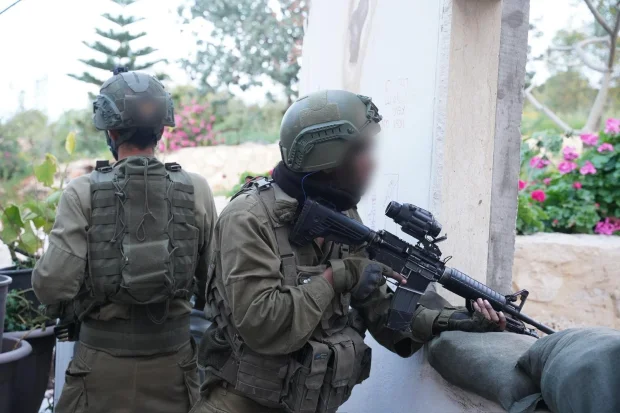
4 IDF soldiers killed, 2 wounded in fighting in southern Lebanon, as Israel eliminates dozens of Hezbollah terrorists

Receive latest news & updates
A message from All Israel News
Help us educate Christians on a daily basis about what is happening in Israel & the Middle East and why it matters.
For as little as $10, you can support ALL ISRAEL NEWS, a non-profit media organization that is supported by readers like you.
Latest articles:

Israeli Arab charged with spying for Iran, citing ideological motives
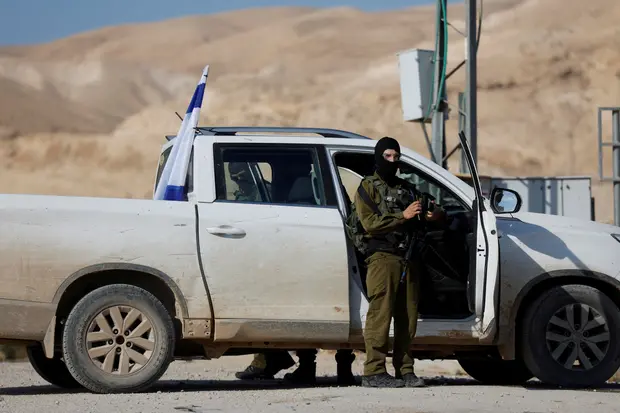
3 Israelis injured, 1 Palestinian woman killed in violent incident outside new Jericho settlement
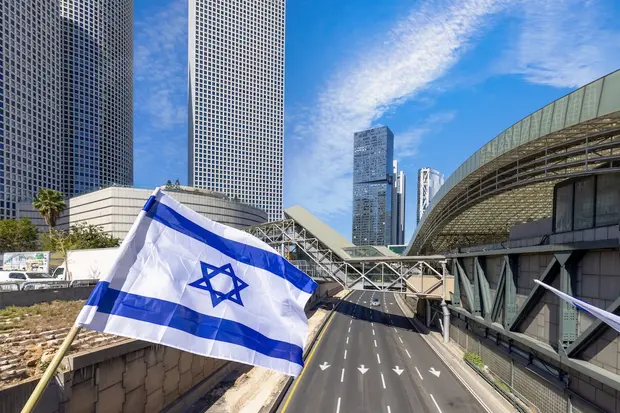
Israel rises to world's 25th-largest economy despite war, boycott calls
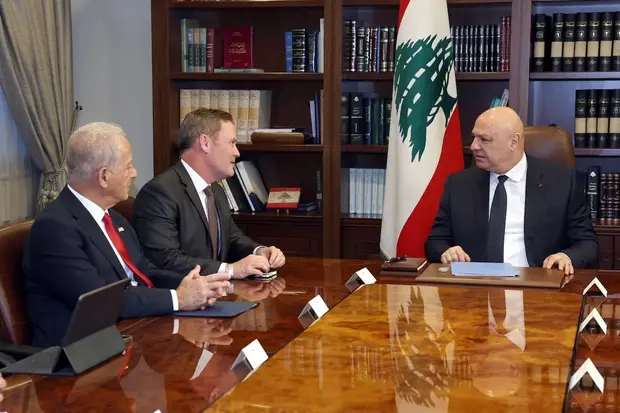
US envoy Waltz visits Lebanon amid discussions over new peacekeeping force, stalled Hezbollah disarmament
Despite years of war, Israeli children and teens report high levels of life satisfaction, international surveys find