Saudi Arabia, Qatar & Oman said to lobby US against Iran strikes, citing fears of oil market instability
UAE doesn't join lobbying effort despite being impacted by US tariffs



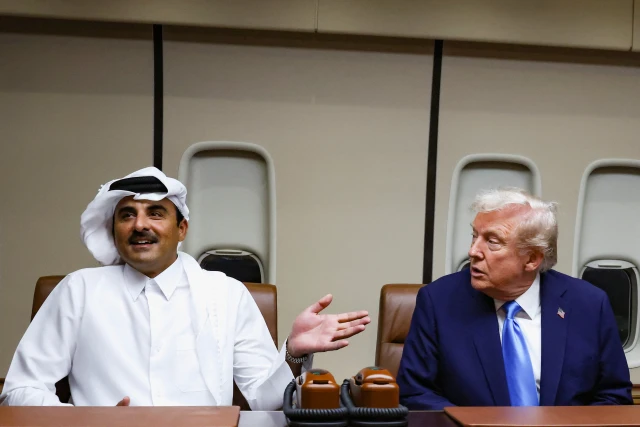
America’s allies in the Arabian Gulf, including Saudi Arabia, Qatar and Oman, are pushing the United States not to launch military strikes against the Iranian regime, amid increasing indications that U.S. President Donald Trump is leaning toward ordering strikes.
However, the United Arab Emirates has reportedly not joined its Gulf neighbors in the effort to dissuade a U.S. attack, for various reasons.
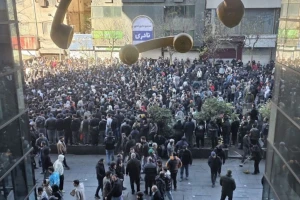
According to the Wall Street Journal (WSJ), Arab Gulf officials said that, while Saudi Arabia, Oman and Qatar have kept quiet on the massive protests against the regime, they have been lobbying the White House behind the scenes not to attack Iran.
They are reportedly concerned that the collapse of the regime could have negative consequences for the oil markets, arguing that this would ultimately hurt the U.S. as well.
While Iran has threatened to retaliate against U.S. bases in the region – and attack Israel in response to U.S. strikes – the Arab states are concerned that Iran could strike oil tankers in the Strait of Hormuz, through which around one-fifth of the world’s oil shipments pass.
The WSJ reported that Saudi officials contacted Tehran to assure it that the kingdom doesn’t intend to get involved in a potential conflict nor allow the U.S. to use its territory to launch strikes against Iran.
After years of highly confrontational relations, Riyadh and Tehran restored diplomatic relations in a summit hosted by China in March 2023. The following year, both countries held joint military exercises.
Unlike Saudi Arabia, Qatar never cut ties with Iran and has long enjoyed close relations with the regime. Qatar’s Foreign Ministry spokesman, Majed Al Ansari, said on Tuesday that his country had been in talks to mediate between the U.S. and Iran.
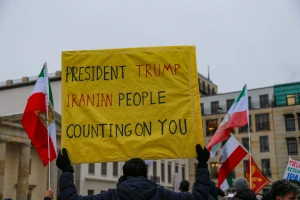
After the U.S. and Iran were in indirect contact earlier this week, all communication reportedly ended after Trump said on Tuesday that he “cancelled all meetings with Iranian Officials until the senseless killing of protesters STOPS. HELP IS ON ITS WAY”.
Reuters reported on Wednesday that U.S. personnel in the al-Udeid Base in Qatar were told to evacuate the base by the evening, possibly indicating preparations for impending U.S. strikes and the Iranian response.
The United Arab Emirates has different strategic considerations than its Gulf neighbors, despite being impacted by Trump’s recent imposition of a 25% tariff on the nations trading with Iran. The UAE is among the country’s largest trade partners.
On Tuesday, UAE Minister of Foreign Trade Thani Al Zeyoudi stated, “The details of the announcement are not clear.”
“We are trying to explore how this is going to be implemented. We are the second-largest trading partner with Iran, and it is one of the main providers and suppliers of many of our commodities, especially food products,” he said at the Abu Dhabi Sustainability Week, according to the Emirati The National News.
“We have to see, is this going to affect the supply of the food products, or some of the products that come from Iran? Is this going to affect the prices on the consumer and how much they're paying to have the alternative?”
“I am sure the businesses are going to have to do their own analysis as well, and they're going to follow whatever is less risky... but we as a government will make sure that we understand the details well.”
Despite trading with Iran, the UAE has taken strong positions against Islamist groups and Iranian proxies across the Middle East in recent years, including the Houthis in Yemen, the former Assad regime in Syria, and Hamas in Gaza, while working closely with Israel.
You might also like to read this: