










Plea for help: Syrian Christians face kidnappings, torture, extortion
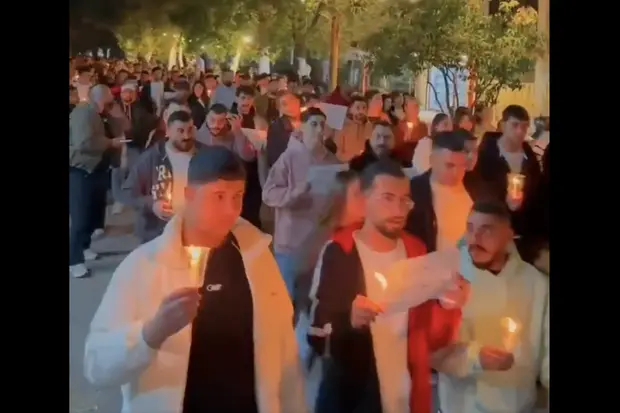
Three patriarchs and church heads issued a joint statement last week expressing concern over reports of attacks and kidnappings targeting Christians in Syria and calling for the protection of religious communities.
The statement referred to reports of assaults and kidnappings of Syrian Christians, accompanied by videos of torture, with assailants demanding large sums of money for their victims' release.
The church leaders said the attacks were not isolated incidents and expressed “grave concern and profound indignation” over developments in Syria.
The three church leaders – His Beatitude Patriarch John X, His Holiness Patriarch Mor Ignatius Aphrem II, and His Beatitude Patriarch Youssef I Absi – also said that a recent attack on Archbishop Youhanna Abdo Arbash marked an escalation in the assaults.
“He was bound, blindfolded, and gagged, while his office was ransacked,” they reported. “The recurrence of these incidents, without any response or tangible results on the part of the authorities, confronts us, and public opinion alike, with a grave question regarding the future of Christians in this country.”
“What has happened, and continues to happen, in many places, including most recently in Al-Suqaylabiyah, in the form of systematic assaults and kidnappings carried out for exorbitant ransom payments, constitutes a violation of the most basic human rights, as evidenced by the video showing the brutal torture of the jeweler Maher Sankari,” they said.
The church leaders prayed for God's protection over Syria and for civil peace, while emphasizing that Christians should be treated as equals and not as “easy targets for attack or as scapegoats.”
Syria, once a Christian majority country, was conquered by Arab Muslim forces in the 7th century, along with much of the Middle East. Since the fall of the Assad regime two years ago, the country has been governed by Hay’at Tahrir al-Sham (HTS), an Islamist group formerly affiliated with Al-Qaeda, led by Ahmed al-Sharaa, who captured Damascus and overthrew the Assad government.
Despite many minorities living in Syria, a constitutional declaration made last year named Islam as the main source of legislation and required the head of state to be a Muslim. According to Uzay Bulut of Gatestone Institute, new school textbooks in Syria now promote an Islamist curriculum and are encouraging the next generation towards jihad.
She viewed the attacks on Christians as part of broader regional developments with implications for Israel, Turkey and Saudi Arabia. “For Turkey, al-Sharaa is helpfully clearing a pathway due south to attack Israel. For Saudi Arabia, al-Sharaa is a tributary gift to the supremacy of Islam,” she said.
Bulut criticized the international community's willingness to engage with al-Sharaa, saying, “It is time for leadership in Syria that brings real openness, not terror. The ‘chances’ are up.”
Kamal Sido, a consultant with the Society for Threatened Peoples (STP), told ALL ISRAEL NEWS that minorities were not safe under Al-Sharaa's new government. As a Syrian Kurd, he has raised concerns that minority groups – including the Druze, Alawites, Kurds, Assyrians, Armenians, Christians, Yazidis and women – were all under threat.
“Step by step, they have support and they are very driven, they want to make Syria an Islamic state, but maybe in 10 to 20 years,” Sido predicted, saying they were planning to "Islamicize" the whole country.
Thibault van den Bossche, an advocacy officer for Religious Freedom at the European Centre for Law and Justice (ECLJ) warned the United Nations earlier this year that Islamist preaching was being imposed in Christian neighborhoods, school curricula were undergoing gradual Islamization and Christians were being portrayed as “fouloul – supporters of the former regime.”
He also reported a growing influence of strict Salafist Islamic beliefs and practices in Syrian society, which seek to model religious and social life on the practices of the earliest generations of Muslims.
“Beyond discrimination itself, the very survival of Christianity in Syria is now at stake. Christian schools are becoming increasingly vulnerable, families in exile continue to lose their property, and terrorist attacks, violence, kidnappings, and widespread impunity have fostered a profound sense of abandonment," van den Bossche said.
"Emigration continues unabated, weakening both the churches themselves, and Syria’s historic religious pluralism. Protecting freedom of worship alone is therefore no longer sufficient. Political, legal, security, and economic conditions must be established that allow Christians to remain permanently in their homeland.”
Dr. Petra Heldt, executive secretary of the Ecumenical Theological Research Fraternity in Israel and expert in Eastern Christianity, told ALL ISRAEL NEWS that the Christian community in Syria had dwindled from over one million in 2011 to fewer than 300,000 today.
Heldt said the international community should listen to the appeals of Christians in Syria and take “concrete steps” to protect the ancient Christian presence in the region. She called on foreign ministries and international envoys to “demand transparent investigations, the prosecution of perpetrators, and an end to impunity.”
While several Western governments moved to lift sanctions on Syria and offer the new regime what U.S. President Donald Trump called a “chance for greatness,” Heldt argued that international support for HTS should be conditional on its treatment of religious minorities.
She said diplomatic normalization and reconstruction partnerships should depend on respect for religious freedom and equal rights. She also urged governments and UN human rights bodies to "actively monitor and document sectarian violence, kidnappings for ransom, and hate speech against religious minorities in Syria" so perpetrators face sanctions.
Heldt also believes international aid to be given directly to Christian organization. “Donor governments should channel humanitarian, medical, educational and economic recovery aid directly through local churches and trusted Christian faith-based organizations on the ground." She says this will allow communities to "rebuild livelihoods and remain in their historic homeland.”
George Deek, Israel’s special envoy to the Christian world, also responded to the Syrian Christian leaders statement, condemning the new Syrian Al-Shaara regime, which has been designated as a terror group by the UN due to its ties to al-Qaeda and ISIS.
Deek said the warning from the church leaders is a “recurring pattern that should alarm everyone."
Like Heldt, he called for monitoring and accountability with real consequences: "Any engagement with Damascus must be conditioned on concrete protection for minorities, accountability for perpetrators and genuine religious freedom. The future of Syria’s ancient Christian communities cannot depend on the goodwill of former jihadists."
Popular article:
interview Easter message of resurrection hope amid war at Jerusalem's Garden Tomb

biblical commentary Let my people go: a Passover message for today
4 IDF soldiers killed, 2 wounded in fighting in southern Lebanon, as Israel eliminates dozens of Hezbollah terrorists

Receive latest news & updates
A message from All Israel News
Help us educate Christians on a daily basis about what is happening in Israel & the Middle East and why it matters.
For as little as $10, you can support ALL ISRAEL NEWS, a non-profit media organization that is supported by readers like you.
Latest articles:
NEWS ANALYSIS Are Netanyahu's days numbered? Eisenkot might form government without Bibi by next week – here's what Evangelicals need to know
13-year-old Syrian Druze girl regains ability to walk after life-changing surgery in Israel
New government within a week? Change Bloc nears swearing-in of coalition with ultra-Orthodox, supported by Arab Ra’am

Kushner says Israel headed to 'global-pariah status' over failure to fulfill Gaza Peace Plan
IDF statistics show 97% of Jewish draft dodgers in 2026 were ultra-Orthodox