











'No imminent threat': Netanyahu and Eisenkot clash over necessity for new strikes against Iranian regime
Netanyahu argues the seriousness of Iranian threat requires a unity government
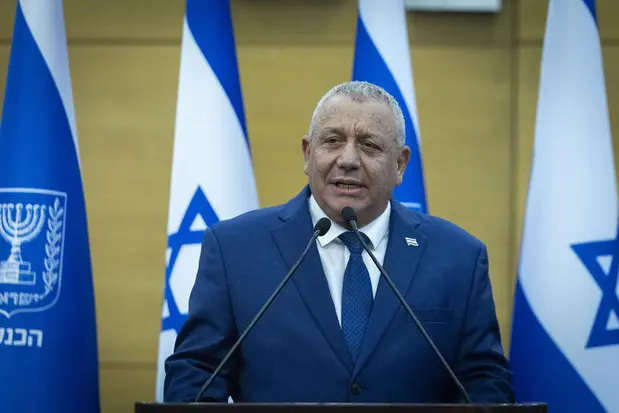
Caretaker Prime Minister Benjamin Netanyahu and Yashar chairman Gadi Eisenkot publicly sparred on Monday about the severity of the threat posed by the Iranian regime and whether Israel should launch new strikes against it in the coming weeks.
According to multiple reports in recent weeks, Netanyahu is pushing to strike as soon as possible and is trying to convince U.S. President Donald Trump to support Israel.
Speaking at the Likud party’s weekly faction meeting on Monday, Netanyahu argued the seriousness of the threat requires a unity government with the Yashar party led by Eisenkot, who has two weeks left to form a new government.
“Our ability to ensure the existence of the state against the great threats surrounding us depends on our unity,” Netanyahu argued.
“Whoever derides, whoever minimizes these threats – those surrounding us that are immediate, tough and severe – is doing so for political reasons,” he said.
Netanyahu is reportedly concerned that delaying strikes could give the regime enough time to move its key assets beyond the reach of conventional munitions carried by Israeli and U.S. fighter jets.
The prime minister's comments came in response to remarks by Eisenkot at the Yashar faction meeting: “Regarding Iran, I do not see today as an immediate and imminent threat to the State of Israel that requires action before a government is formed.”
“The gravest threat from Iran is the 440 kilograms of enriched uranium that have still not been destroyed or removed,” he added. “We need to focus on that.”
He also referred to the ongoing negotiations over a potential unity government, vowing Yashar will work toward “genuine unity, not a political arrangement.”
Leaders of Eisenkot’s Change Bloc have accused Netanyahu of stoking tensions and trying to provoke a new war in order to derail coalition talks or prevent the formation of an Eisenkot-led government.
The latest public disagreement comes against the background of reports that Israel’s security establishment is also divided on the issue.
Somewhat surprisingly, former Mossad director David Barnea expressed support for the position of Netanyahu, with whom he had often clashed during his term, in a speech at the ELNET Jerusalem conference on Monday.
Israel should launch new strikes “as soon as all conditions allow,” he said. “A diplomatic agreement with the Ayatollah regime will never succeed.”
“We must act quickly and decisively to bring about the downfall of this regime,” Barnea said. “If this means going to another war, that is what we must do.”
Current Mossad chief Roman Gofman, who was Netanyahu’s military secretary before being appointed to the position, reportedly also supports the prime minister’s assessment but is facing opposition within the agency.
Haaretz reported that researchers within the agency estimate there is no urgent need for an immediate strike. In response, the Mossad told the newspaper that its internal discussions allow for competing professional assessments to be presented.
The IDF’s top brass reportedly also opposes Netanyahu’s position. IDF Chief of Staff Lt.-Gen. Eyal Zamir reiterated this position during a Monday meeting with the head of the IDF Military Intelligence Directorate’s Research Division, Channel 13 reported.
Netanyahu received a warning from IDF Military Intelligence officials who assessed that an Israeli attack on Iran could also trigger fighting involving Lebanon, Syria and Gaza, Channel 12 reported Sunday.
Popular article:

interview Easter message of resurrection hope amid war at Jerusalem's Garden Tomb

biblical commentary Let my people go: a Passover message for today

4 IDF soldiers killed, 2 wounded in fighting in southern Lebanon, as Israel eliminates dozens of Hezbollah terrorists

Receive latest news & updates
A message from All Israel News
Help us educate Christians on a daily basis about what is happening in Israel & the Middle East and why it matters.
For as little as $10, you can support ALL ISRAEL NEWS, a non-profit media organization that is supported by readers like you.
Latest articles:

Netanyahu, Israel’s Pres Herzog celebrate return of NVIDIA CEO Jensen Huang
Mossad helped prevent attacks on Taylor Swift concert in Austria, former intel chief says
‘Guatemala should be the Israel of Latin America,’ presidential hopeful says, praising Jewish state’s success

Stones from Munich synagogue destroyed by Nazis to go on public display

‘An assault on God himself’ - Israeli officials blast wave of Jewish violence in Judea and Samaria