Oct 7 attacks blindsided US, hostages became a central focus, former Biden aide McGurk reveals
McGurk says Hamas undermined hostage deals, demands softened after Sinwar’s death


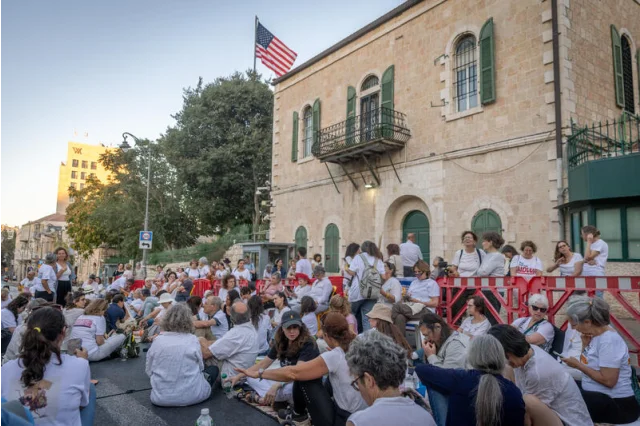
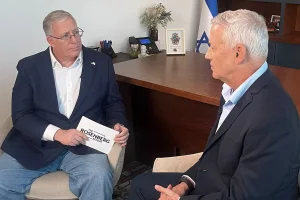
Former White House coordinator for the Middle East Brett McGurk has released a new book detailing his experiences working to try to free the hostages following the Oct. 7, 2023 Hamas terror attacks.
In interviews with several outlets over the past couple of days, McGurk has shared experiences he recounts in the book, Brink: Inside the Race to Free the October 7th Hostages, which details the Biden administration’s efforts to free the hostages from Gaza and bring the war to an end.
McGurk describes how the Biden administration, which was in the middle of trying to negotiate a security deal with Saudi Arabia that would include normalization with Israel, was blindsided by the Hamas attacks.
He had just put his daughter to bed on Friday, Oct. 6, 2023, when he began receiving messages from the White House Situation Room: Israel was under attack.
“On October 6th, I had the Saudis in my office. shook hands with Princess Rima about a kind of time frame for trying to roll out the Saudi-Israel deal. Tony Blinken was on his way to the Middle East,” McGurk told Israeli journalist Haviv Rettig Gur. “And I put my daughter to bed and I was staying up a little late to catch up on things on a Friday night.”
First came reports of rocket fire from Gaza, which McGurk described as “terrible, but unfortunately not terribly unusual.” However, McGurk later got a message from then Israeli Ambassador Mike Herzog, telling him, “This is war.”
McGurk also shared the common concern of the Israeli government and Washington of an escalation involving Hezbollah and possibly even Iran. He said the promise of President Biden to send an aircraft carrier to the Mediterranean was meant to forestall this possibility.
One of the interesting stories McGurk relates in the book, and in several of his interviews, is how Washington, understanding that Israel intended to wage a ground war in Gaza, attempted to remove the civilian population first.
“What is the answer to the two million people in Gaza?” McGurk asked.
“I had some experience with this in the ISIS campaign in the Battle of Mosul, which was absolutely horrific,” he explained to Gur. “But we were able to get a million people out of the city before the battle and working with the UN and others.”
He explained that as Biden and several aides were organizing the initial trip to Israel following Oct. 7, they were in talks with Egypt and Jordan to secure an evacuation plan for Gaza’s 2 million civilians, allowing Israel the freedom to prosecute the war against Hamas with maximum operational freedom.
McGurk said that on the Biden trip to Israel, the plan was to go to Amman first, to meet Egyptian President Abdel Fattah el-Sisi and Jordan’s King Abdullah II. He said the question was, “Is there a formula that can allow Gazans to flee the battle space, as has happened in almost every other war in recent decades?”
However, on the flight to the Middle East, tragedy struck.
“That meeting was canceled because of the al-Ahli hospital attack, which the whole world thought was Israel,” McGurk related.
He also admitted that the public U.S. pressure on Israel regarding Rafah, where Hamas leader Yahya Sinwar was eventually killed, was detrimental to attempts to secure another hostage deal.
He said the public debate between Israel and the U.S. over Rafah hardened Sinwar’s negotiating, pushing a hostage deal further away. McGurk relates that former Shin Bet director Ronen Bar later told him that it was one of the Biden administration's “biggest mistakes.”
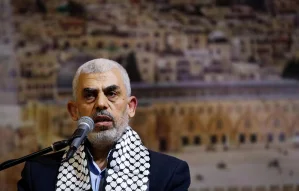
McGurk insisted that the main barrier to hostage agreements was Yahya Sinwar, not the Israeli government. He described a meeting of Biden administration officials in which he stated, “We will not have a hostage deal so long as Yahya Sinwar is alive and is making the calls, period.”
According to him, Sinwar continued to demand a permanent ceasefire with Hamas remaining in power, which McGurk called a return to the “October 6 status quo,” something Israelis were unwilling to accept.
“The negotiating dynamic did not change until the whole power equation in the region changed,” McGurk said. “Yahya Sinwar was killed in October [2024].”
Sinwar’s death, shortly after the killing of Hezbollah leader Hassan Nasrallah, and Israel’s successful repelling of the second Iranian ballistic missile attack in October 2024, with U.S. assistance, significantly weakened Iran’s position, McGurk explained. That weakening, along with President Donald Trump’s election victory, led to a softening in Hamas’ negotiating position.
Those negotiations led to the release of the female hostages, which Hamas had previously refused to release in the November 2023 hostage release-ceasefire deal. The female hostages, including many of the female observation scouts, were released in January 2025.
You might also like to read this: