More Israelis now live in Gaza border communities than before Oct 7 Hamas attack - report




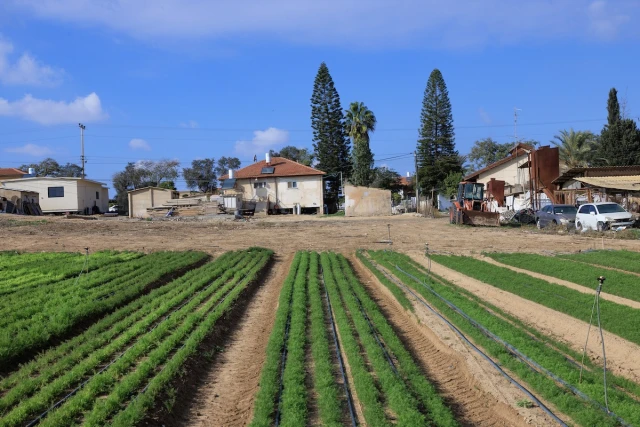
There are more Israeli citizens living in the Gaza border communities than before the Hamas Oct. 7 massacre in 2023, according to new data released by Israel's Central Bureau of Statistics (CBS).
Over 65,000 Israelis now live in the Gaza border region (Gaza Envelope), compared to 62,000 before the devastating Hamas attack, representing a nearly 5% population growth over the last two years. This data is viewed as an important milestone in the Israeli government's efforts to rehabilitate the war-torn region
Israeli Housing and Construction Minister Ze'ev Elkin announced that the government is committed to rehabilitating the Western Negev region, where much of the Jewish state’s agriculture is concentrated.
“We will continue to advance toward achieving our central goal, doubling the population of the Rebirth region to 120,000 residents,” Elkin stated.
Aviad Friedman, head of the TKUMA ("Rebirth") Directorate, welcomed the latest data while stressing that the recovery efforts of the region would continue throughout next year.
“In 2026, we will continue addressing the challenges of rehabilitation and growth, implementing the strategic plan we have formulated to move the region,” Friedman said.
Residents in five of the most devastated communities – Nir Oz, Kibbutz Be’eri, Kfar Aza, Kissufim, and Holit – are still living in designated community housing frameworks, according to the directorate.
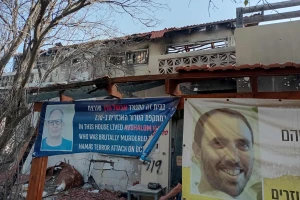
The unprecedented Hamas attack on Oct. 7 caused widespread destruction in the border region when Hamas and other Palestinian terrorists in Gaza murdered 529 Israeli residents in the border region, according to official Israeli figures; 112 residents were kidnapped and taken into Gaza, and 288 local Israeli children were left orphaned after their parents were murdered by Hamas terrorists. As a result of the attack, at least 525 buildings were destroyed.
Despite the widespread destruction, the area has undergone a dramatic demographic shift in the past two years.
Approximately 1,000 young people moved to the region at the beginning of the academic year on Sept. 1. Furthermore, there are currently 2,000 more students living in the Gaza Envelope than before Oct. 7.
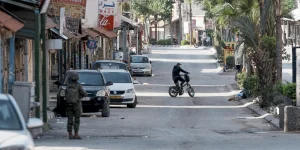
Most of the roughly 3,000 new residents have settled in Sderot, Israel's largest city in the border region, where some 1,000 new housing units have reportedly been built in the Bustanim neighborhood. New data show that 42 of the region’s 47 communities have returned to regular life. In addition, around 90% of the original residents have returned after being displaced for much of the war against Hamas
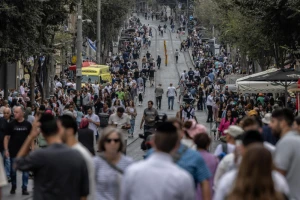
The rapid population growth in the border region contrasts with the overall demographic trends in the Jewish state. Israel’s annual population growth fell below 1% in 2025, for the first time since the founding of the Jewish state in 1948, according to a new report released by the Taub Center on Wednesday.
In June 2024, Bank of Israel Governor Amir Yaron estimated that the Gaza War would cost at least $67 billion in military and civilian expenses during the period between 2023 and 2025. A significant share of civilian spending has been allocated to rebuilding and rehabilitating Israel’s hard-hit Gaza border region, as well as northern areas affected by rocket and drone attacks by Hezbollah from Lebanon.
You might also like to read this: