Justice Minister Levin considers reviving law to change Judicial Selection Committee
Levin has called for the renewal of the judicial reforms despite previous controversy
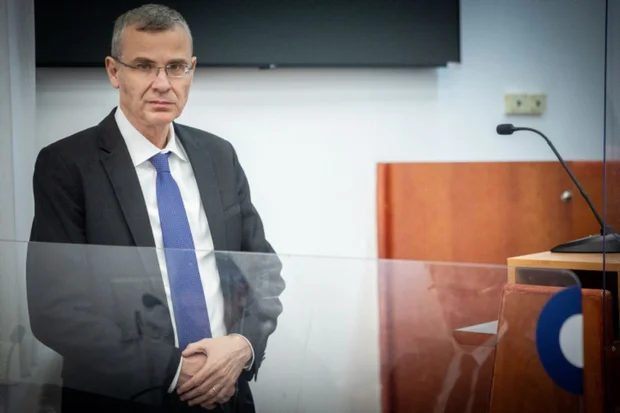
After the recent Supreme Court order requiring Justice Minister Yariv Levin to convene the Judicial Selection Committee to elect a president to the Supreme Court, it is believed that if Levin does convene the committee to select a president, he does not intend to cooperate with the president who will be elected.
“I cannot work with a president who is illegally appointed by his colleagues and who is illegitimate in the eyes of a majority of the public,” Levin said after the court ruling was delivered to him.
A report in Israel Hayom claimed that, for Levin, “any cooperation he has with the president of the Supreme Court will be done only by court order.”
If true, the implications of this failure to cooperate are fairly significant. There are a series of appointments to be made that require the cooperation of the Supreme Court president and the justice minister. If Levin refuses to cooperate, these appointments will remain unfilled.
However, a report in the Times of Israel indicated that Levin is considering a potential legislative solution to the problem of appointing the next president to the court.
Levin aims to appoint a more conservative justice to the presidency but has been blocked by the principle of seniority, which dictates that the most senior justice is selected for the role. Currently, this would result in the appointment of Justice Yitzhak (Isaac) Amit, a liberal-leaning judge.
In addition, the existing system for selecting a new president requires only a simple majority of committee members (5 out of 9), which means the liberal majority committee usually appoints liberal-leaning justices.
To change this, Levin is reportedly considering pushing legislation to change the required majority from 5 to 7, which would give the three coalition representatives the ability to block an appointment they don't agree with.
Another option that Levin is considering, according to the Times of Israel report, is reintroducing a bill to change the makeup of the Judicial Selection Committee which the coalition first brought in March 2023. That bill led to the judicial reform protests, which caused disagreements, even within the coalition. It was eventually withdrawn as the coalition sought to first pass other legislation, including the Reasonableness Standard Law that limits the High Court’s ability to declare a law or government action as “unreasonable.”
Levin has refused to convene the Judicial Selection Committee for more than one year, since the height of the judicial reform controversy last summer. However, following the mandatory retirement of former Supreme Court President Esther Hayut last October, Levin’s refusal has left the court without a permanent president, meaning that new High Court justices can also not be appointed.
Acting Court President Uzi Vogelman, who will retire in October, said Levin is harming “the proper functioning of the judicial system, civil service and the separation of powers.”
Levin also called for the renewal of judicial reform legislation as recently as last month.
Popular article:

interview Easter message of resurrection hope amid war at Jerusalem's Garden Tomb

biblical commentary Let my people go: a Passover message for today

4 IDF soldiers killed, 2 wounded in fighting in southern Lebanon, as Israel eliminates dozens of Hezbollah terrorists

Receive latest news & updates
A message from All Israel News
Help us educate Christians on a daily basis about what is happening in Israel & the Middle East and why it matters.
For as little as $10, you can support ALL ISRAEL NEWS, a non-profit media organization that is supported by readers like you.
Latest articles:

1969 Dutch Eurovision winner Lenny Kuhr moves to Israel – cites antisemitism, family ties

Israel bars French far-left leader Mélenchon in response to France's entry ban on settlement leader
Change Bloc divided over coalition with Arab or ultra-Orthodox parties after week of negotiations

Huckabee fires back as Senate Democrats target US-Israel intelligence ties: 'Shocking!'
Israeli blood test detects early breast cancer with 95% accuracy, assesses recurrence risk