










Israel’s alleged nuclear program returns to focus with Democrats poised to challenge US policy of silence
Democrat Rep. Castro vows to expose nuclear program, warns of ‘irresponsible’ Israeli gov’t
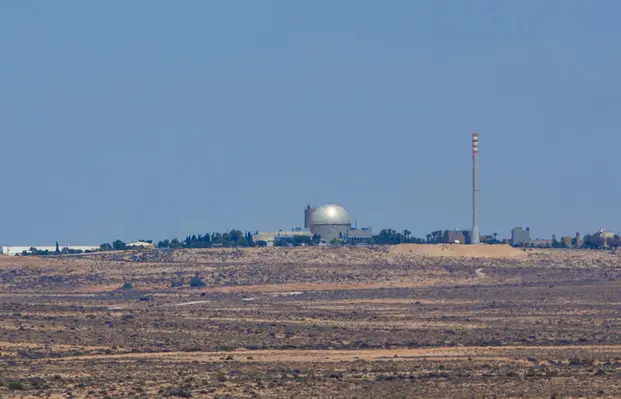
Israel’s policy of nuclear ambiguity appears likely to come under increasing challenge from the U.S., with Democrats set to assume control of both chambers of Congress in January, and a new article by nuclear experts shining a light on new construction at the alleged nuclear reactor near the southern town of Dimona.
The Jewish State has kept up a policy of neither denying nor affirming the existence of a nuclear program for almost 70 years since the alleged start of the reactor’s construction.
The new report from the Nuclear Information Project at the Federation of American Scientists (FAS) includes updated estimates of Israel's nuclear arsenal, and claims that satellite images show a new circular structure with a diameter similar to that of the existing reactor.
The old reactor is approaching the end of its intended operational lifespan, the FAS said. This could explain why, according to images spanning from 2021 to today, the reactor complex is seeing its largest construction effort in decades.
The new circular structure could support efforts to prolong the reactor’s lifespan or serve an entirely different purpose, such as a storage tank, according to the report.
Regarding Israel’s existing nuclear arsenal, the FAS estimated that it currently has about 90 nuclear warheads, maintaining a previous assessment published in 2021, while dismissing competing estimates of several hundred warheads as exaggerated.
The report also examined the Israeli military’s abilities to deliver nuclear warheads, pointing to the Air Force’s F-16 and F-15 squadrons as the most likely airborne delivery systems.
In addition, the researchers assessed that Israel can deliver nuclear warheads with its estimated up to 50 Jericho ground-to-ground ballistic missiles, including upgraded versions with a range of up to 4,000 kilometers (2,485 miles), and its Dolphin-class submarines.
The FAS report is based mainly on the scant information available through estimates, leaks, and satellite imagery. However, Democratic Rep. Joaquin Castro has been working to expose Israel’s nuclear program, and with his party about to control both houses of Congress, he is poised to intensify his efforts.
Get the original map, plus expert analysis from our Nuclear Information Project team on our website ⤵️ https://t.co/vLZzsN8olQ https://t.co/3I7EQjZ5gg
— Federation of American Scientists🔬 (@scientistsorg) June 18, 2025
Castro sits on the House's foreign affairs and intelligence committees. In May, he spearheaded an open letter to Secretary of State Marco Rubio calling for an end to Washington's silence about Israel's nuclear capabilities, which was signed by 30 Democratic members of Congress.
At the time, the State Department responded: “Regarding your questions about Israel's capabilities, we refer you to the Israeli government.” Rubio said at a House Foreign Affairs Committee hearing on June 3: “If we're being honest, I think most of the world believes they [have a nuclear program]. But they've never publicly acknowledged it, and as part of our foreign policy, we don't discuss it in those terms either.”
Speaking to the left-wing newspaper Haaretz this week, Castro said he was “disappointed and concerned about the lack of transparency” and vowed to continue his efforts “to get a clear answer from the government of the United States.”
“The administration has no concerns briefing us on the nuclear capabilities or ambitions of other countries, including North Korea, China, India, Pakistan, Russia, or Iran. It's concerning that they are refusing to provide even basic information on Israel,” Castro said.
Asked about his reasons for raising the issue at this time, Castro noted that the U.S. has been fighting Iran alongside Israel “without even acknowledging what capabilities Israel has or under what circumstances they would use those capabilities.”
In addition, he said a series of issues “raise serious concerns about whether Israel would be responsible when it comes to the use of nuclear weapons,” listing “Israel's actions in Gaza, threats from Israeli members of the Knesset to use nuclear weapons on Palestinians, Israel's continuing occupation of parts of Lebanon and Syria, and the increasingly extremist leadership in the Israeli government –including Ben-Gvir and Smotrich.”
He concluded, “The United States faces serious decisions in how we approach the Middle East, including our relationship with Israel. We cannot have that debate if we aren't being honest about what Israel's capabilities are.”
Popular article:

interview Easter message of resurrection hope amid war at Jerusalem's Garden Tomb

biblical commentary Let my people go: a Passover message for today

4 IDF soldiers killed, 2 wounded in fighting in southern Lebanon, as Israel eliminates dozens of Hezbollah terrorists

Receive latest news & updates
A message from All Israel News
Help us educate Christians on a daily basis about what is happening in Israel & the Middle East and why it matters.
For as little as $10, you can support ALL ISRAEL NEWS, a non-profit media organization that is supported by readers like you.
Latest articles:

explainer 'Between war and peace:' Lebanon's agreement with Israel in limbo as Hezbollah disarmament stalls

Israeli Defense Minister warns of chemical weapons threat, extended range of Iranian missiles

IDF returns to intensive training as fighting continues on multiple fronts

Netanyahu’s allies call to end corruption trial, opposition in stunned silence after court recommends dropping most charges
Israeli Presidential Medal of Honor to be awarded to Evangelical Christian for 1st time