Israeli tech firms develop non-explosive system to intercept hostile drones



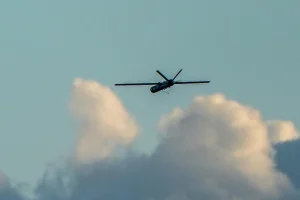
Two Israeli technology companies have partnered to develop a system designed to intercept hostile drones near sensitive locations without relying on explosive countermeasures that could create additional risks on the ground.
Tel Aviv-based Axon Vision and Kfar Saba-based ParaZero Technologies announced this week that they have combined their technologies to address incidents involving drones entering restricted airspace, particularly in environments where shooting them down with conventional weapons could endanger infrastructure, equipment, or civilians.
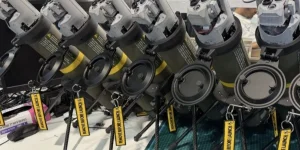
The joint solution integrates Axon Vision’s ForceField system with ParaZero’s DefendAir technology. ForceField uses an Edge AI-powered platform to detect, track, and identify incoming unmanned aerial vehicles (UAVs), then transfers targeting data to DefendAir, which fires a weighted net into the air on a trajectory that intercepts and envelops the drone, entangling the drone’s propellers, and bringing it down without an explosion that could scatter shrapnel or debris.
ForceField was initially developed as a mobile system intended to accompany military forces, including armored units and infantry, by detecting incoming drones and directing defensive responses. However, Axon Vision later adapted the technology for fixed locations such as airports, industrial facilities, energy infrastructure, and other sensitive sites.
In such environments, the companies said that using kinetic methods – including missiles or firearms – can create additional hazards, as damaged drones may scatter debris or burning components that could harm aircraft, radar systems, computer networks, pipelines, vehicles, or nearby personnel.
ParaZero has spent recent months testing its system against drones with increasing levels of speed, sophistication, and maneuverability. The testing began with commercially available drones, including models similar to those that have caused airport disruptions around the world, before progressing to military-grade UAVs used in current battlefields, including in Ukraine and southern Lebanon.
The company also successfully intercepted a DJI FlyCart, a commercial heavy-lift drone that has been used for cargo transport and has reportedly attracted interest from smugglers operating along the Egypt-Israel-Gaza border.
“ForceField was designed from day one as an open and modular operational architecture, rather than a single product configuration,” explained Neri Zin, CEO of Axon Vision. “Different operational environments require different engagement capabilities. Our collaboration with ParaZero demonstrates how the same ForceField architecture can support complementary interception options while maintaining the same Edge AI core and operational workflow."
ParaZero CEO Ariel Alon said, “The integration of DefendAir with ForceField brings together two highly complementary technologies to address one of today’s fastest-growing security challenges.”
“Together, we are expanding the range of operational environments that can benefit from advanced Counter-UAS capabilities, providing customers with an effective non-destructive interception option for protecting critical infrastructure, airports, energy facilities, homeland security assets and other sensitive sites.”
You might also like to read this: