Israeli startup seeks to become Microsoft of quantum computing
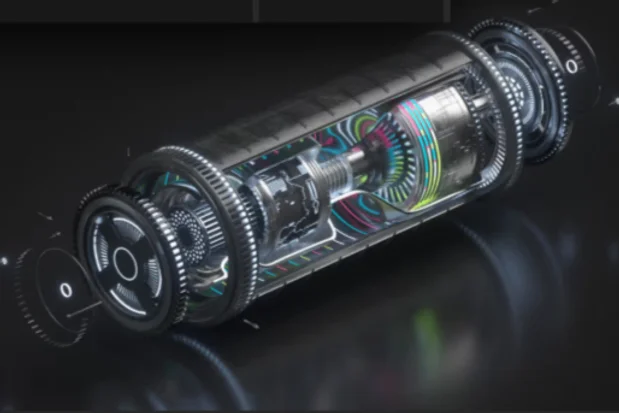
The Israeli software startup, Classiq Technologies, was established in 2020 by CEO Nir Minerbi, CTO Yehuda Naveh, and his son, CPO Amir Naveh. It has successfully developed a software platform designed to facilitate programming for quantum computers. The startup has already secured $110 million from investors and envisions eventually becoming the Microsoft of quantum computing.
“We are building the Microsoft of quantum computing – a software layer that powers the next generation of quantum applications, just as Microsoft did for classical computing,” the CEO Minerbi said in an interview with The Times of Israel. “Microsoft’s Windows made computers easier to use and allowed millions of people to build software without worrying about the machine underneath,” he continued.
Minerbi sees similarities between today’s quantum computing and yesterday’s Microsoft.
“Quantum computing is at a similar point today as personal computing was back then: It’s powerful but hard to use… and we are delivering the essential software stack to empower the development of real-world quantum applications,” he argued.
Despite being only five years old, Classiq Technologies has already established offices in Tel Aviv, Boston and Tokyo. The company’s current 65 employees are expected to double within the next year. Its client portfolio already includes major international brands such as Rolls-Royce, Deloitte, BMW, Toshiba and HSBC. In addition, the Israeli startup has also signed partnerships with the tech giants Google, Nvidia and Microsoft Azure Quantum.
Quantum computing is expected to dramatically accelerate solutions to real-world problems that conventional computers struggle with, particularly in complex fields such as finance, automation, the automotive industry, and pharmaceuticals.
Despite its tiny size, the Jewish state plays a leading role in the development of global technology innovation.
In June 2024, Israel opened its first Quantum Computing Center at Tel Aviv University. Last December, the Jewish state presented its first domestically produced quantum computer, which is designed for both civilian and security applications. The Israeli supercomputer was the result of cooperation between the Hebrew University of Jerusalem, Israel Aerospace Industries, the Israel Innovation Authority and the academic technology transfer company Yissum.
Hebrew University Director Yishai Fraenkel articulated pride in his university’s involvement in the development of the first Israeli supercomputer.
"As the Hebrew University enters its 100th anniversary, this achievement aligns with our founding mission: from establishing Israel’s first scientific research institute in 1925 on the Mount Scopus campus in Jerusalem to the launch of the country’s first quantum computer,” Fraenkel said.
Israel’s supercomputer ambitions have also attracted international attention. In 2023, the American tech giant NVIDIA announced its intention to invest millions of dollars in an Israel-based AI supercomputer, which was dubbed “Israel-1” supercomputer.
Gilad Shainer, NVIDIA’s senior vice president of marketing, stressed the importance of AI-based supercomputers.
"Generative AI is going everywhere nowadays. You need to be able to run training on large datasets," Shainer said.
Popular article:

interview Easter message of resurrection hope amid war at Jerusalem's Garden Tomb

biblical commentary Let my people go: a Passover message for today

4 IDF soldiers killed, 2 wounded in fighting in southern Lebanon, as Israel eliminates dozens of Hezbollah terrorists

Receive latest news & updates
A message from All Israel News
Help us educate Christians on a daily basis about what is happening in Israel & the Middle East and why it matters.
For as little as $10, you can support ALL ISRAEL NEWS, a non-profit media organization that is supported by readers like you.
Latest articles:

North American Jewish organizations to recruit 100 professionals to combat antisemitism

‘No need’ for pre-election Iran strike, IDF chief says as gov’t, opposition trade blame for potential escalation – report

terror attack 2 Israeli soldiers killed, 2 terrorists eliminated in Hebron shooting; IDF says much larger attack was prevented

analysis A people dwelling securely? Israel’s strategic standing, 3 years after Oct 7

Hamas on wheels: What I found in Dearborn reveals a troubling history and a battle over Israel