










Israeli shekel falls 8% against dollar since election amid political uncertainty

The Israeli shekel has suffered steep losses against a basket of 31 globally traded currencies since the Oct. 27 election, losing 8% of its value against the U.S. dollar and wiping out gains made ahead of the vote amid speculation that Prime Minister Benjamin Netanyahu would be replaced by a more market-friendly government.
The shekel performed only slightly better than the Colombian peso and Brazilian real, which have also fallen sharply in recent weeks.
Investor concerns that Israeli leaders may be unable to form a stable governing coalition, combined with broader uncertainty in the global economy, have weighed on the shekel and other financial assets.
Analysts say the prolonged uncertainty over who will lead Israel's next government has weighed on investor confidence.
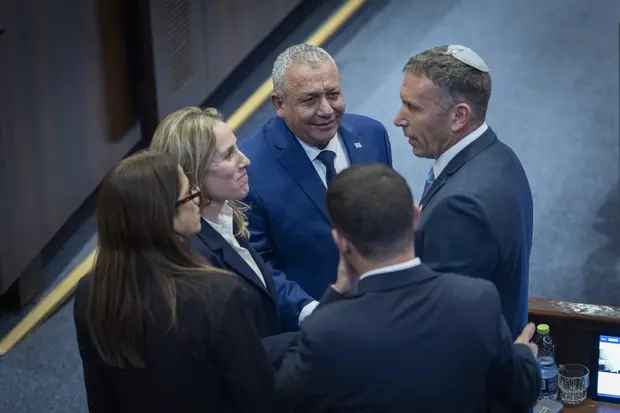
The Israeli election last month did not produce a clear winner and Gadi Eisenkot, who received the mandate to form a governing coalition, have so far not produced results. Eisenkot has until Dec. 6 to complete the task, after which President Isaac Herzog may grant him a 14-day extension. If Eisenkot fails to form a coalition, further attempts by other political leaders, including Netanyahu, may follow, or the process could ultimately lead to another election.
Bank Hapoalim Chief Economist Modi Shafrir warned this week, “Foreign investors know Israel’s political landscape well and view the stability of the next government as just as important as its formation before increasing their exposure to the local market. There is broad agreement that if Eisenkot succeeds in forming a government, the immediate reaction will be a sharp strengthening of the shekel.”
Jonathan Katz, chief economist of Leader Capital Markets, said, “Following the election result, there was disappointment that a stable government is difficult to establish and probably maintain, and therefore we saw markets sold off.” He said that despite extensive negotiations and public discussion, there is still no clear path toward forming a stable coalition.
“When an election fails to produce a clear outcome and the government remains in a caretaker capacity, it is likely that the state budget will not be approved,” said Daphna Aviram-Nitzan, head of the IDI Center for Governance and Economy. budgetary priorities to the changing needs of the economy.” She said, the impact would go beyond limiting government spending, making it harder to shift budget priorities in response to the economy’s changing needs.
“The absence of an approved state budget signals to domestic and foreign investors that uncertainty in Israel persists, which could discourage businesspeople, delay decision-making, and even tip the balance in favor of investing in other countries that offer greater certainty and stability.”
Other factors weighing on the shekel include the strengthening U.S. dollar, volatility in global stock markets and concerns among investors over Israel’s damaged international reputation amid the war in Gaza. Some analysts say fears of boycotts and other pressure from anti-Israel groups have also discouraged investment in Israeli stocks.
Popular article:

interview Easter message of resurrection hope amid war at Jerusalem's Garden Tomb

biblical commentary Let my people go: a Passover message for today

4 IDF soldiers killed, 2 wounded in fighting in southern Lebanon, as Israel eliminates dozens of Hezbollah terrorists

Receive latest news & updates
A message from All Israel News
Help us educate Christians on a daily basis about what is happening in Israel & the Middle East and why it matters.
For as little as $10, you can support ALL ISRAEL NEWS, a non-profit media organization that is supported by readers like you.
Latest articles:

Waiting on Trump: Netanyahu fears delay in Iran strike decision could put key targets beyond reach
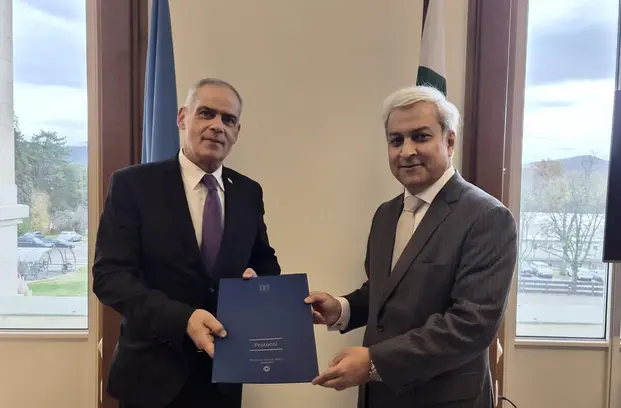
Speculation over significance of handshake between Israeli, Pakistani diplomats

Outrage in Lebanon after IDF officer visits Christian school, Lebanese PM claims Israel tries to ‘whitewash the occupation’

Pro-Israel German politician Karoline Preisler kicked to ground at pro-Palestinian protest in Berlin

Lebanese president condemns Iranian interference, calls for Hezbollah disarmament, withdrawal of Israeli forces