











Israeli scholars find ancient manufacturing site of purple dye near Haifa
In biblical times, purple cloth was a sign of wealth and even royalty, as mentioned multiple times in the scriptures. The discovery of an ancient site producing the dye on an industrial scale has been documented in a paper released last Wednesday.
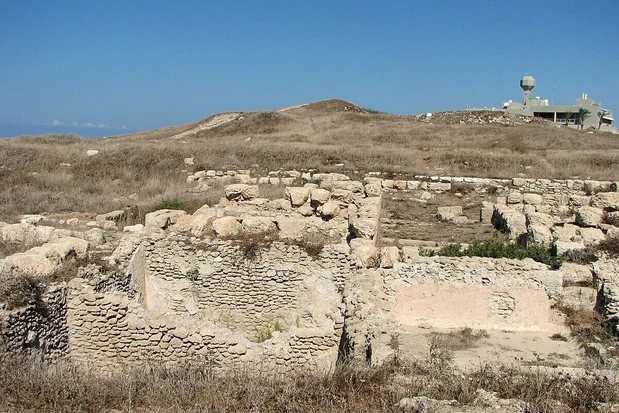
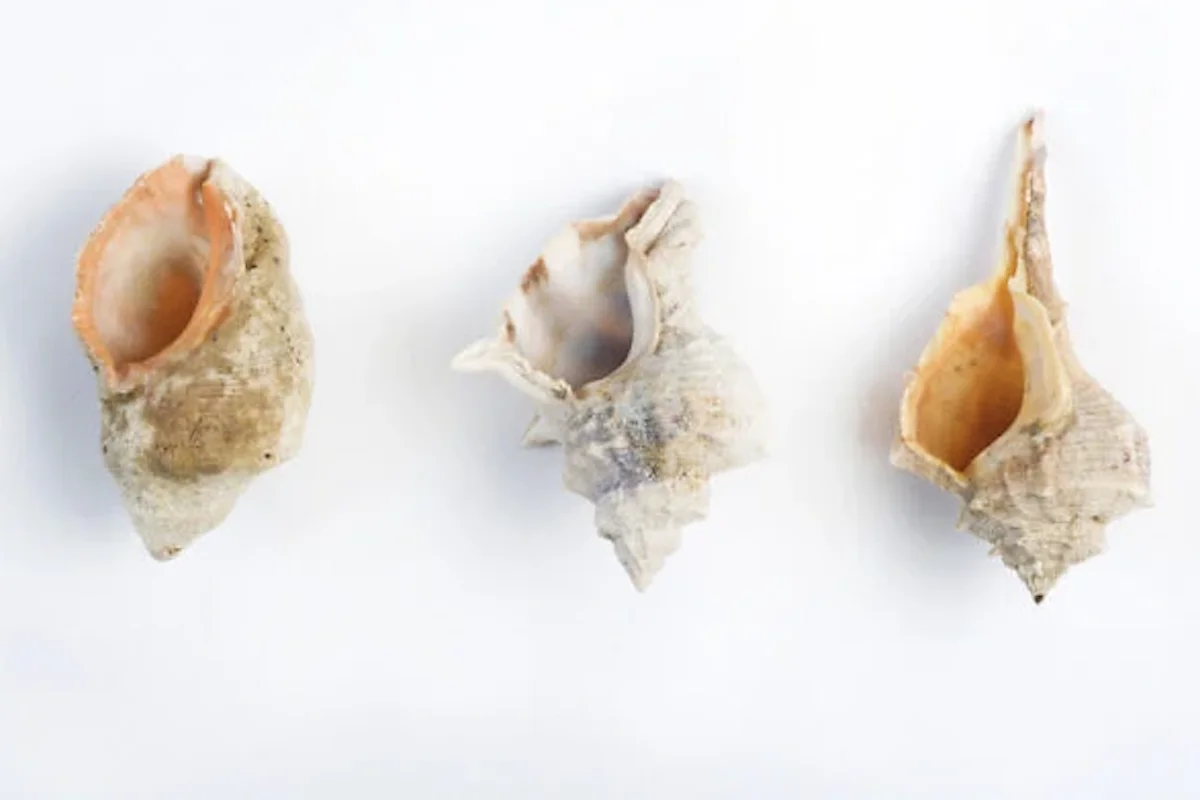
Evidence of the production of “Tyrian Purple” has been found at Tel Shiqmona, according to The Times of Israel. Back in 2021 an ancient piece of cloth colored with the costly dye was found in excavations of Timna, deep in the Negev Desert on the way to Eilat back in 2021, but now we know it was being produced on Israel’s Carmel coast. The blue shells of the murex sea snail can still be found along the Haifa coastline to this day.
Researchers published their findings in the PLOS ONE journal after studying the site of Tel Shiqmona in northern Israel. Scholars have identified the tools used for the extraction and production of purple cloth, finding ancient stone implements and rims of vats still bearing residue of the dye. A total of 176 artifacts were found and recorded, 135 of which were stained with purple.
Lead author of the paper, Dr. Golan Shalvi, told the Times of Israel, “Findings of purple dye from the Iron Age [1200-586 BCE] are extremely rare,” adding, “Tel Shiqmona stands out because it yielded roughly twice as many artifacts directly connected to the industry as all other known sites combined.”
Both scarlet and deep blue were costly in the ancient world because the dye comes from comparatively rare creatures.
Scarlet dye was extracted from a worm found in oak trees, while shades of “techlelet” blue and “argaman” purple or indigo came from the spiny dye-murex, a type of sea snail, the color varying depending on the amount of light the snail had been exposed to. The purple dye could be more valuable than gold in the ancient Near East, even up to fifteen times more expensive at times, according to the Independent.
Evidence has been found that “Tyrian purple”, as it was sometimes known, was being produced as far back as the 15th century B.C. by the inhabitants of Sidon and Tyre, two coastal cities in ancient Phoenicia. The research paper has presented evidence that the dye was also being produced in Israel as early as 1,100 B.C. and up to the 6th century B.C., a period fitting squarely within biblical times – considerably earlier than previously thought.
“In the past, the assumption was that the first large-scale production facilities of purple dye were only established in Roman times, around the 1st century C.E.,” explained Prof. Ayelet Gilboa from the University of Haifa. “Tel Shiqmona offers evidence that already in the 9th century B.C.E., purple dye was produced at an industrial scale. It was not just one individual dyeing a garment for a king,” she added.
By examining the layers of history within the tel, the researchers were able to closely reconstruct the site’s history.
“Early in the Iron Age, Tel Shiqmona was a small Phoenician village already engaged in purple dye production, though not yet on an industrial scale, similar to other Phoenician sites in the region,” Shalvi explained. “But in the 9th century BCE, everything changed: The site ceased functioning as a residential community, transformed into an industrial hub, and was surrounded by a fortified wall, likely built to protect the valuable dye production from outside threats.”
They had also been able to identify the change in demographics over time from their studies of the different strata: “Suddenly, we begin to see a significant presence of inland motifs, and the inland people were the Israelites,” he said.
Shalvi added that the Israelites took control of Tel Shiqmona and perhaps even became the primary exporters of purple dye in the region, trading with Philistia, Moab, Edom and Judah.
“Before our research, we had no evidence of how the dye was produced prior to the Roman period,” said Shalvi.
“It was a mystery.” However now the researchers have been able to reconstruct the process. “The workers would collect the snail glands in these ceramic vats, prepare the solution of the dye and immerse the fleece or threads into the dye,” Shalvi said.
“We uncovered substantial evidence of trade with Cyprus from this period, indicating robust commercial activity,” the scholar explained. “In my view, Tel Shiqmona is also the strongest candidate for having supplied the First Temple in Jerusalem.”
Blue, scarlet, and purple cloth all featured abundantly in the original tabernacle as described in the Book of Exodus. While the fabric for the desert tabernacle would have come from Egypt, It’s entirely likely that the richly colored fabrics used in Solomon’s temple in Jerusalem could have come from Tel Shiqmona.
Popular article:
interview Easter message of resurrection hope amid war at Jerusalem's Garden Tomb

biblical commentary Let my people go: a Passover message for today

4 IDF soldiers killed, 2 wounded in fighting in southern Lebanon, as Israel eliminates dozens of Hezbollah terrorists

Receive latest news & updates
A message from All Israel News
Help us educate Christians on a daily basis about what is happening in Israel & the Middle East and why it matters.
For as little as $10, you can support ALL ISRAEL NEWS, a non-profit media organization that is supported by readers like you.
Latest articles:

Israeli Arab charged with spying for Iran, citing ideological motives

3 Israelis injured, 1 Palestinian woman killed in violent incident outside new Jericho settlement

Israel rises to world's 25th-largest economy despite war, boycott calls

US envoy Waltz visits Lebanon amid discussions over new peacekeeping force, stalled Hezbollah disarmament

Despite years of war, Israeli children and teens report high levels of life satisfaction, international surveys find