Israeli roads around Gaza closed for third day in face of threat from Islamic Jihad group
Israel rejects Egyptian-mediated requests on behalf of the terrorist group
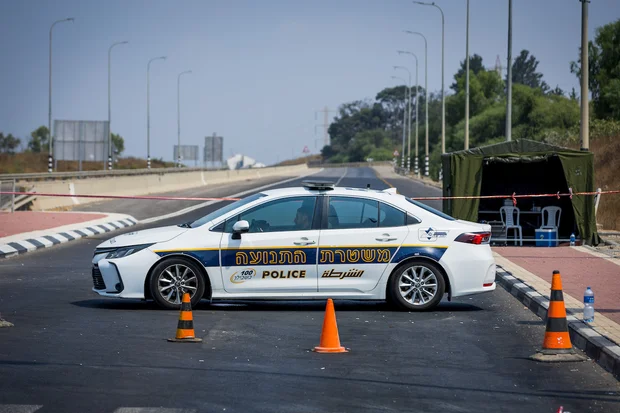
The Israeli military has cut off access to roads skirting the Gaza Strip for a third day, a precaution against possible retaliatory actions by the Palestinian Islamic Jihad (PIJ) terrorist group following the arrest of its leader on Monday.
A raid in the West Bank town of Jenin reportedly led to the arrest of PIJ leader Bassem al-Saadi and two other militants, including al-Saadi’s son-in-law. Al-Saadi has previously served 15 years of time in Israeli prisons.
Residents of Israeli towns along the Gazan border either must find alternative routes out of the envelope – such as Kerem Shalom and Kibbutz Nahal Oz – or remain blockaded until the threat has lifted. Residents are only allowed to exit the area for emergencies at specific time intervals.
All roads west of the Gaza Strip Access Road, Route 232, as well as Route 4 from the Zikim Junction to the main Erez Crossing, have been closed in both directions. Zikim Beach, north of Gaza has been closed to visitors, and train service between Ashkelon and Sderot have been suspended.
The Israel Defense Forces has called up about 100 reservists to assist in securing the area.
Israeli Defense Minister Benny Gantz on Wednesday said that security forces have worked for months to prevent possible terror attacks, as part of Operation Break the Wave, calling it Israel’s “only goal.”
“We will continue this operational activity where and when required,” Gantz said in a statement. “No threat will divert us.”
Speaking at a meeting of the united Blue and White and New Hope political parties, Gantz said Israel “will act with determination to restore normalcy to the area surrounding Gaza, and if it is not possible for them to return to normalcy, there will be no normalcy inside Gaza either. If normalcy returns, all residents of the area will benefit.”
Israeli Prime Minister Yair Lapid discussed the ongoing tensions with his security cabinet on Wednesday, receiving situation assessments and a briefing of Israel’s latest security actions.
Palestinian newspaper Al-Quds cited an unnamed Palestinian source stating that Egyptian efforts to de-escalate tensions between Israel and the Islamic Jihad are ongoing but that “Israel has refused the PIJ’s demands so far.”
The newspaper reported that the terrorist group requested permission for al-Saadi’s family to check up on him and that the PIJ is demanding the IDF cease operations in the West Bank, and in Jenin, in particular.
Recently, the terror group has asking for the release of Khalil Awawdeh, a Palestinian detainee who is currently on a hunger strike.
The Al-Quds source allegedly claimed “Israel is denying all requests” and suggested the PIJ is interested in de-escalating the situation but “holds its right to respond to the crimes of the occupation.”
PIJ is known to guide anti-tank missiles and target both civilian and military vehicles, killing Israeli civilians and IDF soldiers.
Popular article:

interview Easter message of resurrection hope amid war at Jerusalem's Garden Tomb

biblical commentary Let my people go: a Passover message for today

4 IDF soldiers killed, 2 wounded in fighting in southern Lebanon, as Israel eliminates dozens of Hezbollah terrorists

Receive latest news & updates
A message from All Israel News
Help us educate Christians on a daily basis about what is happening in Israel & the Middle East and why it matters.
For as little as $10, you can support ALL ISRAEL NEWS, a non-profit media organization that is supported by readers like you.
Latest articles:

1969 Dutch Eurovision winner Lenny Kuhr moves to Israel – cites antisemitism, family ties

Israel bars French far-left leader Mélenchon in response to France's entry ban on settlement leader

Change Bloc divided over coalition with Arab or ultra-Orthodox parties after week of negotiations

Huckabee fires back as Senate Democrats target US-Israel intelligence ties: 'Shocking!'

Israeli blood test detects early breast cancer with 95% accuracy, assesses recurrence risk