Israeli hit series Fauda sparks international reaction as it tackles events of Oct 7 in latest season
Fauda producer calls episodes depicting Oct 7 'most important thing I've done'



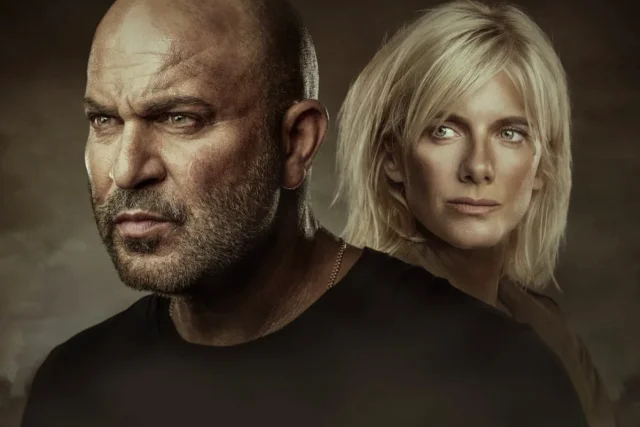
The fifth season of the popular Israeli TV series “Fauda” hit Netflix last week, and viewers across the world are reacting strongly to episodes 7 and 8, which depict the events of the Oct. 7, 2023, Hamas attacks.
The season aired in Israel several months ago, but it reached Netflix and international audiences on Sept. 8, when it quickly climbed to the top ranks of the platform's shows.
According to FlixPatrol, a website that tracks viewership of TV shows and movies on streaming platforms, the new season reached the top 10 in dozens of countries, including many of Israel’s neighbors.
FlixPatrol said the series ranked first in Lebanon, repeating its ranking at the release of season 4, while also scoring highly in Jordan, the United Arab Emirates and Bahrain over the weekend.
Netflix’s own records show the series ranking in the top ten in several Muslim countries, including Qatar, Egypt, Morocco, Turkey and Oman.
Avi Issacharoff, one of the series' creators, spoke with public broadcaster Kan News about the show’s success internationally, particularly in predominantly Arab, Muslim nations.
“We had hope that the season would succeed, but there was also a sense of skepticism in light of October 7 and the fact that public opinion around the world is anti-Israel, which is the ‘understatement’ of the year,” Issacharoff told Kan. “And then you find yourself surprised and saying, ‘Wait a minute, what? Number one in Lebanon?’”
As viewers around the world began watching episodes 7 and 8, which place the series' protagonists in the events of Oct. 7, reactions on social media platforms were a mix of shock, sadness, and outrage, as some viewers were confronted with the nature of the Hamas attacks for the first time.
Most of the series is set two years after the events of Oct. 7; however, episodes 7 and 8 include flashbacks to that day. When the season aired in Israel, the producers included a special warning to the viewers, cautioning that the episodes could trigger deeply emotional reactions.
Some viewers wrote that watching the episodes confronted them with the scale of the massacre in a way they had never experienced before.
“I am neither Israeli nor Jewish, and I cried non-stop,” one viewer wrote after watching.
“Episodes 7 and 8 made my heart pound, made my blood boil and shook me to the core,” a viewer from India wrote.
Another viewer from India wrote, “I’m numb. I’m speechless. I’m going to have some sleepless nights after watching the 7th and 8th episode. What a brilliant and brutally honest show.”
One viewer wrote that after watching the episodes, she struggles to understand how people could support Hamas.
Sleepless nights. Can someone please erase my memory of this episode?? I can’t stop thinking and worrying. Fauda’s 8th episode really disturbed me. I don’t know how we still have Hamas sympathizers living amongst us. God please help me get over this show pic.twitter.com/odhylGIHwQ
— Sabudana khichadi (@dishasatra) September 11, 2026
Brazilian podcaster and leadership development speaker Luciano Pires called the season a “gut punch.”
Noting that Fauda has “always been an uncomfortable show,” Pires said, “the fifth season is a gut punch. Episodes 7 and 8 recreate the October 7, 2023, massacre, and that makes it hard to watch as just fiction.”
“I think everyone saw dozens of real images from the attacks, many filmed by the terrorists themselves, which were already shocking enough,” Pires continued. “But this time, the fiction puts us right inside the horror.”
Pires also noted that the Oct. 7 attacks were personal for the cast of the show. Actor Idan Amedi, who played in seasons 2-4, was injured in Gaza, necessitating a recovery of several months. Matan Meir, a member of the production crew, was killed fighting in Gaza.
A viewer from France who watched the fifth season noted that watching it was particularly difficult, because she personally knows victims of the attacks.
A Greek viewer wrote, “I just finished episodes 7 and 8 of Fauda, and I honestly feel broken.”
“This wasn’t just a TV series. For those two episodes, I was taken to October 7, to the fear, the helplessness, the families hiding and fighting to survive,” he wrote. “And knowing that this horror was real makes it almost unbearable to watch.”
I just finished episodes 7 and 8 of #Fauda, and I honestly feel broken.
— Giannis Argyriou 🇬🇷🇨🇾🇮🇱🇺🇦 (@giannisargyriou) September 9, 2026
This wasn’t just a TV series. For those two episodes, I was taken to October 7, to the fear, the helplessness, the families hiding and fighting to survive.
And knowing that this horror was real makes it…
Documentary film maker Pierre Rehov reacted to several reviews of the series in French media, which had accused the show of gratuitous violence and failing to show the Palestinian perspective.
“Contrary to your claims, season 5 of Fauda is of extreme restraint,” Rehov wrote. “Out of respect for the viewers, it has only skimmed the surface of the atrocities committed on October 7 by the Arabs of Gaza. It spared you the women gang-raped then burned alive, the families tied together and dismembered, father, mother, child. The mother of a 7-year-old child, nearly full-term pregnant, gutted open, the baby stabbed in front of her and her other son shot dead.”
Rehov also noted that many of those criticizing the show had failed to watch the 47-minute video put out by the Israeli government, compiled from footage taken by Hamas terrorists and home security cameras, in which many of the events he described were recorded.
Hamas themselves broadcast many of the videos recorded by their fighters on Oct. 7, sharing them on Telegram and other social media platforms, before their channels were suspended.
Those reactions are part of what the producers hoped to achieve by depicting the events of Oct. 7 in the show.
Issacharoff told Kan News, “In my 26 years as a journalist and screenwriter, this is without a doubt the most important thing I have done. I realized that if someone on the other side of the world saw this thing, it would move people.”
“The average Netflix viewer doesn't sit around watching the news 24/7 like most of us Israelis do,” Issacharoff said. “Naturally, it comes as a surprise to them to see these things and realize that something preceded the bombings in Gaza—a massive, unprecedented event that changed the face of the Middle East.”
You might also like to read this: