Israeli cyber chief sounds alarm on AI-fueled cyber warfare threat



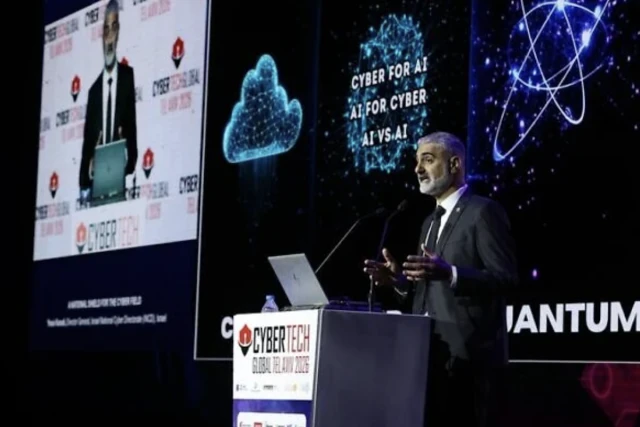
Israel’s National Cyber Directorate (INCD) chief, Yossi Karadi, warned that the world should prepare for a future artificial intelligence-driven full-fledged cyberwar.
Addressing the annual Cybertech Global conference in Tel Aviv on Tuesday, he called on Israel and other countries to be prepared for a war scenario, with a clash between offensive and defensive AI-driven agents.
“We cannot choose when the next war will break out – but we can choose to be ready. The government sets strategy and leads national defense, but it is Israel’s cyber industry, with its innovation, agility, and operational experience, that enables Israel to be prepared for the first cyber-based war,” Karadi stated.
Israel’s cyber head hailed the nation's proposed Cyber Security Law as a milestone for national security.
“For the first time, the law will define what national cyber defense means in Israel. It will regulate the obligations of essential organizations and digital service providers to meet security standards in order to protect public security and daily life, and will establish reporting, supervision, and enforcement mechanisms to handle significant cyber incidents,” he explained.
“The law aligns Israel with international standards and anchors cybersecurity as a national interest, rather than a voluntary decision by each organization,” the cyber chief added.
Presenting a potential doomsday scenario, Karadi warned of cyber hacking attacks on vital national assets such as telecommunications, transportation and energy, which could undermine and, in some cases, threaten human lives.
Karadi said his organization handled more than 26,000 cyberattack cases in 2025 – about a 55% increase over the previous year. Government institutions, the financial sector, and digital service providers were reported as the most heavily targeted sectors of the Israeli economy. He added that Israel has expanded cooperation with other countries to address the growing cyber threat.
Israel and Germany recently signed a strategic cybersecurity cooperation agreement, which is expected to boost the security of both countries. In addition, Jerusalem also launched a Maritime Cybersecurity Center of Excellence with Greece and Cyprus.
Cyber-attacks against Israeli institutions and organizations have increased dramatically since Hamas’ Oct. 7, 2023, attack. The Islamic Republic of Iran and its proxy allies are responsible for the majority of cyber attacks against the Jewish state. Last March, Israeli Deputy Cyber Defense chief Nitzan Amar revealed that Iranian and Hezbollah cyber attacks had soared by 300% since the Hamas attack.
“The last year was not a normal year, but a challenging and unique one,” Amar announced at the Cybertech 2025 conference in Tel Aviv. “Ever since the war broke out, we have observed a major amplification in the scope of Iran and Hezbollah’s malicious activity targeting Israeli entities.”
The United States, the United Kingdom and Israel are the three most targeted countries in cyber warfare, according to a report in late 2025. While Israel is the main target for Iran, the Jewish state warned already in 2024 that Iranian cyberattacks had become a global security threat against many nations.
“We have identified that Iran is attacking its allies and other countries for information extortion and damaging digital services,” Gaby Portnoy, then director of the INCD, said. “The information stolen from government systems is then used for Iranian cyberterrorism.”
You might also like to read this: