









Israel demands Belgian apology after aid worker killed in IDF strike discovered to be Hamas fighter
Aid worker hailed by Hamas and family members as ‘martyr,’ was mourned by Belgian government
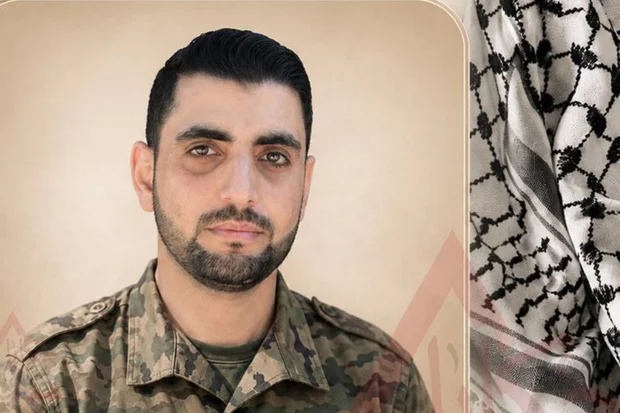
The Israeli Embassy in Belgium has demanded an apology from its host country after evidence showed that a Belgian aid worker killed in an IDF strike in Gaza was a Hamas operative.
Abdallah Nabhan, an employee of the Belgian development agency Enabel, was killed in an Israeli airstrike in April 2024. After his death, the Belgian government summoned the Israeli ambassador to condemn the killing.
“An Enabel employee & his family have been killed in Gaza. We express our solidarity with his family & colleagues,” then Belgian Foreign Minister Hadja Lahbib wrote to her 𝕏 account in 2024. “Bombing civilian areas & populations is contrary to international law. I will summon the Israeli ambassador to condemn this unacceptable act & demand an explanation.”
At that time, Israel already had doubts about Nabhan’s affiliation, which were conveyed by the Israeli Ambassador Idit Rosenzweig-Abu during the meeting.
“I have just concluded a meeting with Foreign Minister Lahbib and Development Minister Gennez,” Rosenzweig-Abu posted to her 𝕏 account.
I have just concluded a meeting with Foreign Minister Lahbib and Development Minister Gennez.
— Ambassador Idit Rosenzweig-Abu (@IditAbu) April 25, 2024
In the meeting I have expressed our regret over every innocent civilian life lost.
I have also explained that the house in which the family was staying belonged to a central senior… pic.twitter.com/wmz6mPfOoK
“In the meeting I have expressed our regret over every innocent civilian life lost,” she continued, while noting, “I have also explained that the house in which the family was staying belonged to a central senior Hamas operative (who was a member of the Enabel Employee’s extended family). That Hamas operative was the target of the air strike.”
Even before the April 2024 strike in which Nabhan was killed, the IDF had already hit the offices of Enabel in Gaza, destroying them. No one was in the building at the time, but the Belgian government accused Israel of destroying the offices in retaliation for the development agency’s unwillingness to cut ties with the United Nations Relief and Works Agency (UNRWA) despite ongoing investigations into UNRWA’s ties with Hamas.
However, following the October 2025 Gaza ceasefire, Hamas and several of the Palestinian terror organizations have begun to release death notices for operatives killed during the Gaza war.
Open-source intelligence (OSINT) investigators have found hundreds of cases in which people originally listed as civilians, or as professionals, killed in Israeli strikes, were later revealed to be operatives of the terror organizations.
Earlier this month, a Telegram channel affiliated with Hamas’ Khan Younis Brigade, released a death notice for Abdallah Nabhan, depicting him in uniform and identifying him as a member of the brigade, while calling him a “mujahid” (Arabic for fighter) and a “martyr.”
Last year, a family member also identified Nabhan as a Hamas fighter in a post to Facebook, referring to him as “a martyr in the Al-Aqsa Intifada.”
Gabriel Epstein, Senior Policy Associate at Israel Policy Forum, uncovered much of the information revealing Nabhan’s connection to Hamas.
He also revealed that another person killed in the strike with Nabhan, Mohammed Bassem Ahmed al-Jamal, was also a Hamas combatant. Al-Jamal was originally listed as a journalist before his status as a commander in the Qassam Brigades was revealed.
Abdullah Jamal Sobhi Nabhan (ID#: 803187939, age 32), a Gazan employee of Belgian international development agency Enabel, appears to have been a member of Hamas' Khan Younis Brigade. Nabhan was killed in an airstrike alongside his brother, father, and son in April 2024. 🧵 pic.twitter.com/eItnuEnJWf
— Gabriel Epstein (@GabrielEpsteinX) September 4, 2026
Now, the Israeli Embassy in Belgium has demanded an official apology over the incident.
“The Israeli Embassy is owed an apology!” it said in a statement on 𝕏. “In April 2024, Abdallah Nabhan, an employee of Belgium’s development agency Enabel, was killed in an Israeli airstrike in Gaza. Belgium summoned Israel’s ambassador, and international condemnation followed.”
“New evidence now indicates that Nabhan was a member of Hamas’s Khan Younis Brigade. A channel affiliated with the brigade identified him as a “mujahid” and published an image of him in uniform,” the embassy wrote.
The Israeli Embassy is owed an apology!
— Israel in Belgium (@IsraelinBelgium) September 6, 2026
In April 2024, Abdallah Nabhan, an employee of Belgium’s development agency Enabel, was killed in an Israeli airstrike in Gaza. Belgium summoned Israel’s ambassador, and international condemnation followed.
New evidence now indicates that… https://t.co/NXXVI2urJU pic.twitter.com/p3vJPZPesq
“Those who accused Israel then should acknowledge the evidence now,” the Embassy added. “A public apology would be preferable, but a private one will also be accepted.”
Popular article:

interview Easter message of resurrection hope amid war at Jerusalem's Garden Tomb

biblical commentary Let my people go: a Passover message for today

4 IDF soldiers killed, 2 wounded in fighting in southern Lebanon, as Israel eliminates dozens of Hezbollah terrorists

Receive latest news & updates
A message from All Israel News
Help us educate Christians on a daily basis about what is happening in Israel & the Middle East and why it matters.
For as little as $10, you can support ALL ISRAEL NEWS, a non-profit media organization that is supported by readers like you.
Latest articles:

Hamas openly threatens Israel with ‘more Oct 7 attacks’ as intelligence shows terror group is rearming

More than 1,300 antisemitic posts blame Israel, Jews for French riots – report

Thailand turns to Israeli anti-drone technology to counter growing battlefield threat

Israeli fighter jets flew to Iranian border in ‘power projection,’ deterrence exercise ahead of elections next week

Israel targets nuclear fusion leadership as AI drives soaring energy demand