








Iranian regime resumes producing ballistic missiles at ‘high rate,’ IDF warns
Shiite leader asks Iran not to drag Lebanon into future conflict with Israel
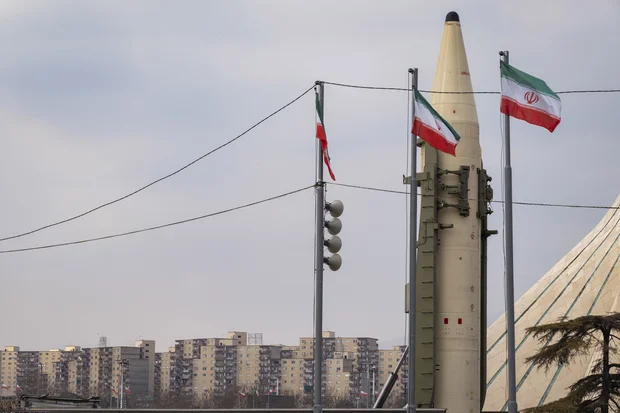
The Iranian regime has resumed its production of ballistic missiles “at a high rate,” an official of the Israel Defense Forces warned in a classified briefing to the Knesset Foreign Affairs and Defense Committee, Ynet News reported on Monday.
The warning came against the background of several reports in recent weeks pointing to a growing expectation that another round of fighting between Iran and Israel could happen in the coming months.
According to Ynet, Western diplomatic officials said that Iran had returned to older methods of manufacturing ballistic missiles after Israel significantly degraded its production capabilities, for example, by destroying the valuable planetary mixers necessary for producing the missile fuel.
The officials said that in the next conflict, Iran aims to launch between 500 and up to 1,000 missiles at Israel simultaneously.
“Israel conveyed messages to Iran through Western countries that it has no interest in attacking again – but the response was that Israel is lying. Therefore, the concern of miscalculation by Iran is growing,” the officials said.
“We do not see a major effort by Iran to renew its nuclear program – but we do know that the top priority for the Iranians is to restore the ballistic-missile program.”
This week, a senior European ambassador was cited as saying that “an Israeli military action in Iran” could occur next year, but he added that the U.S. would not give Israel a “green light” for a large-scale strike for now.
Another indication that another conflict is expected by leaders across the region, is a report by the Lebanese Nidaa al-Watan newspaper on Monday, which said that Lebanese Parliament Speaker Nabih Berri asked Iran not to drag Lebanon into a future conflict with Israel.
Berri is the nominal head of the country’s Shiite community and seen as an ally to Hezbollah, which the Iranian regime had intended to be its doomsday-weapon for the case of a large-scale conflict with Israel.
However, Israeli airstrikes and a ground incursion last year devastated the group to the degree that it couldn’t help Tehran during the 12-Day War earlier this year.
Now, Berri reportedly made three requests to Supreme Leader Ali Khamenei, whom Shiites in Lebanon see as their highest religious authority.
“The first demand calls for keep[ing] Lebanon fully neutral in any future confrontation between Iran and Israel, and refraining from using the Lebanese arena as a pressure card in Tehran’s negotiations with Washington,” a source told Nidaa al-Watan.
“The second demand was more sensitive, with Berri asking for a fatwa (a legal ruling on a point of Islamic law) from Supreme Leader Ali Khamenei allowing Hezbollah to hand over the precision-guided missiles and drones, in return for securing U.S. approval of a deal that would lead to a full end to the war,” the sources added, noting that Berri claimed he could guarantee a positive U.S. response.
“The third demand was obtaining swift and urgent funds to support tens of thousands of Shiites who have lost their homes, businesses and assets due to the latest war,” the source said.
The response by the Iranian regime was said to have been “ambiguous,” as it only explicitly agreed to add more funds but “did not offer any clear answer regarding the neutralization demand or the fatwa.”
This “increased the level of concern among Shiite political and religious circles, who considered that the ‘Iranian silence’ was a message in itself, and that Tehran’s decision to cling to the Lebanese card had not changed despite the hefty prices,” the source added.
On Sunday, Iran’s foreign ministry announced, in a possible response to Berri’s requests, that “Iran does not interfere in Lebanon” and that “Hezbollah is an institution that takes the decision regarding its weapons in an independent manner.”
Popular article:
interview Easter message of resurrection hope amid war at Jerusalem's Garden Tomb

biblical commentary Let my people go: a Passover message for today
4 IDF soldiers killed, 2 wounded in fighting in southern Lebanon, as Israel eliminates dozens of Hezbollah terrorists

Receive latest news & updates
A message from All Israel News
Help us educate Christians on a daily basis about what is happening in Israel & the Middle East and why it matters.
For as little as $10, you can support ALL ISRAEL NEWS, a non-profit media organization that is supported by readers like you.
Latest articles:
North American Jewish organizations to recruit 100 professionals to combat antisemitism
‘No need’ for pre-election Iran strike, IDF chief says as gov’t, opposition trade blame for potential escalation – report
terror attack 2 Israeli soldiers killed, 2 terrorists eliminated in Hebron shooting; IDF says much larger attack was prevented
analysis A people dwelling securely? Israel’s strategic standing, 3 years after Oct 7
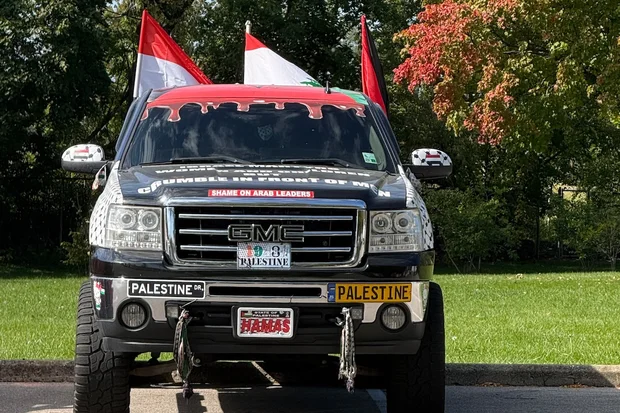
Hamas on wheels: What I found in Dearborn reveals a troubling history and a battle over Israel