IDF mixed-gender battalions guard against smuggling, terror threats along Israel’s southern borders



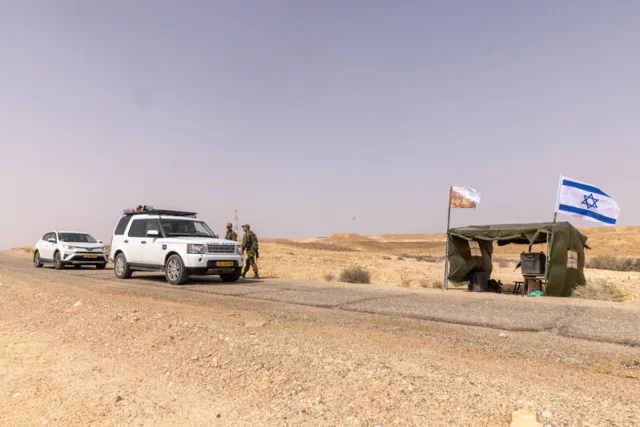
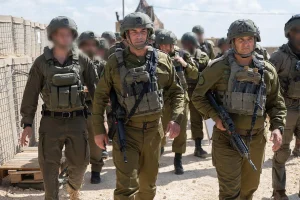
The Israel Defense Forces operating along the nation’s southern border say they have significantly reduced the volume of drug and weapons smuggling by drones, while remaining on alert for terrorist attacks and armed clashes with smuggling gangs. The IDF’s mixed-gender combat battalions are among the forces guarding the border.
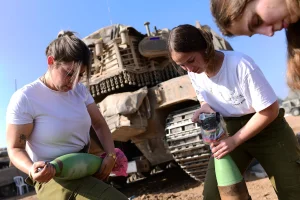
The IDF’s Paran and Yoav brigades protect Israel’s borders with Egypt and Jordan, while the 80th Division, including its mixed-gender Caracal and Bardelas battalions, is deployed in the south to patrol the border and protect communities along Route 10, which runs through the Negev and Arava deserts toward Eilat.
IDF officers estimate that thousands of drones carrying drugs, weapons and other contraband cross Israel’s southern borders each year. Col. D. (37) the deputy commander of the Paran Brigade, said the use of drones is not new but has increased significantly in recent years.
“The drones were always there in one form or another, and the enemy used them in wars. We understand that the threat developed further over the past two years. We began seeing and identifying them being used more frequently,” he said.
The vast majority of contraband being moved in and out of Israel by drones consists of contraband and weapons, but Col. D. said security forces are beginning to get on top of the problem, with traffic greatly reduced from what it used to be. However, levels of violence along the Egyptian border remain a concern, with clashes with armed smuggling gangs occurring on a fairly regular basis.
While the level of violence along the border fluctuates, Col. D. said security forces have seen a decline in incidents compared with the past. “Today we are identifying fewer and fewer of them along the border,” he said. He attributed the decline to increased action against the drones and a more proactive approach by the security forces. “The drones were hit, and we are more proactive and aggressive wherever we can be. It has a direct effect, and you can clearly see it along the border.”
Col. D. said the troops remain prepared for the possibility of terrorist activity and respond cautiously when a drone is detected, since surveillance cannot immediately determine whether it is carrying drugs or poses a broader security threat.
“When something is spotted by surveillance, I don’t know whether it’s a drone smuggling drugs to Tel Aviv,” he said. “As far as I’m concerned, it is an enemy drone, and I have to do everything I can to prevent it from reaching its destination.”
IDF Maj. S. (26), deputy commander of the Caracal Battalion, immigrated to Israel from Belgium with her family a decade ago. She told Ynet News that she is motivated by a mixture of Zionism and an awareness that Jews in Europe are increasingly targeted by antisemitism.
“When I became an officer, it fulfilled a dream of my great-grandmother, a Holocaust survivor, who saw it as a kind of victory over the Nazis,” she said. “Although she did not live to see me wearing the rank, I’m sure she would be proud of me.”
Maj. S. also described her experience leading soldiers in combat during the Hamas-led Oct. 7, 2023 invasion and terror attack, defending the residents of Kibbutz Holit and remaining in the region for a month afterward as the commander of troops in the community of Pri Gan.
“I arrived in the Gaza border area with my soldiers and we fought in Holit,” she said. “We took part in the battle alongside Caracal’s female tank crews and Bardelas.”
She said that the experience of the Border Defense Corps demonstrates that women can serve effectively in combat roles.
“I think the proof is right in front of us,” she said. “In the Border Defense Corps, and in Caracal in particular, we have some of the best female officers there are. Women are serving as combat soldiers in key positions and doing good work. We are proving to everyone that it can work. In Caracal, we all carry out the same missions, live shoulder to shoulder, fight shoulder to shoulder and train shoulder to shoulder.”
You might also like to read this: