IDF expands combat training for non-combat soldiers following Oct. 7 gaps



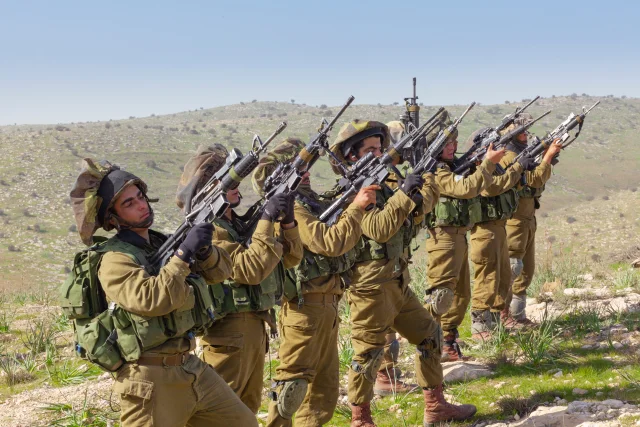
The Israeli military has opened a new school to provide infantry and combat training to soldiers serving in largely non-combat units, including logistics, medical, human resources, maintenance and military rabbinate units.
The new program was established following security gaps exposed during Hamas’ Oct. 7, 2023, invasion of southern Israel, when non-combat soldiers also found themselves confronting Hamas terrorists.
Speaking to The Times of Israel, the lieutenant colonel heading the new school said the program was established as part of the lessons learned following the attack.
“We understood, across all the branches and corps, that the personnel in the combat administrative support companies need a more infantry-oriented and combat-oriented level of readiness to know how to deal with challenges,” the officer said.
“Shin,” a junior IDF logistics officer with limited combat experience, found himself fighting on the front line during the Hamas attack. His company commander, Maj. Raz Peretz, was among 26 soldiers killed in the fighting.
“I did not have the appropriate level of combat training for this,” Shin told The Times of Israel.
Non-combat soldiers like Shin play a critical role in supporting combat units by providing equipment, ammunition, fuel and food. However, the Oct. 7 experience exposed the need for these support units to also have basic combat skills and a higher level of operational readiness.
Shin said the attack forced the IDF to rethink its previous operational framework.
“How do you give such a level of readiness to combat administrative support companies, something they did not receive during basic training? And that is how the school was born.”
The new program includes marksmanship, weapons training and instruction for operating vehicles in darkened combat zones. Soldiers will also receive hand-to-hand combat and physical fitness training.
The school’s commander said that she and her deputy had both experienced the events on Oct. 7 firsthand. "We were in all the enemy territory and went through everything,” she said.
“Clearly, when you carry out a logistical operation there will be a combat force with you, but the [support soldiers] need to know that if they encounter an enemy, how they will kill a terrorist. They need to be confident in their ability to handle a situation,” the lieutenant-colonel said.
“This force is critical and important, and therefore it is also important to us to provide the right tools and means to continue operational continuity,” the school’s commander concluded.
You might also like to read this: