Frontline drone challenges fuel Israeli, Latvian innovation cooperation


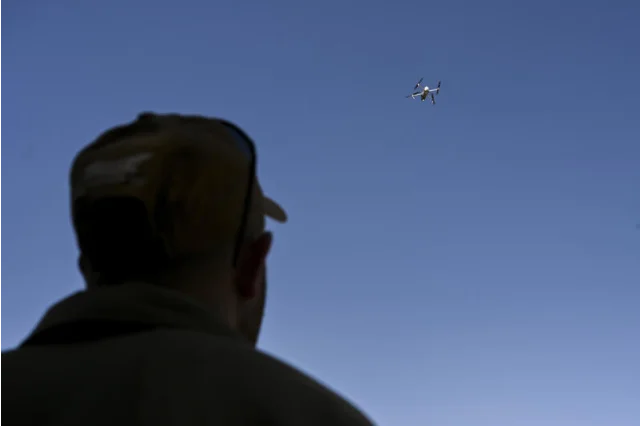
Latvia’s growing exposure to aerial threats from Russia and Belarus is creating new opportunities for cooperation with Israel, whose communities near the Gaza border have spent years developing technologies and emergency-response systems to confront attacks from Hamas.
Noam Bedein, director of innovation diplomacy and strategic partnerships at Hamitbah-Western Negev Innovation Authority, witnessed the similarities earlier this month when he attended the Latvian Dual-Use Export Forum 2026 on NATO’s eastern flank.
Both Latvia and Israel’s Negev region have developed firsthand experience with aerial threats because of their proximity to hostile neighbors, creating potential bridges between their defense, civilian resilience and dual-use innovation sectors.
The Latvian forum opened with a warning to attendees reflecting the country’s growing concern over threats to its airspace.
"Given the geographical location of the region, you may receive a cell broadcast alert if a potential threat in the airspace is detected. If you receive such an alert, please remain calm. If necessary, the event will be paused."
For Bedein, the warning was reminiscent of the security alerts repeatedly experienced by Israeli communities near the Gaza border during years of Hamas rocket attacks. In Latvia, however, the threat was not merely theoretical.
"On May 7, in this very city, two drones came by," Latvian Prime Minister’s Parliamentary Secretary Krists Avots told attendees at the forum.
"The government fell. We were caught somewhat unprepared. I think it was something to remember: that we need to be always ready, and being always ready means having the right capabilities that match what's the latest and greatest," he explained.
Bedein said the director of the Latvian site where the forum was held also described the rapid changes driven by the security environment.
"Because of growing tensions on the Russian side, our location has been scrubbed from public maps," Bedein recalled that the Latvian site director told him. "Nobody takes photographs. Everything you see here was built in the last six months to keep pace with operational demands."
The security concerns are also driving economic and technological investment. Latvian Economics Minister Viktors Valainis, who addressed the forum, emphasized the growing connection between national security and economic development.
"The link between security and the economy has become very direct," Valainis assessed.
"For Latvia, positioned on the eastern border of the European Union and NATO, the dual-use sector is both an existential defense necessity and a strategic economic engine. Latvia has surged defense spending from 3% to over 5% of GDP. Our national goal is to double the size of our economy by 2035, and dual-use industries are the primary spearhead," the minister explained.
The growing threat environment has also increased European interest in Israeli aerial defense technologies as the war in Ukraine continues.
But Israeli Ambassador to Latvia Sandra Simovich said the cooperation should extend beyond technology to include civilian resilience. She noted that the Latvian ambassador to Israel recently visited communities near the Gaza border to learn how they provide mental-health support and develop trauma infrastructure amid ongoing security threats.
The emerging partnership is also being supported by Lina Ferbere of Jewnited.lv, a grassroots civil-society organization established in Latvia following the Hamas Oct. 7, 2023, massacre in Israel.
"What people are not prepared for here is resilience tech, learning first responders and how to deal with emergencies," Ferbere told Bedein during his visit to Latvia.
Ferbere said Jewnited.lv hopes to strengthen Latvia-Israel ties through long-term civil, academic and societal partnerships, including visits by Latvian academics and health professionals to Israel.
"I would love to adjust the program to be less tragic, more looking to the future, looking to what Israel can give to the story through innovation and development in times of constant pressure," she explained.
You might also like to read this: