Former War Minister Benny Gantz reveals why Israel held off on attacking Hezbollah after Oct. 7: ‘I don’t regret it’
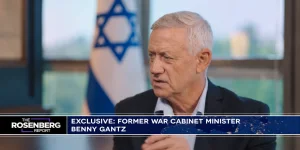
EXCLUSIVE INTERVIEW: Joel Rosenberg hosts the former IDF chief and defense minister and current leader of Israel’s Blue & White party



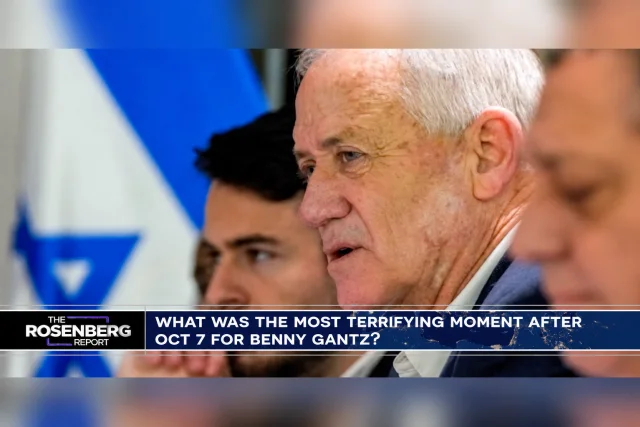
Kicking off the fifth season of THE ROSENBERG REPORT on TBN, Joel Rosenberg welcomed Benny Gantz to the program for the first time.
Gantz (67) is a major figure in Israel’s military, national security and political life. After more than three decades in the IDF, including serving as chief of staff, Gantz entered politics and became one of Israel’s leading political figures and a prominent rival of Benjamin Netanyahu. He has served as defense minister and played a key role in Israel’s wartime decision-making following the Oct. 7, 2023, Hamas invasion and terror attack.
Gantz revealed details of an intense debate inside Israel’s leadership over whether to launch a major offensive against Hezbollah just days after the Hamas attack, telling ALL ISRAEL NEWS Editor-in-Chief Joel C. Rosenberg that he still believes the decision to focus first on Gaza was correct.
Speaking on THE ROSENBERG REPORT, Gantz recalled arriving for discussions on Oct. 11, as then-Defense Minister Yoav Gallant was pushing for Israel to strike the Hezbollah terror group in Lebanon, including targeting its leader, Sec.-Gen. Hassan Nasrallah.
Gantz said he understood Gallant’s reasoning, particularly given Hezbollah’s enormous missile and rocket arsenal and the danger that the terror group could launch a devastating attack on Israel.
“On regular, normal days, I would agree with Gallant that we have to assault first our stronger enemy and only then deal with our weaker enemy,” Gantz said.
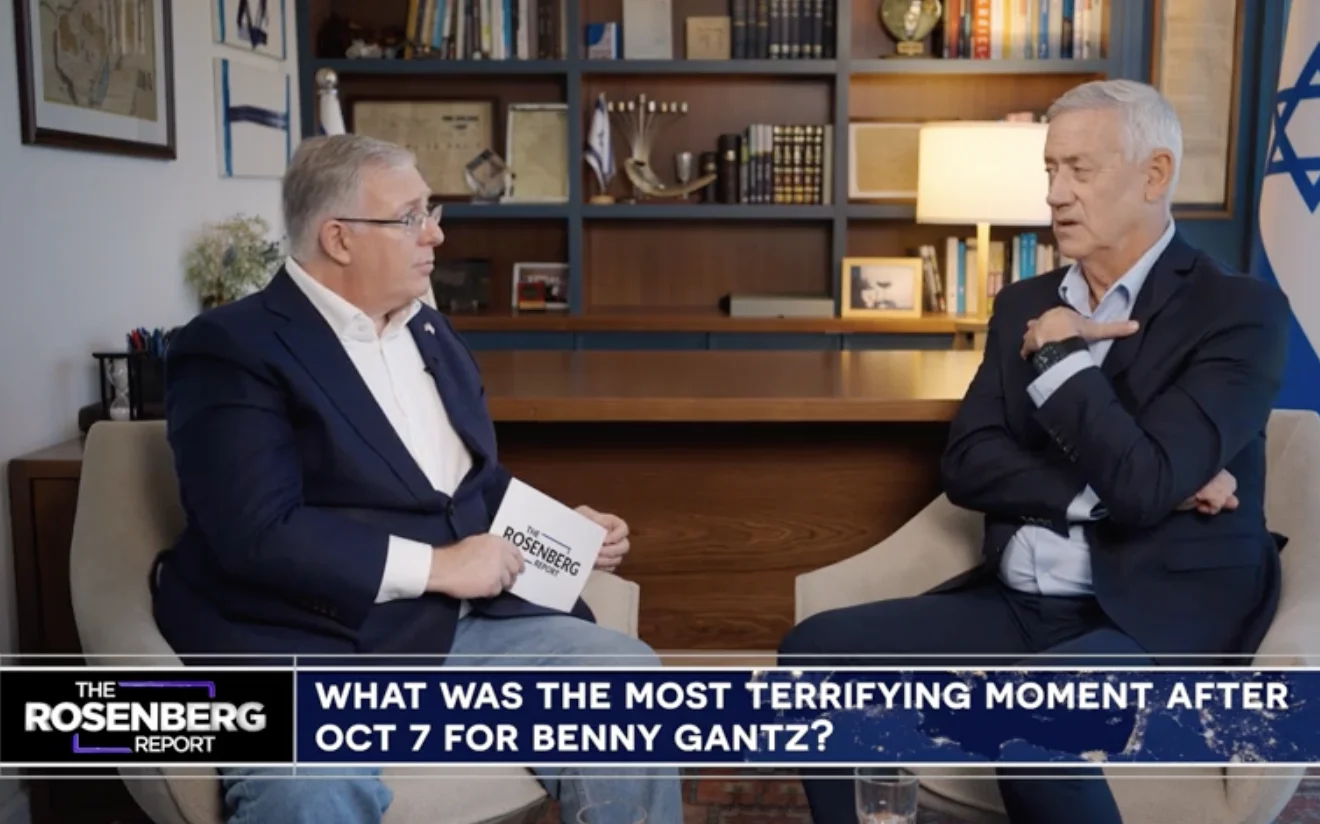
However, he argued that the extraordinary situation following the Hamas invasion and massacre required Israel to concentrate its forces in the south.
“We still had terrorists on our ground in the southern areas. We had more than 250 hostages. That was a totally different reality,” Gantz told Rosenberg. “It was like a black swan.”
Gantz said his position was that Israel should maintain a strong defensive posture against Hezbollah, with the ability to conduct limited offensive operations, while directing its main effort toward defeating Hamas.
During the discussions, reports suddenly began arriving of possible Hezbollah drone and aerial attacks originating from Lebanon.
“Then Netanyahu asked me, ‘So what do you think now?’” Gantz recalled. “So if that’s the case, let’s attack them.”
The Israeli leaders moved to the cabinet room to reassess the situation with the IDF, but Gantz said they soon discovered that the alarming reports were false.
“By the time we got there, we realized that it was rumors, that was not fact,” he said, adding that radar systems had apparently detected geese rather than an incoming Hezbollah attack.
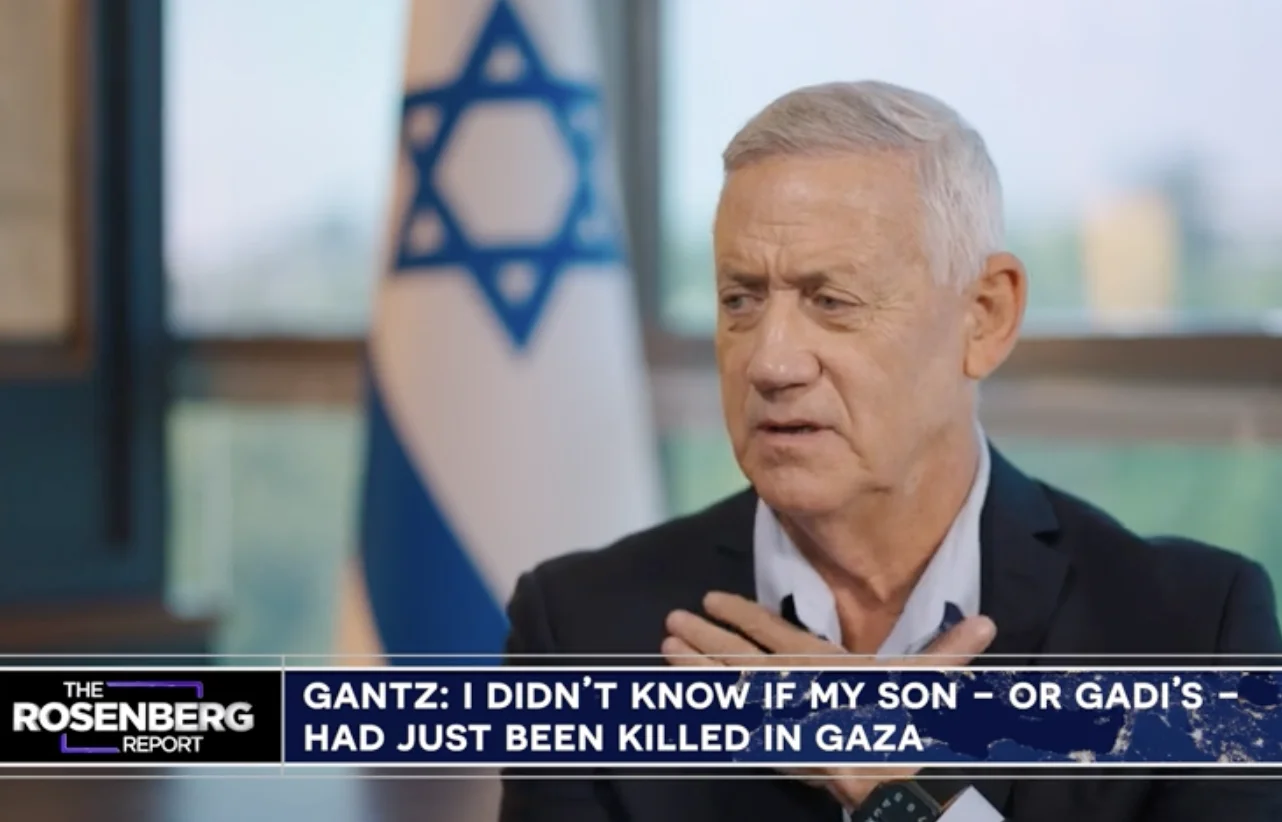
Israel ultimately did not launch the proposed major northern offensive at that stage, instead focusing on fighting Hamas in Gaza while engaging Hezbollah in a more limited conflict along the Lebanese border.
Rosenberg asked Gantz whether, in retrospect, he regretted opposing the initial proposal, particularly after Israel later carried out successful operations against Hezbollah, including the pager and walkie-talkie operations and the eventual killing of Nasrallah.
“I don’t regret it,” Gantz responded.
“Even if I look back in perspective, I think we did the right thing,” he added.
Click HERE to watch Joel Rosenberg’s full interview with former Israeli Defense Minister Benny Gantz.
THE ROSENBERG REPORT airs Thursday nights at 9 p.m. EST and Saturday nights at 10 p.m. EST on Trinity Broadcasting Network (TBN), the most-watched Christian television network in the United States.
You might also like to read this: