Iran unrest may hamper regime’s ability to strike Israel, says former Navy chief Eliezer Marom



Former Israeli Navy commander V.-Adm. (res.) Eliezer Marom discussed the ongoing unrest in Iran and the potential for Iranian missile attacks against Israel in an interview with the Israeli radio station 103FM on Sunday.
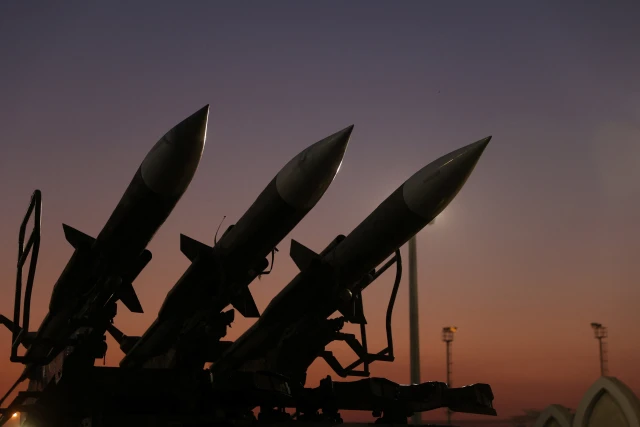
“Most of their missiles use liquid fuel, and you cannot launch them from underground depots,” Marom explained on 103 FM radio. “They have to move into the field, and that requires a fairly large convoy, including launchers and significant quantities of fuel."
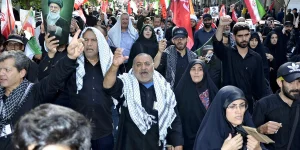
Marom assessed that the growing anti-regime protests could make it more difficult for the ayatollah regime to launch a potential large-scale missile attack against Israel.
“It is hard to move without encountering flashpoints,” Marom said. “It then becomes difficult to launch from open areas. This makes it easier for the Americans to act on the matter."
The navy chief’s prediction comes after the ayatollah regime recently threatened to hit U.S. military bases in the Middle East and Israel if the two countries directly intervened in the domestic unrest against the Tehran regime.
Marom assessed that in such scenario, the ayatollah regime could potentially prioritize targeting U.S. military assets over targeting Israel.
“Not necessarily Israel,” he said. “They will certainly want to launch toward US military bases in the Middle East."
Marom speculated that the current theocratic regime in Tehran could potentially be replaced by a military regime led by the hardline Revolutionary Guards.
“It is possible that the current regime falls and is replaced by one led by the Revolutionary Guards.” While a large majority of Iranians oppose the ayatollah regime, Marom cautioned that the opposition appears to be divided and not all Iranians support the crown prince Pahlavi.
“After a regime collapse, there is always chaos, especially when no single leader unites the rebels. The crown prince is not exactly the leader of this revolution. It’s not like with Khomeini, when power was immediately transferred to him. That is not happening,” he explained.
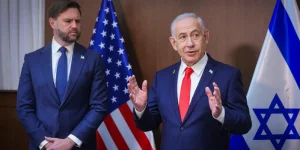
Israel is carefully monitoring the situation in the Islamic Republic of Iran and Israeli military forces remain on a high alert in case Tehran attempts to fire missiles at Israel. Prime Minister Benjamin Netanyahu hailed the Iranian people’s fight for freedom at a government meeting on Sunday. He predicted that a post-ayatollah Iran and Israel would quickly become close allies.
“The people of Israel, and the entire world, stand in awe of the immense bravery of Iran's citizens. Israel supports their struggle for freedom and firmly condemns the mass killings of innocent civilians. We all hope that the Persian nation will soon be liberated from the yoke of tyranny, and when that day comes, Israel and Iran will once again be faithful partners in building a future of prosperity and peace for both nations,” Netanyahu stated.
While most Iranians, and much of the international community, appear to support regime change in Tehran, Marom warned that a post-ayatollah Iran could descend into chaos similar to Syria after the fall of the Assad-regime in December 2024. Such a scenario could also threaten Israel’s national security.
“Consider how much weaponry and how many capabilities Iran has that endanger us,” he said. “I’m not sure we’re heading toward a regime that is all sweetness and light; a full democracy, and so on. It’s not clear whether the regime will fall, but if it does, it may resemble Syria. We need to ensure that large quantities of weapons don’t fall into the hands of those who might emerge as the sole rulers."
The former navy commander also expressed skepticism concerning potential American intervention in Iran.
“I don’t think action is imminent. We know Trump. He threatened Hamas, and nothing happened. In Venezuela, too, the situation remains unresolved. He moved Maduro from his place, but not a single American is in Venezuela right now,” he concluded.
You might also like to read this: