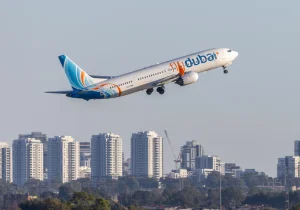
Flydubai investigation will have to ask: How did security miss a knife, where did vetting fail?
Also, are regional diplomatic gains at risk of degrading in light of security breaches and possible terrorism?



As what is shaping up to be a catastrophic terrorist attack was averted in the near-crash of flydubai’s flight carrying Israelis from the United Arab Emirates to Tel Aviv, some serious questions are being raised in the wake of an ongoing investigation.
How the copilot managed to get a knife on board, who vetted him before hiring him, and whether he became radicalized – and if so, before or after the vetting process – are questions investigators will have to answer.
“What we know from pilots crashing planes into mountains, for instance, is that pilots need to be vetted. And then they need to be vetted some more,” said Michael Pregent, a former U.S. intelligence officer and expert on the IRGC.
In an interview with ALL ISRAEL NEWS, Pregent raised several critical breaches that will likely be explored in the investigation, including whether the copilot has flown this route previously or if he volunteered for this particular flight carrying Israelis to Tel Aviv.
If he volunteered for this flight, it could indicate he was planning an attack. And another question is whether he was acting alone.
“The threat came from the cockpit, from behind a locked door where people can’t get into. He wanted to be on this flight. He was able to get a knife in, so someone probably had to be bribed,” Pregent said. “The only thing standing in his way was the pilot – that’s why he had to kill the pilot.”
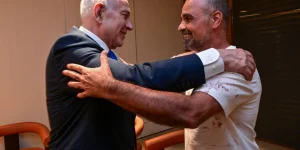
So far, the only official statements about the pilots’ nationalities have come from Israel: Security officials said that the co-pilot was an Omani national and Israeli Prime Minister Benjamin Netanyahu named the injured pilot as an Indian citizen.
An updated flydubai statement refers to an “altercation” in the flight deck. Details of the stabbing, an attempt by a copilot to crash the plane and the rescue efforts have come from Israeli witnesses on the plane and Israeli officials.
The UAE and Saudi Arabia, where the aircraft landed, have not confirmed these incidents. The Omani Foreign Ministry has not commented on the copilot's identity.
According to Flightradar24, flight 1073 plummeted to an altitude of 15,000 feet and sent several emergency signals, including one indicating unlawful interference.
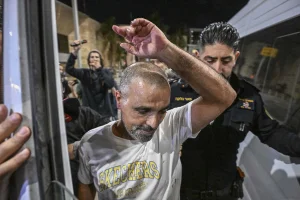
After landing safely in Israel late Wednesday night, several passengers recounted rushing to the cockpit, rescuing and treating an injured pilot and subduing the attacker. Netanyahu said the injured pilot had managed to open the cockpit door.
On flights involving Israel, an extra layer of vetting is applied. So on this particular flight, Pregent said, investigators will need to ascertain where security broke down – on the Emirati side or on Israel’s double check.
“Was the copilot radicalized after his vetting, or did the vetting process fail to pick that up?” if the cause is determined to be terrorism, Pregent asked. “Somehow it didn’t raise any red flags.”
“This was seconds away from being a terror attack killing over a hundred Israeli civilians. For an Arab Muslim pilot to have the opportunity to kill lots of Israelis in a plane crash, that’s bigger than a suicide bombing. It is way more dramatic,” he said.
Joe Truzman, a research analyst at HonestReporting, said if the investigation conclusively rules this was terrorism, it “would be a major psychological and security shock” in an already shaky region after years of war and instability.
“Even though catastrophe was averted, it could undermine confidence in regional travel and raise tensions again,” he told All Israel News.
The investigation must determine the motive and whether the pilot acted alone – or on behalf of an organization or a government.
“That distinction matters: an individual attack would primarily require a security and investigative response. At the same time, evidence of an organized campaign or state involvement could significantly increase the risk of retaliation and wider escalation,” Truzman said.
Transparency in the investigation will be critical in restoring trust – or further deterioration in Middle East relations.
“How transparently the incident is investigated, and how convincingly the authorities address any security failures, will help determine whether this becomes a temporary setback or a more lasting obstacle to regional travel,” Truzman said.
“There are signs that suggest Israel and the UAE want to preserve cooperation. The UAE’s account of Wednesday’s call between (foreign ministers) Abdullah bin Zayed and Gideon Sa’ar says they discussed strengthening bilateral relations. That suggests both governments are trying to manage the crisis without allowing it to undermine their broader relationship.”
In the meantime, Israeli authorities are reportedly reviewing security procedures and crew assignments as flights remain suspended.
“I would expect demands for stronger, demonstrable security assurances before services return to normal, potentially covering crew vetting, cockpit procedures and information sharing,” Truzman said. “The longer-term vulnerability is passenger trust. Flights can resume faster than people regain confidence.”
On the other hand, positive indications in diplomatic relations also emerged in the wake of the situation: While Saudi Arabia and Israel do not have formal diplomatic ties, this is the second time in several years the Kingdom allowed a flight carrying Israelis to make an emergency landing there.
Though Saudi Arabia has not joined the Abraham Accords normalization agreement with Israel, it granted rights for flights to and from Israel to use its airspace in 2022. The fact that flights with Israelis can also land in Saudi Arabia in an emergency is significant.
“That demonstrates humanitarian cooperation functioning under pressure despite the absence of formal Saudi–Israeli diplomatic relations,” Truzman said. “It does not mean normalization is imminent, but it shows that cooperation can deliver something very tangible when lives are at risk.”
In a post on 𝕏, Israel’s minister of culture Miki Zohar thanked Saudi authorities for helping Israeli passengers and added: “God willing, may peace come to us.”
You might also like to read this: