Why Israelis call Judea and Samaria by their biblical names



When I was a kid in Sunday School, our teacher drew a map of Israel and divided it into three horizontal strips and wrote their names on them. The north was Galilee, the middle was Samaria, and the south was Judea. She explained that Jesus lived in Galilee and went to Jerusalem in Judea for the Jewish feasts, and that most Jews preferred to avoid Samaria by walking through the coast or the Jordan Valley, because in Samaria their enemies – the Samaritans – lived. Sometimes Jesus did go that way, though, like when he met the Samaritan woman at the well.
Reality was a bit more complex than those simple straight lines. There are mountains, plains, and valleys to take into account. In general, Judea and Samaria were often thought of as the mountainous region in the middle of the Land of Israel, with the Jordan Valley to its east and the coastal plain to its west. That last part, too, was an oversimplification – Galilean pilgrims often did travel through Samaria, despite the tensions.
Judea was the southern region surrounding Hebron and Jerusalem, roughly corresponding to the area of the ancient Kingdom of Judah and, before that, the territories associated with the tribes of Judah, Simeon and Benjamin. Samaria was the area farther north, roughly corresponding to the heartland of the northern Kingdom of Israel, whose capital from Omri onward was Samaria. Herod the Great later rebuilt the city and renamed it Sebaste in honor of Augustus, but the region retained the name Samaria.
Although I have to add: Judea and Samaria are the Latinized versions of the original Hebrew names, Yehudah and Shomron. Where did the name Samaria, or Shomron, come from? 1 Kings 16:24 tells us that King Omri (Ahab’s father) purchased the land from a man named Shemer and therefore named the city Shomron.
In Acts 1:8, Jesus tells his disciples: “You will be my witnesses in Jerusalem, and in all Judea and Samaria, and to the ends of the earth.”
So “Judea and Samaria” is not a new political terminology invented by Israeli settlers. Christians have been reading these place names in their New Testaments for two thousand years. And they remained the historical/geographical names of the regions through later antiquity and into modern geographical writing. Did they have the exact borders as the current West Bank? No. Geographical names tend to have somewhat fuzzy borders, just as no one really knows the exact boundaries of the Midwest.
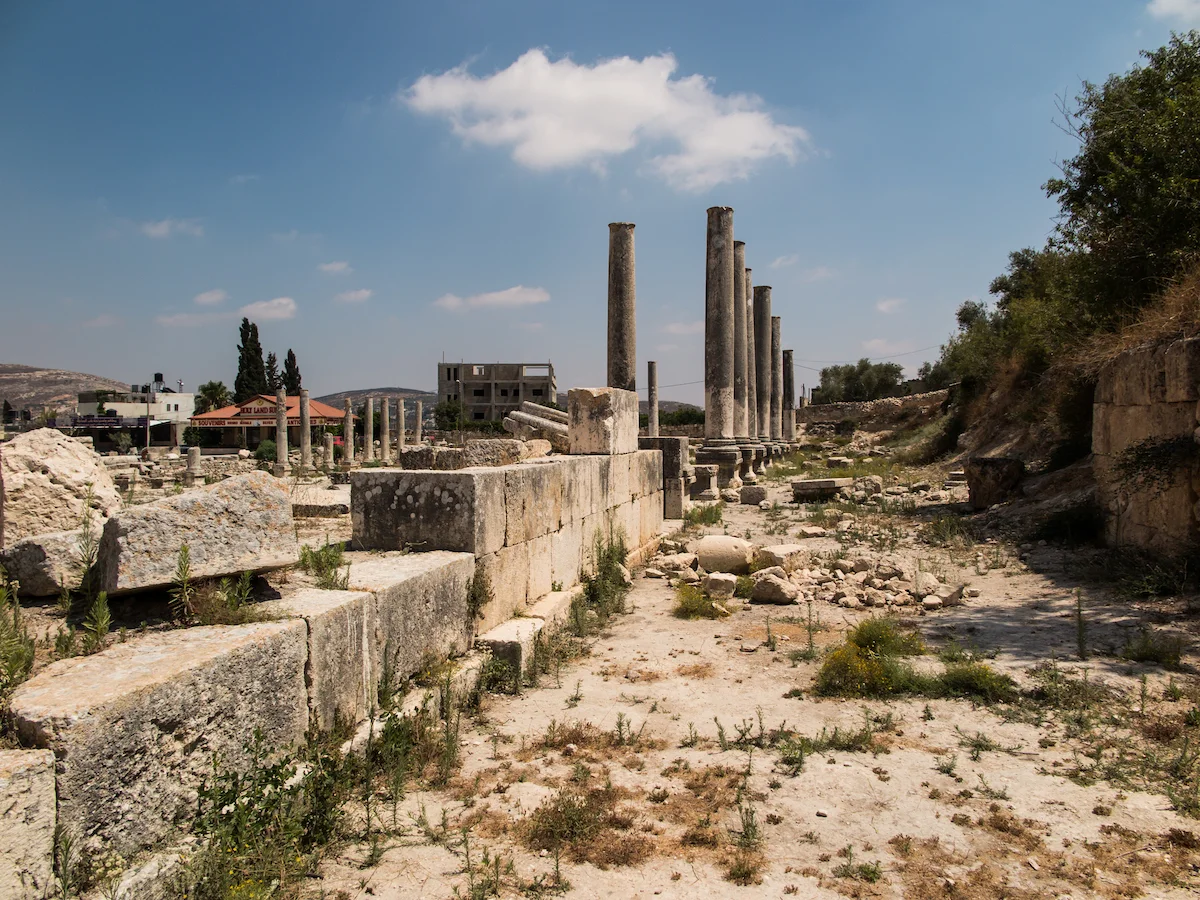
The term “West Bank” came into use in 1949, when those borders were drawn. Before then, “Judea and Samaria” remained normal geographical terminology – even at the United Nations. Resolution 181 from 1947 refers to “the hill country of Samaria and Judea” when describing the proposed Arab state.
In 1948, Transjordan had the best-organized and most effective Arab army in the war, commanded in large part by British officers. It captured East Jerusalem, including the Old City, and successfully held the strategic Latrun area. By 1949, Transjordan was officially styled Jordan, and the territory it had conquered west of the river became known as the “West Bank” – a name derived from Amman’s perspective. The 1949 armistice created a new dividing line that had not existed before, and the territory Jordan controlled west of the river acquired a new name.
In 1967, Jordan lost the territory, and in 1988, it officially gave up its claims to it. Despite this, the international terminology remained “West Bank.” In Israel, however, there was a debate on the matter. The first military orders called it “haGada haMa’aravit,” or the West Bank, but since that term justified the Jordanian perspective, Israel eventually decided to call the territory “Judea and Samaria,” reviving the ancient original name of the historical geographic regions that made up much of the territory.
Because Israel did not annex the West Bank – although it extended Israeli law and administration to East Jerusalem – the territory remained under separate military administration. The old 1949 borders were still in place, as the territory continued to be legally and administratively distinct from Israel proper and therefore required an official administrative name.
Today, neither term is neutral. In international circles, “Judea and Samaria” signals a message that you affirm the Jewish, biblical claim to the land, while “West Bank” is generally considered either pro-Palestinian or neutral, even though it is a Jordanian term.
Within Israel, “Yehuda v'Shomron,” or Judea and Samaria, is a fairly common term used mostly by settlers and on the Israeli right, but it has also developed into a fairly neutral name for the region, at least when referring to Israeli settlers living there.
Many Israelis, seeing there is no neutral term for the area, prefer to call it “haShtachim” or “the territories.” In a news report discussing Palestinians, journalists may talk about Palestinians from Gaza versus those from “haGada,” meaning, "the Bank,” while referring to Israeli settlers as living in Yehuda v'Shomron.
So Israelis do not call the area Judea and Samaria because modern Zionists invented biblical-sounding names for a contested territory. Those are ancient geographical names that were still used internationally before 1948. The term “West Bank” emerged later, during Jordan’s rule from 1948 to 1967. Today, the choice between the names reflects not only geography but also which chapter of the land’s history the speaker considers most important.
You might also like to read this: