Early Starters International brings trauma-informed, innovative spaces to children affected by conflict in Israel



Early Starters International is a non-profit humanitarian organization dedicated to creating safe spaces for children living in crisis and conflict zones. Beyond providing immediate relief, the organization works to drive systemic change through policy advocacy, educator training, and the enhancement of existing early childhood facilities.
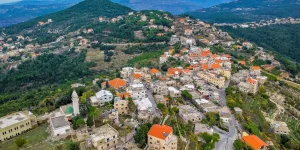
In October 2023, following the Hamas attack in southern Israel and Hezbollah’s attacks in the north, Early Starters International opened its first safe space in the northern Israeli town of Shlomi to support displaced communities. Located in hotels and community centers, these spaces provided children with routine, stability, and psychological support amid the upheaval of wartime displacement.
Building on this mission, the Shlomi space introduces a design-focused, trauma-informed environment for children. By engaging all five senses – sight, sound, touch, smell, and taste – the space fosters a sense of safety and predictability while supporting emotional and physical healing. Extensive research across neuroscience, design, and mental health fields shows that trauma extends beyond emotional impact, shaping the body, the senses, and how individuals perceive reality.
Helli Naftalovich, director of Early Starters International Israel, said, “In the Shlomi safe space, we set out to turn design into a language – not as decoration, but as a tool that speaks directly to the body and the senses, even before words.”
Most children’s play areas are marked by bright colors that create an environment of “stimulation” and “high energy,” but those hallmark traits have been diminished in the unique design of this therapeutic space. As reported by the Jerusalem Post, the Shlomi space “was created as a protective bubble. Every element - light, materials, sound – was selected to reinforce the core message ‘you are safe.’”
Naftalovich added, “Every design decision here, from light to texture, is meant to communicate one message: You are safe. You can slow down.”
The space features gentle, curved architectural forms, warm, diffused lighting, and a soothing pastel palette. Natural, flexible, and tactile materials invite physical engagement, while slow, calming sounds and familiar scents – like "vanilla and butter cookies" – act as sensory anchors, evoking feelings of home and safety. Walls wrapped in fabric and adorned with illustrations create a subtle visual story, guiding children into a secure and imaginative environment.
According to the Jerusalem Post, the layout is divided into five adaptable zones: a cozy area for calming and self-regulation; a creative art corner; a home-like socio-dramatic space; a zone for physical play and construction; and a combined dining and parent-rest area. Designed to encourage independent exploration and emotional growth, the space offers age-appropriate activities that strengthen parent-child bonds and nurture children’s sense of agency.
Currently, Early Starters International runs dozens of permanent safe spaces across northern and southern Israel, part of an ongoing effort to support children’s recovery and well-being, and to address the widespread psychological impact of conflict. Trauma and PTSD have affected communities across the country, from the south to the northern border.
In southern communities such as Sderot, studies have found that between 75 and 94 percent of children exhibit clinical markers of PTSD – including nightmares, bed-wetting, and difficulty concentrating. Routine school drills, rocket-alert apps, and exposure to injured classmates have spread anxiety far beyond frontline areas, prompting pediatric psychologists to warn that untreated childhood trauma can lead to higher rates of adult depression, aggression, and chronic illness.
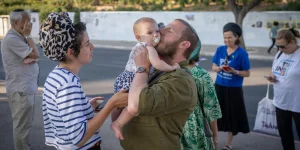
Israel authorized northern communities, including Dovev – a moshav near the Lebanese border – to return to their homes in March 2025. At first, residents reported a sense of “euphoria” after receiving the greenlight to pack up and return. That optimism, however, quickly gave way to anxiety about the future. In Dovev alone, roughly 300 families were displaced by the fighting.
Many families from northern communities have not yet returned to their homes, leaving open the question of if and when they will be able to do so safely. The uncertainty continues to weigh heavily on residents, as ongoing security concerns and the psychological impact of displacement shape daily life.
If you or your loved one is struggling with anxiety or trauma-related stress in Israel, please contact the NATAL Israel Helpline at 1-800-363-363 or *3362.
Want to help more people find our reporting from Israel? Leave a quick Google review of our website HERE .
You might also like to read this: