











opinion The doomsday that never came: AI, the Tower of Babel, and humanity's need for God
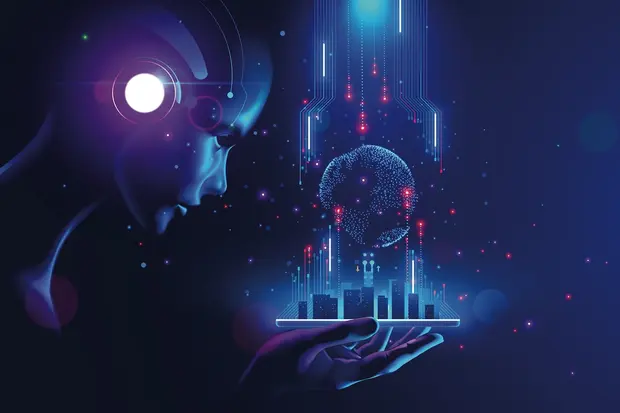
Sixty-six years ago, scientists calculated that November 13, 2026, would mark humanity's mathematical doomsday. The world survived. But the warning behind that extraordinary calculation may be more relevant than ever in the age of artificial intelligence.
On November 13, 2026, the world failed to end.
That was hardly surprising. What deserves our attention is why three respected scientists once identified that precise date as humanity's mathematical doomsday—and why one of the world's leading researchers in complex systems believes the calculation still contains a warning.
In 1960, Heinz von Foerster, Patricia Mora, and Lawrence Amiot published an extraordinary paper in Science, titled "Doomsday: Friday, 13 November, A.D. 2026."
Their analysis suggested that if humanity's historical population growth continued according to the mathematical pattern they had identified, the world's population would approach infinity on that date.
Of course, an infinite human population is impossible.
But the researchers had discovered something remarkable: for much of recorded history, population had not merely expanded. Its growth had accelerated, supported by an increasingly powerful relationship among people, knowledge, technology, and resources.
More people produced more ideas. More ideas increased productivity. Greater productivity supported more people.
The system reinforced itself.
The mathematics eventually pointed toward an impossible outcome.
Yet what if that impossibility was not the real warning?
At a November 2026 conference in Vienna devoted to the original calculation, physicist and complexity researcher Didier Sornette offered a provocative interpretation.
A mathematical singularity need not predict an actual infinity. It can indicate that an accelerating system is approaching conditions under which its existing behavior cannot continue.
The critical date becomes a warning about the system, not a prophecy about the world's destruction.
History largely vindicated the need for caution, though not the original numerical prediction. Population growth slowed considerably as fertility patterns changed. The United Nations now projects that global population will peak around 10.3 billion in the mid-2080s.
Nevertheless, in a 2001 study, Sornette and Anders Johansen identified historical patterns compatible with a major transition around 2052, give or take ten years. That remains a model-dependent hypothesis, not an established forecast.
The important insight lies elsewhere.
Sometimes the forces producing a civilization's greatest successes also create the conditions for its greatest vulnerabilities.
And humanity has now introduced a technology capable of accelerating both: artificial intelligence.
When intelligence outruns wisdom
Artificial intelligence is unlike most earlier technologies because it can assist in producing the knowledge necessary to develop further technologies.
AI systems already help researchers analyze data, write computer code, explore scientific hypotheses, and solve complex mathematical problems.
As these capabilities improve, they may accelerate scientific discovery, medical innovation, financial productivity, and the development of subsequent AI systems.
The possibilities are extraordinary.
But the dangers are equally consequential.
The same systems that can improve medical diagnosis can facilitate dangerous experimentation. Technologies that strengthen cybersecurity can also assist sophisticated cyberattacks. Algorithms that increase financial efficiency can contribute to instability when institutions depend upon similar models, assumptions, and automated decisions.
AI may expand human capability without comparably expanding human judgment.
This distinction is foundational.
Intelligence allows us to calculate what can be done.
Wisdom helps us determine what ought to be done.
A civilization can possess impressive technological sophistication while making catastrophically foolish decisions.
And Scripture has been warning humanity about that possibility for thousands of years.
Babel was not destroyed because its builders lacked intelligence
Genesis 11 describes humanity united by a common language, technological capacity, and collective ambition.
The people of Babel developed construction methods and undertook an extraordinary engineering project.
Their stated objective was revealing:
"Let us build ourselves a city, and a tower whose top is in the heavens; let us make a name for ourselves" (Genesis 11:4, NKJV).
The problem was not architecture.
Nor was it technological progress.
Genesis 1:28 entrusts humanity with responsibility over creation, while Genesis 2:15 presents cultivation and stewardship as part of mankind's calling.
The problem at Babel was the purpose to which human ingenuity had been directed.
Its builders sought greatness and security on their own terms. Collective human achievement became an instrument of self-exaltation.
Babel therefore presents a theological warning that has lost none of its relevance.
Human beings can become extraordinarily competent at accomplishing objectives they have never wisely examined.
Artificial intelligence magnifies precisely this danger.
A machine may produce an exceptionally effective solution to a problem without determining whether the problem has been framed morally, whether the objective is legitimate, or whether the resulting achievement serves the good of humanity.
An algorithm can optimize the means without justifying the ends.
If human beings surrender responsibility for choosing those ends, technological sophistication becomes a substitute for moral accountability.
Babel's enduring lesson is not that mankind must abandon innovation.
It is that innovation becomes dangerous when human power is treated as a replacement for dependence upon God.
Israel, artificial intelligence, and the burden of responsibility
Nowhere is this question more immediate than in Israel.
Israel has established itself as a leading center of technological innovation despite its small population and demanding security environment.
According to the Israel Innovation Authority's 2026 annual report, approximately 35% of Israeli high-tech investment during 2025 was directed toward companies developing core artificial-intelligence technologies.
This is an extraordinary concentration of resources in a field increasingly important to medicine, cybersecurity, economic competitiveness, and national defense.
For Israel, these technologies are not simply commercial opportunities.
They can contribute to protecting critical infrastructure, identifying threats, strengthening defensive capabilities, and preserving human life.
But technological superiority carries moral obligations.
Consider a difficult security decision supported by an advanced AI system.
The system may process thousands of intelligence reports, recognize patterns invisible to human analysts, and recommend a course of action within seconds.
Its recommendation may be extraordinarily useful.
But who is responsible if its underlying information is wrong?
Who evaluates uncertainty, proportionality, civilian risk, and the possibility that an apparently optimal decision will produce unacceptable consequences?
The algorithm cannot assume the moral responsibility of the commander or policymaker.
That responsibility remains human.
Israel's biblical inheritance speaks directly to this distinction.
Deuteronomy 16:20 commands: "Justice, and only justice, you shall follow" (ESV).
Micah 6:8 identifies the demands of justice, mercy, and humility before God.
These are not instructions that become obsolete with advanced military or computational technology.
Israel has legitimate security responsibilities, and technological innovation can serve them. But the moral standards governing human life cannot be replaced by claims of superior efficiency or predictive accuracy.
For Israeli believers in Yeshua, there is an especially important witness here: technological achievement and faithful stewardship need not compete, but neither can one substitute for the other.
The nation that gave the world the Hebrew Scriptures should help remind the technological world that the highest achievement is not merely power, but power exercised with justice.
What Daniel actually teaches about the future
Daniel 12:4 contains a statement that seems particularly striking in our technological age: many will go to and fro, and knowledge will increase.
Some Christians see in these words an anticipation of modern transportation, instantaneous communication, and artificial intelligence.
We should be cautious.
Daniel's immediate context concerns prophetic revelation, and scholars disagree about whether the increase of knowledge refers principally to a greater understanding of that revelation or to broader human knowledge.
It would be irresponsible to announce that Daniel specifically predicted machine learning.
Nevertheless, the book's larger theological message is unmistakable.
Human kingdoms rise. They accumulate wealth, military power, and administrative sophistication. Their rulers may become convinced that history is theirs to direct.
Yet their sovereignty remains limited.
Daniel 2:21 declares that God changes times and seasons and removes and establishes kings.
Nebuchadnezzar learned that political greatness could not make him independent of the Most High.
Modern civilization faces a related temptation.
AI researchers may someday construct systems of astonishing capability. Financial markets may assign immense valuations to technologies promising extraordinary productivity. Political leaders may believe that technological superiority guarantees national security.
But predictive capacity is not sovereignty.
Humanity may become increasingly capable of modeling the world without becoming capable of controlling every consequence of its decisions.
Nor does mathematical sophistication authorize Christians to predict the timing of the end.
Jesus warned that no one knows the day or hour (Matthew 24:36).
A mathematical singularity is not the Second Coming.
A speculative technological timeline is not the Book of Revelation.
And a scientific warning about systemic instability should never be mistaken for a divine announcement that a particular year must bring catastrophe.
Christian discernment requires that we distinguish what science can investigate from what God has revealed.
The greatest risk may be our refusal to hear the warning
Sornette's broader work identifies a particularly troubling feature of complex organizations: dangerous information may exist long before a catastrophe, yet fail to reach those with authority to respond.
Executives may discourage unwelcome reports. Institutions may reward reassuring forecasts. Individuals may conceal errors because telling the truth threatens professional advancement.
In such circumstances, catastrophe can become a consequence not merely of insufficient knowledge but of suppressed knowledge.
Scripture recognizes this pattern.
Jeremiah condemned those who offered false assurances of peace while refusing to confront the underlying corruption of their society (Jeremiah 6:14).
Isaiah 5:20 warned against the moral inversion that calls evil good and good evil.
The prophets were not presenting mathematical theories of financial contagion or technological risk.
They were identifying a deeper human problem: the capacity to possess information while refusing the truth it demands.
AI could magnify that problem.
Organizations may become increasingly dependent upon systems whose outputs appear precise but whose assumptions, uncertainties, and limitations are inadequately understood.
When a machine produces a persuasive answer, people may stop asking whether the answer is true.
When an algorithm recommends an efficient decision, institutions may stop asking whether the decision is just.
When AI can generate a convincing explanation of almost anything, the ability to distinguish knowledge from persuasion becomes more—not less—important.
The answer is not to reject artificial intelligence.
It is to ensure that technological systems remain subordinate to truthfulness, transparency, and accountable human judgment.
What Christians must do now
These questions demand more than abstract theological reflection.
Christian universities should teach students to use AI productively while requiring them to demonstrate independent knowledge and reasoning.
Written examinations, oral defenses, evidence-based assignments, and careful assessment of foundational knowledge should remain part of serious education. Students should not graduate with polished AI-generated work but an inability to explain what they supposedly learned.
Churches should train believers to distinguish biblical interpretation from plausible-sounding machine-generated theology.
An AI system may accurately summarize a biblical passage. It may even construct an impressive theological argument.
But generating religious language is not the same as possessing faith, repentance, worship, or spiritual discernment.
Technology companies should build meaningful safeguards into systems whose failures may affect human life, security, or essential institutions.
Governments should retain human accountability over consequential decisions, particularly those involving military force, surveillance, and individual rights.
And Christians working in science, finance, public policy, and engineering should understand their professional responsibilities as expressions of stewardship before God.
The question is not whether Christians should participate in technological innovation.
They should.
The question is whether they will bring biblical wisdom into institutions increasingly tempted to equate capability with authority.
The future belongs neither to a machine nor to a mathematical model
The world survived November 13, 2026.
The original doomsday calculation did not describe humanity's actual demographic future.
But its deeper warning remains worth hearing.
Civilizations can generate extraordinary growth while failing to recognize the limits and dependencies created by that growth.
Artificial intelligence could help humanity overcome longstanding problems, including disease, resource scarcity, and inefficient production.
It could also magnify conflict, deception, institutional fragility, and the concentration of power.
Neither outcome is predetermined by mathematics.
What Scripture establishes is something more fundamental.
Humanity's deepest problem has never been the absence of sufficient intelligence.
It is the failure to order its intelligence toward truth, justice, humility, and obedience to God.
Proverbs 9:10 declares:
"The fear of the LORD is the beginning of wisdom" (NKJV).
And Colossians 1:17 teaches that all things hold together in the Messiah.
For Christians and Messianic Jews, these truths provide neither an excuse for complacency nor permission for technological fatalism.
They provide the basis for responsible action.
We are called to cultivate knowledge without worshiping it, exercise power without idolizing it, and embrace innovation without surrendering conscience.
The builders of Babel believed their collective ingenuity could secure their greatness.
Our generation may be tempted to believe that artificial intelligence can secure our future.
But a machine cannot redeem the human heart.
An algorithm cannot absolve moral responsibility.
And no technological singularity can take the place of the living God.
The world does not need another doomsday prediction. It needs a recovery of wisdom before intelligence becomes an instrument of its own undoing.
That wisdom begins where Scripture has always said it begins: with the fear of the Lord.
Popular article:
interview Easter message of resurrection hope amid war at Jerusalem's Garden Tomb

biblical commentary Let my people go: a Passover message for today

4 IDF soldiers killed, 2 wounded in fighting in southern Lebanon, as Israel eliminates dozens of Hezbollah terrorists

Receive latest news & updates
A message from All Israel News
Help us educate Christians on a daily basis about what is happening in Israel & the Middle East and why it matters.
For as little as $10, you can support ALL ISRAEL NEWS, a non-profit media organization that is supported by readers like you.
Latest articles:

Israeli shekel falls 8% against dollar since election amid political uncertainty
Waiting on Trump: Netanyahu fears delay in Iran strike decision could put key targets beyond reach
Speculation over significance of handshake between Israeli, Pakistani diplomats

Outrage in Lebanon after IDF officer’s visit to Christian school, Lebanese PM claims Israel tries to ‘whitewash the occupation’

Pro-Israel German politician Karoline Preisler kicked to ground at pro-Palestinian protest in Berlin