Amnesty says Hamas must 'stamp out' extrajudicial executions of ‘collaborators,' ensure justice
‘Anyone who feels insulted grabs a gun’ – Gazans report culture of militancy created by Hamas inside Gaza





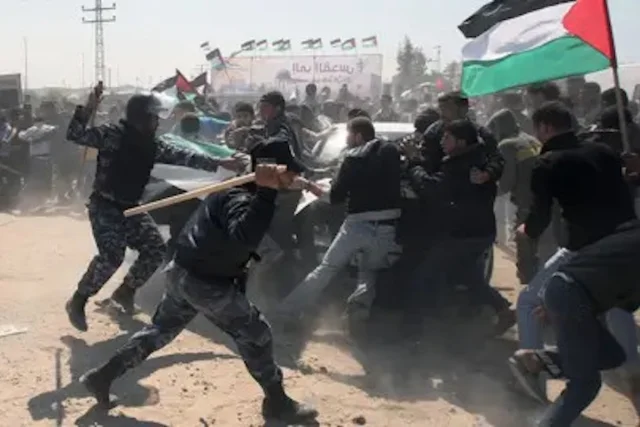
Hamas and other Palestinian terror organizations must end extrajudicial executions of Palestinians suspected of collaborating with the Israeli government, Amnesty International said in a recent article published to its website.
“Authorities and forces affiliated with Hamas in the occupied Gaza Strip must put an end to extrajudicial executions of suspected collaborators with Israel, carried out in the absence of any judicial proceedings,” the human rights organization said in a statement.
Amnesty cited a June 2026 UN report, which it said found “249 cases of extrajudicial executions and severe physical violence in Gaza between August 2024 and early 2026.”
Many of these cases were carried out directly by Hamas forces, Amnesty claimed.
Despite calling out Hamas for “extrajudicial executions and unlawful killings,” Amnesty still blamed Israel for “the collapse of law and order in Gaza and the extreme state of deprivation,” saying they were a result of “Israel’s ongoing genocide.”
“The Hamas authorities must immediately halt all unlawful killings, acts of vigilantism, and arbitrary arrests,” Amnesty International’s Senior Director for Research, Advocacy, Policy and Campaign Erika Guevara-Rosas said.
“Restoring law and order must never serve as a cover to commit grave human rights violations, carry out reprisals or to collectively punish entire families,” she said.
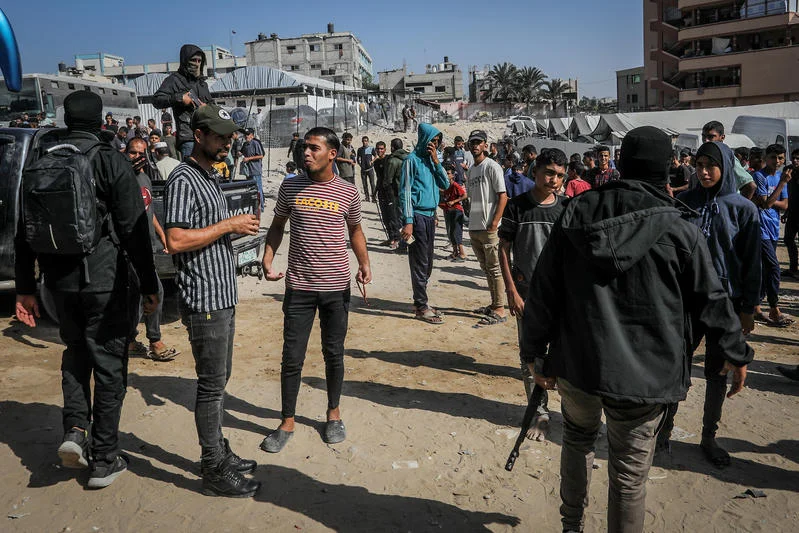
On its Telegram channel, Hamas has publicly confirmed the executions of several Gazan Palestinians, calling them “collaborators.”
Before the October 2025 ceasefire, a Telegram channel affiliated with Hamas published several documented killings of so-called “collaborators,” along with threats to hunt down any Gazan citizen passing information to Israel.
In its report, Amnesty said it documented nine extrajudicial executions and one unlawful killing, all of which came after the October 2025 ceasefire-hostage deal.
Several of those killed were members of the Dughmush family from western Gaza City, with which Hamas engaged in a battle for control over Al-Sabra neighborhood, following the ceasefire declaration.
Hamas also publicly executed “eight unarmed members of the Dughmush family,” accusing them of collaborating with Israel.
A Palestinian woman who spoke with Amnesty International on condition of anonymity, to protect her safety, said the eight family members “turned themselves in after being promised a fair trial, only to be publicly executed two hours later.”
At the same time, the Center for Peace Communications, a New York-based nonprofit organization dedicated to fostering reconciliation and reducing identity-based conflicts in the region, said that Hamas has created a culture of militancy in the Gaza Strip.
Citing several testimonials shared with Jusoor News by local Gazans, the Center for Peace Communications described a broad “proliferation of weapons beyond militant ranks.”
It referred to a recent video published by Jusoor News, in which armed Gazan men can be seen shouting to Hamas, “We have guns just like you!”
"يا حماس، مسلحين مثل ما كنتم".. غضب وتهديد بالثأر خلال تشييع ثاني قتلى عائلة أبو وردة على يد عناصر من كتائب القسام، وسط إطلاق نار كثيف. pic.twitter.com/7sHRwFSZTh
— جسور نيوز (@JusoorNews) August 17, 2026
“Anyone who feels they or their family has been insulted grabs a gun,” an older man told Jusoor News. “The leaders don’t treat people with respect, and regular people don’t respect the leaders or each other.”
Moumen Al-Natour, a political activist who fled Hamas’ rule in Gaza during the war, told the Center for Peace Communications that the Hamas’ ideology created a culture of violence that needs to be uprooted.
“When I was a child, I remember my Islamic studies teacher telling us, ‘Kill a Jew and you will enter paradise,’” Al-Natour recalled. “If we do not replace these ideas with new ones, we will accomplish nothing.”
Support our independent, on-the-ground reporting from Israel. Become a $5/month Ally.
You might also like to read this: