UN resolution for ISF Gaza mandate reportedly urges Hamas disarmament but could open door for UNRWA return
Future of ceasefire remains uncertain as Hamas refuses disarmament







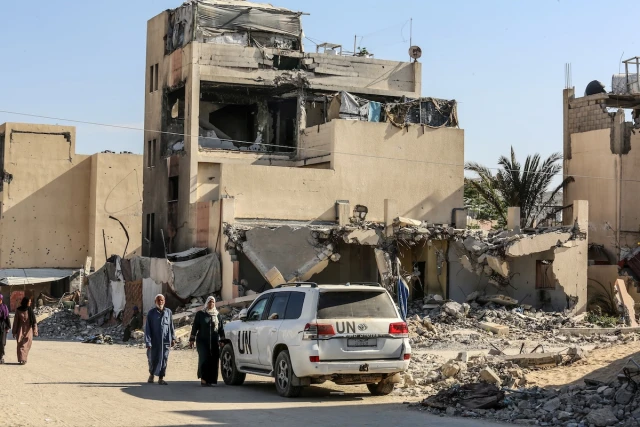
The U.S. has redrafted the wording of a proposed UN Security Council resolution concerning the future of Gaza and will present it to the council members on Tuesday, hoping for a vote by the end of the week, according to Israel Hayom.
The council members will be able to comment and propose changes for 24 hours, before a vote on Friday or this coming Monday, the report said.
A previous draft had received a significant amount of criticism. The resolution is intended to demarcate the authority and responsibilities of the International Stabilization Force (ISF), which is supposed to take over security responsibility, and the transitional administrative authority for the Gaza Strip.
According to a report by Reuters, ten countries, including Arab and European states, expressed hesitation and concerns over the first draft and signaled they wouldn’t participate in the ISF if there was a chance of direct confrontation with Hamas.
The resolution is expected to lay out a roadmap for the future of the Gaza ceasefire, which has been stuck in its first phase for around a month, as Hamas still holds the remains of three Israeli hostages, and one Thai, and refuses to disarm.
The Gaza Strip is currently split in half, with the IDF holding the areas east of the Yellow Line demarcating the two areas. According to Israel Hayom, the new text conditions the IDF’s further withdrawal on full demilitarization and coordination with the U.S. and Arab states.
The Israeli army will withdraw “in accordance with milestones and timetables jointly determined with the security forces, the guarantor states, and the United States,” and a limited Israeli security presence will remain until the prevention of terrorism’s return is assured, according to the draft.
However, the revised text also includes problematic changes for Israel, which could potentially open the door for the return of UNRWA to the enclave.
The draft doesn’t include the sanctions against international aid organizations that have a history of cooperation with terrorism anymore.
The new text only says that there must be “assurances that such aid will be used solely for peaceful purposes and not diverted to armed groups.”
Regarding the transitional authority, the draft resolution stipulates that it will have to submit a written report every six months about the implementation progress of Gaza’s demilitarization to the Security Council.
Another clause calls for direct coordination between the IDF, the ISF, Arab states, and the U.S., stressing the ISF’s responsibility to prevent the reconstruction of terrorist infrastructure and to ensure the complete disarmament.
However, with the ceasefire still stuck in phase one, 18 different sources told Reuters this week that they fear the Yellow Line could become a permanent de facto border dividing Gaza.
IDF international spokesperson Lt. Col. Nadav Shoshani has said that Israeli efforts to fortify the Yellow Line are meant to prevent Hamas infiltrations, vowing that Israeli troops would withdraw once the terror group disarms.
“Once Hamas fulfills its part of the agreement, we will move forward,” he said.
Speaking to Reuters, six European officials involved in the diplomatic efforts confirmed that the U.S.-backed peace plan is stalled, and U.S. plans for reconstruction efforts are focusing only on the Israeli-controlled side of Gaza.
A 62-year-old Gaza resident told Reuters that many Gazans will want to move to the Israeli side if reconstruction starts only there, which could be one of the goals of the American plan, effectively pressuring Hamas into disarming or losing all its population.
However, the Arab states have signaled opposition to this idea, and are also insisting that the Palestinian Authority be involved in governing Gaza in the future. The Gulf states are reportedly conditioning their financial support for reconstruction, with costs estimated at $70 billion, on this issue.
Jordanian Foreign Minister Ayman Safadi emphasized, “Gaza is indivisible; it is part of the occupied Palestinian territories.”
You might also like to read this: