










Israeli ministers back controversial law that allows police use of facial recognition cameras in public spaces
Critics decry the bill as ‘Big Brother Law’
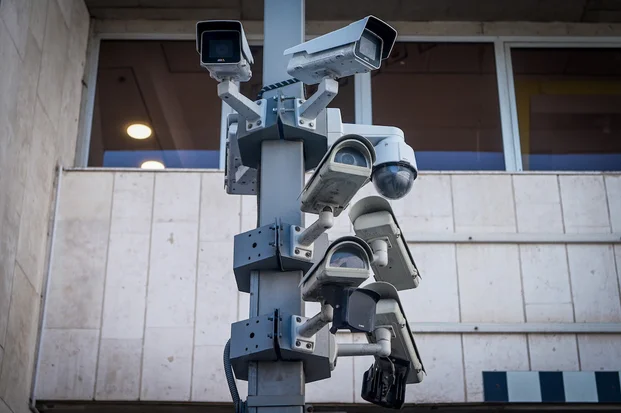
A new bill that would allow the Israel Police to use facial recognition cameras in public spaces received the support of the Ministerial Committee for Legislation on Monday, according to local media reports.
If the bill passes into law, the Israeli police force, as well as Israel's security agencies, like the Shin Bet, will be allowed to access information gathered by the cameras without first obtaining a special court order.
The bill’s explanatory section states that the data from the cameras will be used to “prevent, thwart or uncover serious crime and those involved in planning or carrying it out.”
The proposed bill comes amid the unprecedented wave of crime, especially in Israel’s Arab community, following repeated criticism of the police for its failure to curb the phenomenon.
The bill would also allow the use of a computer vision system, which is capable of identifying vehicle license plates in order to determine if it was stolen or if the owner’s driver’s license expired.
The bill was submitted by National Security Minister Itamar Ben Gvir and Justice Minister Yariv Levin and is the latest version of similar bills dating back to 2013-14, with another version having been advanced by the previous government under then-Prime Minister Naftali Bennett, before being shelved.
The previous version was dismissed in February after its definition of the limits for using the cameras was considered too vague. In addition, the bill had been criticized across the political spectrum for potentially endangering freedom of speech and expression.
The current version has a clause that will forbid the use of the law to enforce events such as protests, which would encroach on freedom of speech and includes a three-year prison sentence for abusing the use of cameras.
The current version has a clause that will forbid the new law from being enforced at specific events, such as protests, so as not to limit freedom of speech. It also includes a three-year prison sentence for abusing the use of cameras.
The Knesset is expected to vote on the draft of the new bill in a special plenum session on Tuesday.
Ben Gvir defended the proposed law, which he said will allow the police to deal with criminals more effectively.
“I say to all those that are nagging, whoever opposes this law probably doesn't care that people are murdered in Arab society. This law exists in London and the USA and today we also are giving the police here tools to deal with crime,” he said.
The anti-judicial reform group Hofshi B’Artzenu (translated from Hebrew as 'To be free in our own country') condemned the proposed legislation as “a clear sign of dark regimes with one common denominator—dictatorship,” while the Kaplan Force protest movement decried it as a “delusional proposal” borrowed from the Iranian ayatollahs.
Right-wing libertarian politician and former Knesset Member Moshe Feiglin called the bill “shocking,” and “Orwellian horror.”
“In the same way as it destroyed and handed over parts of our country, much more than the left, even with these Big Brother laws the ‘right’ succeeds in harming itself first of all.”
Popular article:
interview Easter message of resurrection hope amid war at Jerusalem's Garden Tomb

biblical commentary Let my people go: a Passover message for today
4 IDF soldiers killed, 2 wounded in fighting in southern Lebanon, as Israel eliminates dozens of Hezbollah terrorists

Receive latest news & updates
A message from All Israel News
Help us educate Christians on a daily basis about what is happening in Israel & the Middle East and why it matters.
For as little as $10, you can support ALL ISRAEL NEWS, a non-profit media organization that is supported by readers like you.
Latest articles:
Israeli Arab charged with spying for Iran, citing ideological motives
3 Israelis injured, 1 Palestinian woman killed in violent incident outside new Jericho settlement
Israel rises to world's 25th-largest economy despite war, boycott calls
US envoy Waltz visits Lebanon amid discussions over new peacekeeping force, stalled Hezbollah disarmament
Despite years of war, Israeli children and teens report high levels of life satisfaction, international surveys find