









Israel invests $33 million in quantum computing infrastructure as global race intensifies
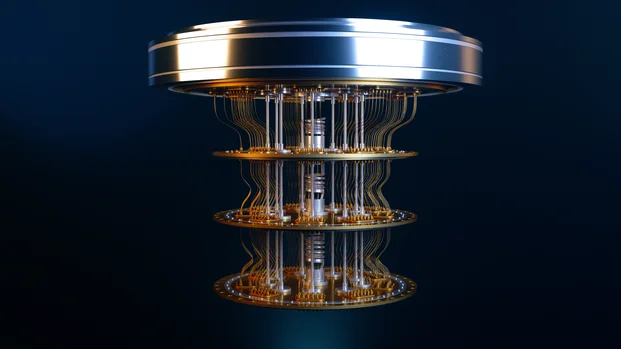
The Israel Innovation Authority (IIA) announced on Monday that it will invest NIS 100 million ($33 million) in establishing national quantum computing infrastructure and a research and development (R&D) center to support local universities and businesses. The move comes as Israel seeks to secure a leading position in the rapidly developing global quantum technology race, which is expected to have far-reaching implications in the years ahead.
The authority explained that the new Israeli Quantum Computing Center seeks to provide advanced research facilities to both Israeli universities and emerging startup companies.
“It was launched at a time when Israeli quantum processors were not yet available and therefore relied on foreign processors,” the IIA stated. “The current call for proposals is intended to establish Israeli quantum computing technology and, on that basis, provide R&D services to Israeli academia and industry,” it added.
The new national R&D center will reportedly integrate three different quantum processing technologies, enabling Israeli institutions to evaluate and test the performance of various platforms.
“Quantum computing is expected to fundamentally transform the way industries address highly complex computational challenges,” IIA CEO Dror Bin said. “We aim to provide Israeli industry and academia with a state-of-the-art R&D infrastructure that will enable them to evaluate, integrate, and adopt quantum computing technologies, transforming scientific and technological knowledge into a competitive advantage for Israeli high-tech while strengthening Israel’s position as a global leader in this field.”
Powerful quantum processors are designed to solve complex problems that conventional computers are currently unable to address. While quantum technology remains in its early stages, experts expect it could eventually enable breakthroughs across a wide range of fields, including drug discovery, economics, engineering, scientific research, security, financial modeling and cryptography.
The United States and China are reportedly leading the global quantum technology race, with multi-billion-dollar investments in infrastructure, research and talent development.
Israel’s resources are far more modest in comparison. However, the country has leveraged its strong domestic tradition of innovation to develop indigenous quantum technology capabilities. In June 2024, Israel opened its first Quantum Computing Center at Tel Aviv University, and in December 2024, it unveiled its first domestically produced quantum computer.
“The research team working on this ambitious project is among the best at the Hebrew University. The collaborative, multidisciplinary nature of this project will yield critical outcomes for research and bolster Israel’s scientific and technological status,” Hebrew University Director Yishai Fraenkel predicted at the time.
However, concerns remain in Israel that insufficient funding could undermine the country’s ambitions of securing a spot among the world’s quantum technology leaders.
“Establishing a national R&D infrastructure is expected to enable Israeli companies to evaluate different technologies, shorten development cycles, build practical expertise, and develop the capabilities needed to compete in the rapidly evolving global quantum ecosystem,” the Israel Innovation Authority stated.
Popular article:
interview Easter message of resurrection hope amid war at Jerusalem's Garden Tomb

biblical commentary Let my people go: a Passover message for today

4 IDF soldiers killed, 2 wounded in fighting in southern Lebanon, as Israel eliminates dozens of Hezbollah terrorists

Receive latest news & updates
A message from All Israel News
Help us educate Christians on a daily basis about what is happening in Israel & the Middle East and why it matters.
For as little as $10, you can support ALL ISRAEL NEWS, a non-profit media organization that is supported by readers like you.
Latest articles:

North American Jewish organizations to recruit 100 professionals to combat antisemitism

‘No need’ for pre-election Iran strike, IDF chief says as gov’t, opposition trade blame for potential escalation – report

terror attack 2 Israeli soldiers killed, 2 terrorists eliminated in Hebron shooting; IDF says much larger attack was prevented

analysis A people dwelling securely? Israel’s strategic standing, 3 years after Oct 7

Hamas on wheels: What I found in Dearborn reveals a troubling history and a battle over Israel