Israel aspires to become “AI superpower,” expanding autonomous warfare

Israel has ambitions to become a “superpower” in the field of artificial intelligence warfare.
The director-general of the Israeli Ministry of Defense, Maj.-Gen. (ret.) Eyal Zamir predicts that AI technology will dramatically change the future of warfare and wants Israel to be at the forefront of new developments.
“There are those who see AI as the next revolution in changing the face of warfare on the battlefield,” Zamir said. “Our mission is to turn the State of Israel into an AI superpower and to be at the head of a very limited number of world powers that are in this club."
The senior Israeli military officially made these remarks while addressing participants at the 20th Annual Herzliya Conference at Reichman University. The local summit is held each year to discuss issues of state security and policy.
Recent civilian-developed AI could potentially have important applications in the field of military technology. These include "the ability of platforms to strike in swarms, or of combat systems to operate independently, of data fusion and of assistance in fast decision-making, on a scale greater than we have ever seen,” according to Zamir.
Israel, internationally recognized as the Start-Up Nation, has emerged as one of the world leaders in the field of cyber warfare. Zamir praised the nation’s cyber warfare success against Iranian nuclear facilities thus far and said it constitutes "a correct and timely discerning of the defense, economic, national and international dimensions.”
In April 2021, Fereydoun Abbasi, head of the Iranian Parliament’s energy committee, reluctantly expressed admiration for the Jewish state’s cyberwarfare capabilities when Israel’s military forces reportedly hit Natanz, a key Iranian nuclear facility.
“The enemy’s plot was very beautiful. I’m looking at it from a scientific point of view. They thought about this and used their experts and planned the explosion so both the central power and the emergency power cable would be damaged,” said Abbasi.
At the time, Iran called the attack an “act of nuclear terrorism” and was expected to set back Iran’s ability to enrich uranium by as much as nine months.
Popular article:

interview Easter message of resurrection hope amid war at Jerusalem's Garden Tomb

biblical commentary Let my people go: a Passover message for today

4 IDF soldiers killed, 2 wounded in fighting in southern Lebanon, as Israel eliminates dozens of Hezbollah terrorists

Receive latest news & updates
A message from All Israel News
Help us educate Christians on a daily basis about what is happening in Israel & the Middle East and why it matters.
For as little as $10, you can support ALL ISRAEL NEWS, a non-profit media organization that is supported by readers like you.
Latest articles:

With over 85% of votes counted, Israeli elections end without clear path to viable coalition

Trump to impose unity government on Israel? - Reports claim US president pushing for government without controversial ministers
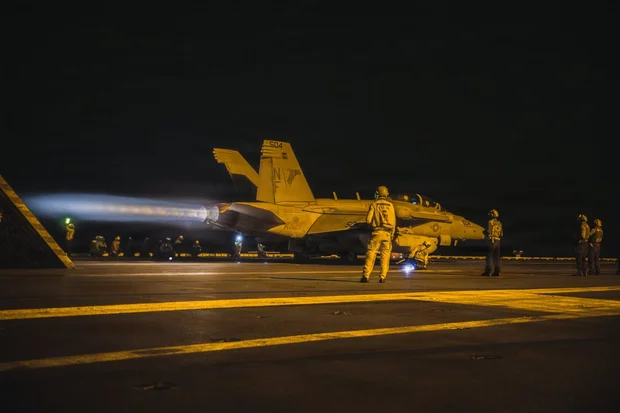
US tells Gulf nations to prepare for possible military campaign in Iran following midterm elections
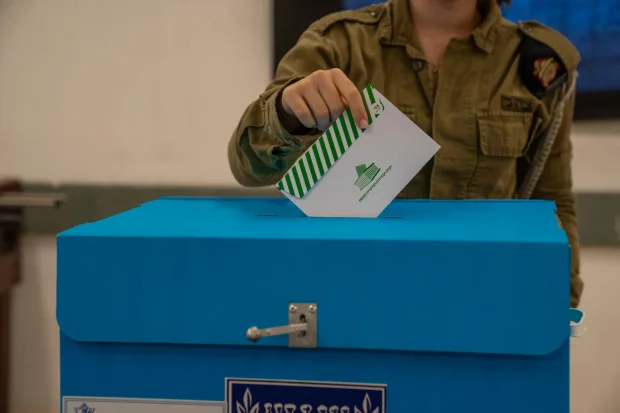
The last votes that could change everything – Israel awaits count of 600,000 'double envelopes'

Election uncertainty weighs on shekel as Israeli stocks fall