Israel and Syria agree on ‘joint fusion cell’ for intel-sharing, will discuss US-backed economic free zone on Golan Heights
Zermatt-like economic zone to include 'wind farms, agriculture, the best ski mountain in the Middle East'





After two days of talks in Paris, Israel and Syria agreed to establish a “joint fusion mechanism” to share intelligence and prevent military miscalculations, the U.S. State Department, which mediated between the sides, announced on Tuesday.
In addition, Israel’s Channel 12 News reported that the sides agreed to discuss a U.S.-proposed plan to establish a free economic zone in the currently Israeli-controlled part of the Syrian Golan Heights and pursue further economic cooperation.
“After a period of several months, the diplomatic dialogue between Israel and Syria resumed with American backing and support,” Prime Minister Benjamin Netanyahu's office (PMO) confirmed in a statement.
According to the news outlet Axios, the fusion cell will be based in Amman, Jordan, and all military operations will be frozen until its details are worked out between the parties.
Each side will send representatives to hold talks about diplomatic, military, intelligence and commercial ties. “The fusion cell will be the engine of the process and the U.S. will be the 24/7 intermediary,” a U.S. official said.
The PMO said: “The dialogue took place as part of President Trump’s vision for promoting peace in the Middle East. During the talks, Israel emphasized the importance of ensuring the security of its citizens and preventing threats along its borders.”
Notably, it emphasized, “It was agreed that the dialogue will continue in order to advance common goals and to ensure the safety of the Druze minority in Syria.”
Israel’s demand to protect the Druze community in southern Syria and to establish a humanitarian corridor to assist them after last year's large-scale attack has reportedly been among the main obstacles in the talks so far.
Both sides signaled optimism after talks were held with mediation from U.S. Envoy to Syria Tom Barrack and U.S. President Donald Trump's envoys, Steve Witkoff and Jared Kushner.
“The talks were very good and candid. Our theme was cooperation instead of repudiation,” a U.S. official told Axios.
The U.S. State Department published a joint statement, in which Syria and Israel affirmed “their commitment to strive toward achieving lasting security and stability arrangements for both countries.”
The joint fusion mechanism is intended to “facilitate immediate and ongoing coordination on their intelligence sharing, military de-escalation, diplomatic engagement, and commercial opportunities” under U.S. supervision, according to the statement.
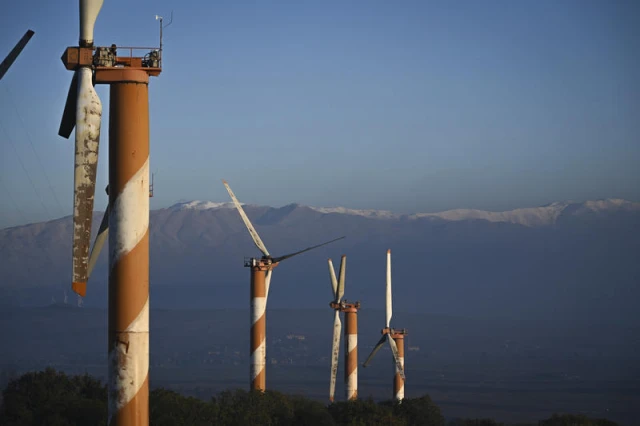
Regarding the proposed economic zone, a U.S. official said that it “will include wind farms, agriculture, the best ski mountain in the Middle East and the Druze community that is the best at hospitality,” adding that partners in the region are ready to finance the project.
“The outcome of the meeting reflects a strong and mutual desire to move from denial to genuine cooperation and shared prosperity,” Barrack told The Jerusalem Post following the discussion.
“The new Syrian government has made it unequivocally clear that it harbors no hostile intentions toward Israel and instead seeks a relationship based on respect and coexistence.”
According to Channel 12's political analyst Amit Segal, the U.S. proposal does not reference the Abraham Accords or any other normalization agreement.
The zone will reportedly include “a wind power plant, a crude oil pipeline, data centers, and pharmaceutical facilities – and best of all, the area would remain demilitarized. The plan offers quite a bit for Syria: roughly $4 billion in GDP growth – a 20% increase on its current output – along with an 800-megawatt boost in power capacity, 15,000 new jobs, and a 40% reduction in pharmaceutical dependency.”
“Israel, for its part, gains the chance to transform an arid buffer zone into a 'dynamic economic corridor,' while enjoying 'reduced military spending' to protect its northern border,” Segal wrote on 𝕏.
He compared the concept to the ski region of Zermatt in Switzerland: “Independent tax rules, relaxed visa requirements, arbitration mechanisms for financial disputes, maybe even a shared currency framework,” adding that “however tempting this vision is, Israel should be very careful before it starts trading soldiers for skis."
You might also like to read this: