IDF weighs taking legal action as Israel grapples with ‘blood libel’ claims by documentary ‘NAZA’
IDF to investigate investigate soldiers involved in the film for potential disclosure of classified materials



Israeli government agencies, the military, senior politicians and former hostages, on Monday continued to blast the documentary “NAZA,” a film by two Israeli directors that alleges the IDF committed war crimes in the Gaza Strip and won an award at the Venice Film Festival over the weekend.
Channel 12 News reported that government agencies are holding urgent meetings to formulate joint guidelines for how to respond to claims by the film, which is still not publicly available.
Diplomats were reportedly sent several arguments to counter the claims made in portions of the film that have been released, including the claim that the IDF is using AI-powered software to target and kill civilians.
The report said key messages include the fact that there are always people who publish lies, even in vibrant democracies; that there is no genocide in Gaza; and that the IDF invests significant resources to minimize harm to civilians and aborted hundreds of operations out of fear of collateral damage throughout the war, among others.
This is completely false.
— Israel Defense Forces (@IDF) September 13, 2026
The IDF has never planned, approved, or carried out a strike in Gaza in which 500 civilians or anything near that number were anticipated to be killed. Nor was any credible claim raised throughout the war suggesting that an IDF strike had caused… https://t.co/wFUNt7bYTM
On Monday, Prime Minister Benjamin Netanyahu joined most of the leading politicians in the country in condemning the movie, calling it a blood libel. “We’re fighting worldwide antisemitic incitement, but when it comes from within us, it’s intolerable,” he said in a video posted to Telegram.
However, he continued by using the incident to attack his election rivals, arguing that “it starts with Yair Golan, who said that we are killing babies as a hobby,” as well as with the former IDF military advocate, who he said “leaked a doctored and lying video that slandered IDF soldiers across the world.”
He also pointed out that the former head of Israel’s directors’ guild, of which the film’s directors are part, recently joined Gadi Eisenkot’s Yashar party, calling on Eisenkot to cancel his vote-sharing agreement with Golan’s Democrats.
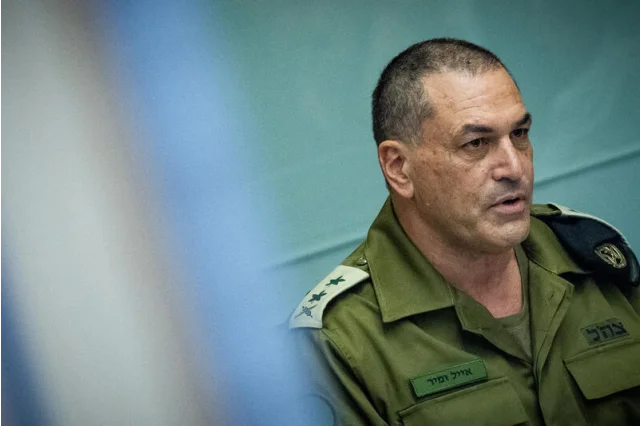
The Israeli military has strongly rejected the movie's claims and stated Monday that Lt.-Gen. Eyal Zamir ordered several actions to be taken to combat claims made by “NAZA” following a high-level consultation, including possible legal action.
“Based on what has been published thus far, this is not a film offering criticism of the IDF, nor is it an attempt to establish the truth. It is based on blood libels, deliberate distortions of reality, and grave, false accusations against IDF soldiers and commanders,” charged Zamir.
“This is a dangerous attempt to deny us the legitimacy to defend ourselves against the worst of our enemies—and, in doing so, to place IDF soldiers and commanders at genuine risk. We will not allow IDF soldiers to be made targets through lies and blood libels.”
Zamir called for “a broad national and international public diplomacy effort,” with the participation of several relevant ministries. Within the IDF, he instructed to create “amulti-agency, multidisciplinary team… to formulate courses of action and tools for addressing false allegations against the IDF and its soldiers, in cooperation with experts from Israel and around the world.”
In addition, the Military Advocate General was instructed “to examine and advance possible legal measures concerning the film and those involved in it,” while the IDF will investigate soldiers involved in the film for the potential unauthorized disclosure of classified materials.
IDF Spokesman Brig.-Gen. Effie Defrin stressed that the IDF is seeking to receive the full documentary to be able to respond to its claims.
“To enable a substantive, professional, and fact-based discussion, rather than one based on misleading portrayals, I invite the filmmakers to allow IDF representatives to view the film in full so that we can address each of the allegations it raises on its merits,” said Defrin.
In an earlier statement, the IDF noted that the film’s available excerpts “include claims regarding national and military strategy that are clearly beyond the knowledge of junior-level soldiers,” and that there are “references to situations in which IDF Intelligence Directorate soldiers, who were allegedly interviewed for the film, by definition would not have been involved.”
Also Monday, Eliya Cohen and Rom Braslavski, who were kidnapped by Hamas on Oct.7 before being released years later, blasted the film directors. Cohen said in a video that while he recognized Israel is a democratic country where the directors couldn’t be arrested, they should at least be publicly shamed.
“People need to spit on them in the streets” for smearing the soldiers who fought to return them home, said Cohen. Braslavski slammed the directors as “traitors” who “should be sent to prison.”
Meanwhile, some 700 professionals in the Israeli film industry signed a petition of support for the directors while criticizing government efforts to “silence” or outlaw them.
“We, filmmakers, call upon everyone still fighting for freedom of speech and artistic expression to join in expressing support and solidarity with Rachel Shor and Yuval Avraham,” they wrote.
“In recent days, we have witnessed an unprecedented campaign of incitement and vitriol against the filmmakers — a campaign that is dangerously close to effectively sanctioning violence against them and threatening their lives,” the petition alleged.
You might also like to read this: