Historic Arab voter turnout: Results for Ra'am, Joint List shatter records but could harm chances to replace gov't
Democrats leader Golan urges opposition to work with both Arab parties
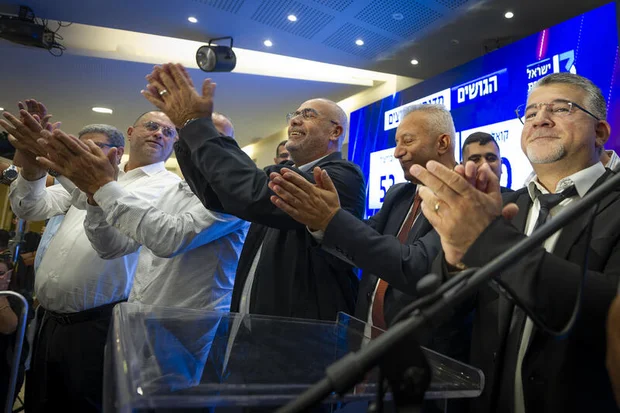
Even before the final votes are counted, the historically high Arab-Israeli voter turnout is clearly one of the biggest stories of the 2026 elections, though it remains to be seen whether it will help or harm the chances of replacing the current Israeli government.
Starting with the first voter turnout reports and continuing throughout the day, Arab communities led all towns in turnout, prompting what critics described as a panicked and at times ugly fear campaign by right-wing parties. Overall turnout reached 77.7%, the highest this century, up from 70.6% in 2022.
On Tuesday, many analysts echoed sentiments similar to those shared by Amit Segal, Channel 12’s political analyst: “Ben Gvir brought hundreds of thousands of voters to the polls. Just not his own – Arab voters.” Many Arab voters explicitly said that their main motivation was to replace the Netanyahu-Ben Gvir government they see as hostile towards them.
However, ironically, the excitement among the Arab populace and the record turnout could harm the “Change Bloc” and prevent Prime Minister Benjamin Netanyahu from being replaced.
The first exit polls predicted the two Arab parties – the Joint List and Islamist Ra’am – to garner as many as19 combined seats, shattering the previous record of 15 seats in 2020, when they ran together.
With 76.8% of the vote counted at the time of publication, Ra’am received six seats and the Joint List a whopping 13, becoming the third-largest party overall.
But this complicates the task of forming a new government, as the Arab mandates come at the expense of the Change Bloc.
Bloc members have said they may accept outside support from Arab parties but will not sit in a government with them.
The results also suggest that even an arrangement between the Change Bloc and Ra’am may not secure a majority, making some form of cooperation with the Joint List necessary.
🔴 "روح بن غفير".. احتفالات في مقر القائمة العربية المشتركة https://t.co/LoEt0iTpPe
— موقع بكرا احلى - الحساب الثاني (@boukraaa7la2185) October 27, 2026
Inflammatory statements by some of its politicians on election night further harmed the chances for cooperation with their party.
Footage showed Joint List supporters in Nazareth singing the Arab nationalist song “Biladi, Biladi.” Others, including party leader Yousef Jabareen, chanted “Go away, Ben Gvir” in Arabic.
Osama Al-Saadi, a former Joint List lawmaker, dedicated to what he described as a victory for “the sons of our people in Gaza, in the West Bank, and in occupied Jerusalem” during his speech.
It’s hard for me to believe that this is actually happening in Israel. After the horrors of October 7, I never imagined I would witness something like this. Member of the Jointed Arab List Osama Al-Saadi: "We dedicate this victory to Gaza and the West Bank, and we say to the prisoners Ben-Gvir is out."
— Adi (@Adi13) October 27, 2026
“We ousted this fascistic government, this government of murder and ethnic cleansing,” Saadi said. “We greet the prisoners rotting in the prisons; these great news for you… [Ben Gvir] is out, out.”
Jabareen told his supporters that the party “hopes to send Bibi, Ben Gvir, Smotrich and the bloodstained government home.”
Joint List Knesset Member Ahmad Tibi posted on 𝕏: “It’s either Bibi or Tibi,” in an ironic twist on the Likud’s election phrase. He declared the party would extend a hand “to everyone willing to pave the way for change and the downfall of Netanyahu's government.”
Speaking with the Saudi Al-Arabiya news channel, Tibi added that “the first step will be to oust the Knesset Speaker, Amir Ohana, and this won't be possible without the Joint List, so I say on behalf of the Joint List – we will vote to remove him and vote for the opposition candidate presented by the opposition parties – this is the first step, and then we will voice our demands, which are a safety net for our society, and we want to see what the responses will be.”
Meanwhile, Ra’am party chairman Mansour Abbas has long stated he wanted to join a coalition government again. Speaking with Channel 12 in the evening, Abbas said he was in contact with many parties, hinting that this even includes leaders from the Netanyahu bloc.
“Everyone is speaking with us – and not just from the change bloc,” Abbas said, while acknowledging that “currently there aren’t numbers for a government,” with the Gadi Eisenkot-led opposition bloc.
On Channel 16, Abbas noted that replacing the current government is his priority, while declining to explicitly name Hamas as a terror organization.
Abbas said the first priority must be determining whether a viable government can be formed, before ironing out the details and conditions. He also pointed to his repeated condemnations of Hamas and its actions.
At the Ra’am headquarters, Abbas declared on Tuesday evening: “All of us together achieved this. We’ll translate this electoral power into an influential political force. We’re here – not on the sidelines.”
Speaking to The Times of Israel, Ra’am MK Iman Khattib Yassin reiterated early Wednesday morning that “it’s still too early to talk about” possible red lines in negotiations to join the next government.
“We’ve come to serve our citizens, and we’ll do that at all costs. But there’s no need to pay excessively high costs,” she said. Yassin added that Arabs who are not Israeli “deserve their own Palestinian state,” adding that “it’s time to start a diplomatic process” for peace.
Alone among the opposition leaders, Democrats party chairman Yair Golan on Wednesday pushed for full cooperation with both Arab parties.
Writing on 𝕏, Golan said, “Netanyahu lost. I know how to count to 120. 65 is more than 55,” including both Arab parties in his count.
“That’s how Israeli democracy works. Period. The reality before us must teach us one resounding lesson: we have no future here if we don’t stop being afraid. And if we don’t put an end to racism. We must no longer accept Netanyahu’s racist division between Jewish votes and Arab votes.”
“If Netanyahu insists on counting only a Zionist majority, he should first subtract the 16 Knesset members from the non-Zionist Haredi parties from his own bloc. The change bloc has a Zionist majority: 49 to 39. The change bloc has an Israeli majority: 65 to 55,” Golan concluded.
Popular article:

interview Easter message of resurrection hope amid war at Jerusalem's Garden Tomb

biblical commentary Let my people go: a Passover message for today

4 IDF soldiers killed, 2 wounded in fighting in southern Lebanon, as Israel eliminates dozens of Hezbollah terrorists

Receive latest news & updates
A message from All Israel News
Help us educate Christians on a daily basis about what is happening in Israel & the Middle East and why it matters.
For as little as $10, you can support ALL ISRAEL NEWS, a non-profit media organization that is supported by readers like you.
Latest articles:

Netanyahu, Eisenkot each announce intentions to form Israel’s next government

British Jews show growing interest in aliyah amid antisemitism concerns – includes medical professionals
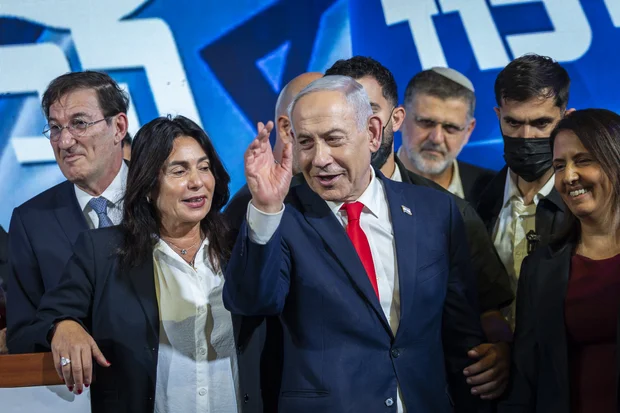
Elections 2026 Netanyahu leading after election – but it's still anyone's game
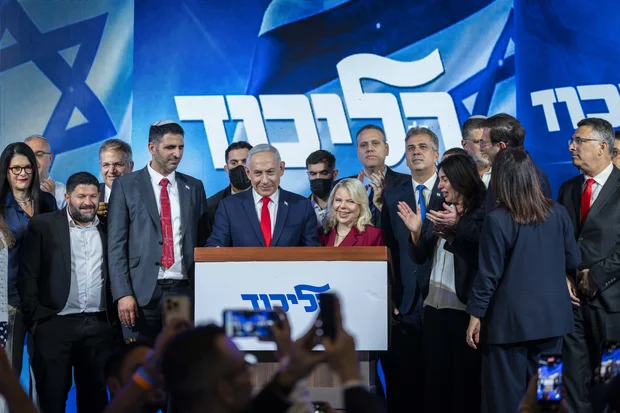
elections 2026 70.7% of votes counted in Knesset elections, Netanyahu bloc weakens to 54 seats
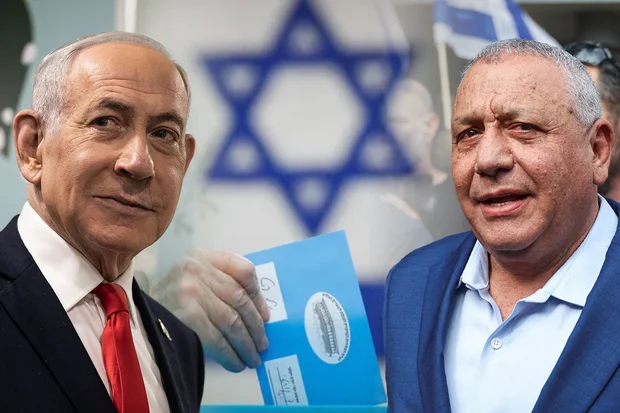
WATCH VIDEO: Massive, historic Israeli voter turnout of 77.7% is fantastic but high turnout means high drama – who will win, Bibi or Gadi?