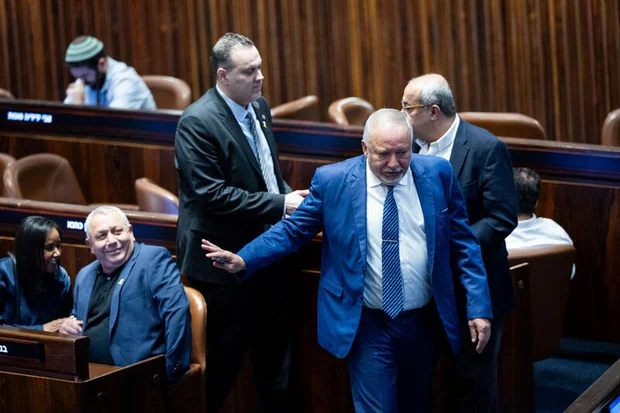
Herzog grants Netanyahu 10-day extension to form government
Leaders from Israeli opposition parties called on Herzog not to grant Netanyahu’s request for an extension
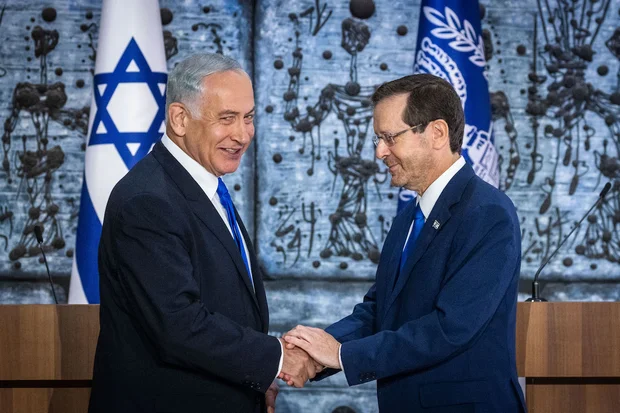
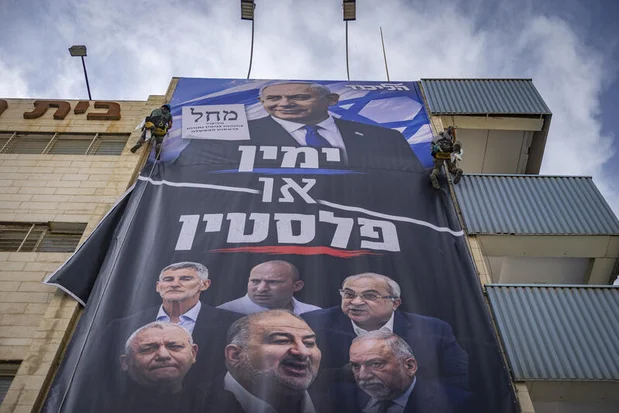
On Friday, Israeli President Isaac Herzog extended Prime Minister-designate Benjamin Netanyahu’s mandate to form a government by 10 days.
Netanyahu, whose original mandate was to expire on Saturday night, submitted a request for an extension late Thursday. Earlier in the day, Netanyahu reached an agreement with the ultra-Orthodox Shas party on its roles in the new government.
However, Netanyahu, the Likud party chairman, still has to finalize issues of principle and ideology with his coalition partners, as well as come to an agreement over certain contested roles.
In his request to Herzog, Netanyahu asked for the full two-week extension he is allowed to request, citing ”many and complex issues of principle.”
While noting that internal negotiations are ongoing, Netanyahu wrote, “I will need all the days of extension which are within your authority to give me according to law in order for me to form the government.”
While he did not provide a reason granting the shorter extension, Herzog did indicate concern with the incoming coalition and called on Netanyahu to “work for the entire public of Israel” and to “maintain a respectful and responsible dialogue between the authorities.” The deadline extension ends on Dec. 21.
Leaders from Israeli opposition parties called on Herzog not to grant Netanyahu’s request, arguing that it was not warranted as the parties had already agreed upon government roles. They argued that the real purpose of the extension was to enable Likud to enact legislation aimed at pleasing coalition partners.
Likud is preparing to replace the Knesset speaker on Monday, which is seen as a necessary step to secure Shas’ support. Shas has demanded legislation that would enable MK Aryeh Deri to serve in the government despite a suspended jail sentence for tax evasion.
Herzog did not address the opposition’s claims. However, it is not clear what choices he had.
Netanyahu and his coalition partners won 64 of the 120 seats in the Knesset at the Nov. 1 elections. The outgoing government coalition was seen as very fragile for its complex mix of different parties with conflicting interests.
If Netanyahu is unable to finalize his government’s negotiations before the new deadline, Israel will go into another election. Israel has held five elections in the last four years.
Popular article:

interview Easter message of resurrection hope amid war at Jerusalem's Garden Tomb

biblical commentary Let my people go: a Passover message for today

4 IDF soldiers killed, 2 wounded in fighting in southern Lebanon, as Israel eliminates dozens of Hezbollah terrorists

Receive latest news & updates
A message from All Israel News
Help us educate Christians on a daily basis about what is happening in Israel & the Middle East and why it matters.
For as little as $10, you can support ALL ISRAEL NEWS, a non-profit media organization that is supported by readers like you.
Latest articles:

editorial Evangelical Christians, please vote: The future of the US-Israel alliance is on the line
Breaking silence, Liberman annouces he will support Eisenkot for PM, Lapid for Knesset speaker
Israel's Christian ambassador warns against support for Muslim Brotherhood candidates
Eisenkot slams Likud for ‘malicious attempt to deny election results’ amid foreign interference probe

Maronite community forgives vandals who targeted historic church in Nahariya