Can the Abraham Accords stay on track after the flydubai attack?



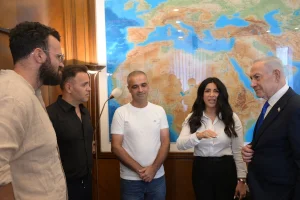
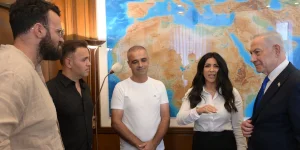
Just days after Prime Minister Benjamin Netanyahu returned from the United Arab Emirates, where he met with UAE President Sheikh Mohamed bin Zayed Al Nahyan amid signs of renewed regional cooperation, an Omani co-pilot allegedly tried to crash a flydubai flight carrying more than 170 people from Dubai to Tel Aviv.
Israeli media reported that Netanyahu’s UAE visit also included an expanded meeting with representatives from Saudi Arabia, Morocco, Egypt, Kuwait, Bahrain, Libya, Oman and the United States. However, those countries have not publicly confirmed their participation. The talks reportedly focused on regional security and cooperation, raising hopes that Israel’s relationships with its Arab neighbors could finally begin moving forward again after nearly three years of war.
Then came the attempted attack.
The Omani co-pilot allegedly stabbed the captain and attempted to crash the aircraft before passengers intervened. Additional pilots aboard the flight took control, safely landing the plane in Saudi Arabia. Israeli officials have described the incident as a possible terrorist attack, although investigators are still working to determine the attacker’s precise motive and whether he acted alone.
In the immediate aftermath, flights between Israel and the UAE were disrupted, leaving Israeli travelers stranded and prompting Israeli carriers to organize repatriation flights.
The incident came at an especially sensitive moment for Israel’s relations with the Arab world. Direct flights between Israel and Marrakech are resuming, with Israeli airlines expanding service this fall – another sign that ties with Morocco are beginning to recover as the region moves beyond the October 7 war.
Those close to the diplomatic process do not believe the attempted attack will derail the warming relationships. But they say it serves as a stark reminder of how fragile those ties remain and how much work Israel still has to do if it wants to restore the Abraham Accords to where they stood on October 6, 2023, let alone expand them further.
Noam Meirov, a Middle East expert specializing in regional business relations and partnerships, particularly among the Abraham Accords countries, told ALL ISRAEL NEWS that he sees the accords today as somewhere between surviving and thriving.
“I am not going to say that everything is all right [with the Accords],” he said. “But I am not pessimistic and don’t think they were destroyed. I’m somewhere in the middle.”
He said the war in Gaza and across the region “strategically challenged” the accords. Yet the fact that the relationships are beginning to pick up again in any capacity, he said, demonstrates both their resilience and the “mutual ground” on which Israel and its Abraham Accords partners continue to stand.
The Abraham Accords currently include normalization agreements between Israel and the United Arab Emirates, Bahrain and Morocco. Sudan also agreed to normalize relations with Israel, although the process has stalled due to the country's ongoing instability. Kazakhstan also officially joined the accords in November 2025.
“We have similar needs and values,” Meirov said, noting that, from his perspective, all parties are “truly against radicalism of all sorts” in the region, especially “Iran as the major exporter of radicalism in the region.”
He said the countries also share common business and innovation interests, including a focus on new technologies and regional economic growth, much of which began developing to varying degrees after the accords were signed.
But Meirov acknowledged that the relationships built through the Abraham Accords have been battered over the past three years, as the war against Hamas in Gaza strained Israel’s standing across the Arab world. He said negative coverage of Israel throughout the region, particularly from outlets such as Qatar’s Al Jazeera, has contributed to that deterioration.
The challenge now, he said, is for both Israel and its Arab partners to make a deliberate decision to rebuild what has been lost.
“That means both sides need to continue to actively invest in the accords from a business perspective, and a public diplomacy perspective, and from a political perspective to strive to expand the accords,” Meirov said.
He stressed that regaining the momentum that existed before October 7 will not happen automatically.
“Before the war we were in amazing momentum, on the verge of signing this normalization agreement with Saudi Arabia,” Meirov noted. “Now we're further away from that than October 6. To get there, we need to recreate momentum with other countries and with the countries who have already signed the accords.”
Part of that process, he said, will require Israel and the Arab countries to clearly articulate their vision for the region, including that they “see Israel as an integral part of the Middle East, and to teach that to their children.”
Fatema Alharbi, Gulf Affairs director for the NGO Sharaka, expressed similar sentiments. Speaking to ALL ISRAEL NEWS from Bahrain, she said that “we are living in very, very challenging times, and you cannot predict what will happen next.”
Alharbi said she hopes the Israeli elections will result in “a more moderate coalition” that could help advance and expand the accords.
Despite the uncertainty, Meirov said he remains hopeful that the next phase will include countries that have so far remained outside the Abraham Accords.
“I do hope that we will see new countries joining the accords soon,” Meirov said. “There were countries rumored to have really gone through a dramatic change, an understanding that Israel is a positive part of this region throughout the last three years, and I'm praying that hopefully they'll go public about it and normalize relationships with Israel as soon as possible.”
You might also like to read this: