Ancient mosaic from Israel equating Jesus with God on display in US
'This is arguably the most important archaeological discovery for understanding the early Christian church,' says director of the Scholars Initiative at the Museum of the Bible
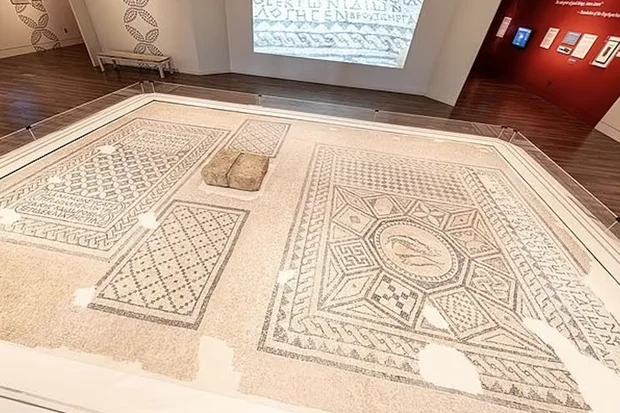
The Meggido Mosaic, which includes the words “God, Jesus Christ” in Greek, giving the earliest evidence that the first believers equated Jesus with God, has been shipped to the U.S. for a new exhibition at the Museum of the Bible in Washington, D.C.
The 581 sqft (54 sqm) Roman mosaic, which dates back 1,800 years has been described as “the greatest discovery since the Dead Sea Scrolls” by Carlos Campo, the CEO of the museum.
Bobby Duke, director of the Scholars Initiative at the Museum of the Bible, concurred, saying, “This is arguably the most important archaeological discovery for understanding the early Christian church,” according to the Daily Mail.
There are many aspects of the mosaic, thought to have been completed around 230 AD, that give a window into relations between Romans and Christians, Jews and Gentiles, and the faith of the first believers in Jesus.
“For example, the mosaic underscores the crucial role of women in the early church by the fact that five women are mentioned in it by name,” Duke explained. “Truly, the mosaic presents a wealth of new data for church historians, like the Dead Sea Scrolls did for Bible scholars.”
Another clue is the patronage of a Roman officer named Gaianus who paid for the work, as mentioned in the mosaic itself. The fact that a Roman had contributed towards a Christian prayer house from his own pocket indicates a less antagonistic relationship between Romans and the early church than historians had previously assumed.
The mosaic was found in the ruins of a private prayer chapel that Yotam Tepper, the archaeologist who directed the excavation on behalf of the Israel Antiquities Authority (IAA), described as a Christian prayer hall positioned in a culturally mixed area.
The building was part of an ancient Jewish village called Kfar Othnai with a large Roman army encampment nearby, indicating that Jewish and Gentile believers may have been worshipping together back in the first centuries of the early church, even collaborating financially to build the place of worship.
The IAA said the ancient structure could be interpreted as “the oldest Christian prayer house in the world… and in fact, it tells the story of Christianity even before it became official.”
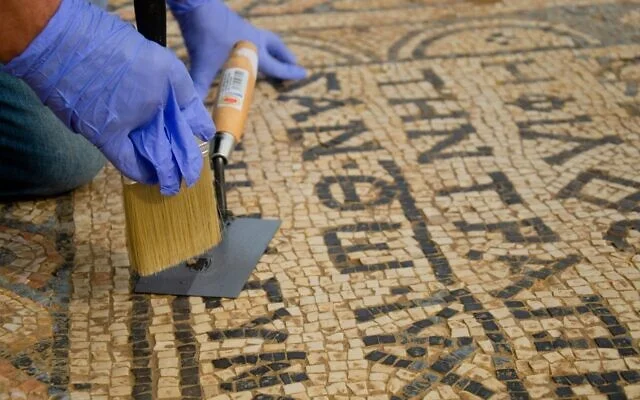
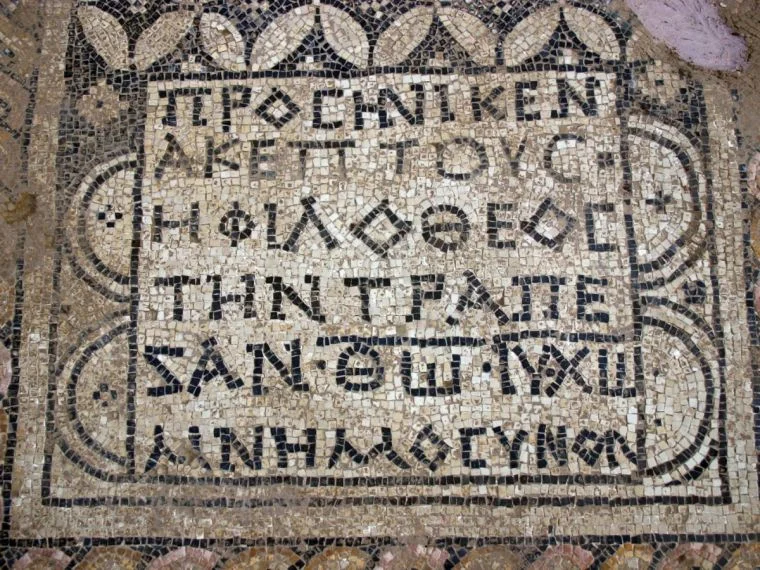
One part of the mosaic that will be of great interest is the inscription dedicating a table, most likely a Eucharist table, by a woman named Akeptous.
Epigraphist Leah Di Segni offered this interpretation: "The God-loving Akeptous has offered the table to God Jesus Christ as a memorial."
The phrase “God Jesus Christ” is written in abbreviated form Θω Ιυ Χω with a line above the letters, a common technique in Greek biblical manuscripts to indicate a reference to the 'nomina sacra' (sacred name).
Other artworks found in the structure also indicate the Christian nature of the building, including a mosaic of two fish, an early Christian symbol used before the cross became more commonplace.
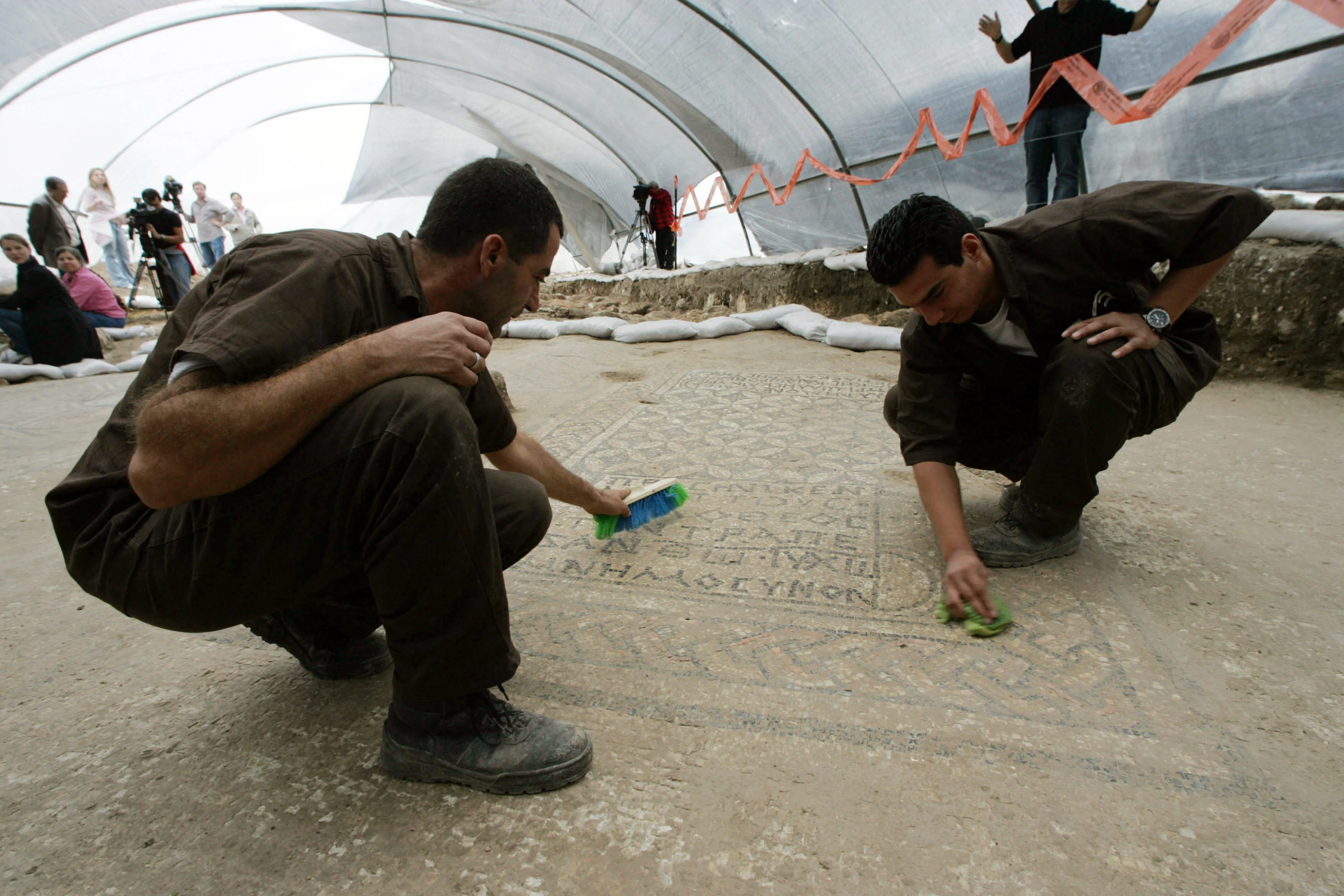
The mosaic was originally discovered during excavations in 2005 near the Megiddo Prison, as authorities were preparing to expand and relocate the facility.
"This is an extremely dramatic discovery, because such an old building of this type has never been found either in the land of Israel or anywhere else in the entire region,” Tepper said at the time. “The structure and the mosaic floor date back to the period before Christianity became an officially recognized religion, before Constantine.”
The excavation took four years to complete, during which the mosaic was stabilized and restored. The IAA then worked to separate and ship the floor in 11 crates, each weighing about 1,000 pounds, earlier this year.
The Museum of the Bible exhibition, "The Megiddo Mosaic: Foundations of Faith," will be on display until July 25, 2025.
At the opening, Campo stated, “We truly are among the first people to ever see this, to experience what almost 2,000 years ago was put together by a man named Brutius, the incredible craftsman who laid the flooring here.”
Following the exhibition, the Megiddo mosaic will be returned to Israel to be put on permanent display where it was discovered.
Popular article:

interview Easter message of resurrection hope amid war at Jerusalem's Garden Tomb

biblical commentary Let my people go: a Passover message for today

4 IDF soldiers killed, 2 wounded in fighting in southern Lebanon, as Israel eliminates dozens of Hezbollah terrorists

Receive latest news & updates
A message from All Israel News
Help us educate Christians on a daily basis about what is happening in Israel & the Middle East and why it matters.
For as little as $10, you can support ALL ISRAEL NEWS, a non-profit media organization that is supported by readers like you.
Latest articles:

Hamas openly threatens Israel with ‘more Oct 7 attacks’ as intelligence shows terror group is rearming

More than 1,300 antisemitic posts blame Israel, Jews for French riots – report

Thailand turns to Israeli anti-drone technology to counter growing battlefield threat

Israeli fighter jets flew to Iranian border in ‘power projection,’ deterrence exercise ahead of elections next week

Israel targets nuclear fusion leadership as AI drives soaring energy demand