With over 85% of votes counted, Israeli elections end without clear path to viable coalition
Netanyahu bloc leads Eisenkot 53-48, Arab parties celebrate historic 19 combined seats
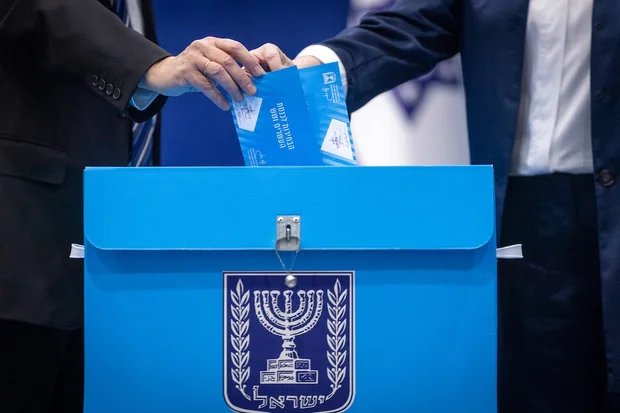
With 85.6% of all ballots counted, excluding mainly the double envelopes, the Central Election Committee (CEC) announced Wednesday afternoon that Prime Minister Benjamin Netanyahu’s Likud would become the largest party with 26 out of 120 seats.
However, neither Netanyahu’s bloc (53 seats) nor the bloc led by Yashar chairman Gadi Eisenkot (48) is projected to win the necessary 61-seat majority. On Wednesday, the major party leaders largely kept quiet, preferring to start negotiations about possible coalitions behind the scenes.
Next largest after Likud is Gadi Eisenkot’s Yashar with 21 seats, followed by Naftali Bennett and Yair Lapid’s Together (Beyachad) and Yousef Jabareen’s Joint List with 12 seats each.
Preliminary election results, with 11.4% yet to be counted https://t.co/5CLgDJHJQ0
— Israel Elects (@israel_elects) October 28, 2026
The Democrats are projected to win eight seats, while seven seats each went to Jewish Power, the ultra-Orthodox Shas and United Torah Judaism, Mansour Abbas’s Ra’am and Avigdor Liberman’s Yisrael Beitenu.
Bezalel Smotrich’s Religious Zionism cleared the 3.25% electoral threshold with six seats. Just below, and still with a slight chance to jump above it with the double envelope count, is Yoaz Hendel’s Reservists/Economic party with 2.63%. Ofer Winter’s People of Israel (1.61%) and the Charedi Public (0.19%) have no chance to make it into the next Knesset.
The results could still change slightly with the count of the last regular ballot boxes and the double envelopes, which is expected to be completed by late Thursday.
President Isaac Herzog on Wednesday praised the election day as “truly impressive, with the highest turnout in decades. It is a badge of honor for Israeli society, and it was remarkable to see how deep the desire for democracy is in Israel.”
Herzog now has the right to choose the party leader with the best chances of establishing a government and give him the first attempt to do so. Unnamed sources close to the president told Ynet News that Herzog could begin contacting party leaders as soon as Friday.
“We must do everything we can, certainly after yesterday, to avoid another round of elections. So I expect everyone who comes here to come with an open mind,” Herzog said during a gathering at his Jerusalem residence in Jerusalem.
These are the preliminary numbers from the Druze municipalities. Note that this does not include the many Druze who live in mixed communities. https://t.co/xx9TauoN3o
— Israel Elects (@israel_elects) October 28, 2026
Apparently still reeling from the surprising results that defied most recent polls, the party leaders largely avoided public statements on Wednesday after addressing their supporters soon after the polls closed the evening before.
According to Ynet News, the unusual quiet was a result of shock and disappointment with the outcome that rules out nearly any possibility to find a viable government coalition and prevent new elections—at least without several party leaders breaking explicit campaign promises.
One of the few public indications came from United Torah Judaism Chairman Yaakov Asher, who affirmed that there were “no approaches from party leaders, apart from a message conveyed by people close to Prime Minister Netanyahu indicating that he intends to keep the coalition parties together.”
Ynet reported that Netanyahu didn’t immediately reach out to his political allies, in a notable departure from his usual post-election moves. The report suggested this is part of a strategy to preserve his freedom for political maneuvers as well as the necessity to analyze the results and plan his next steps.
The preference is reportedly to pry away one or more parties from the Eisenkot bloc, and the author of the report claimed to have overheard “senior Likud ministers attending the election-night gathering at the International Convention Center in Jerusalem […] already arguing that the party should seek partnerships with Avigdor Liberman and Naftali Bennett.”
The Southern Bedouin municipalities have long been a Ra'am stronghold. Even so, Ra'am's performance yesterday was unusually dominant - it swept 87% of the votes, up 13 points from 2022. https://t.co/264vLXWcBg
— Israel Elects (@israel_elects) October 28, 2026
Meanwhile, the Likud accused the Arab parties, which were the surprise winners of the election, of “stealing” the country’s elections through an alleged series of violations, including “bribery, threats, violence, forgery and the use of prohibited software to mobilize voters.”
The party noted it was transferring hundreds of pieces of evidence to the police, the Shin Bet and the Central Elections Committee.
On the other side of the political divide, Ynet reported that senior figures in Yashar, Yisrael Beitenu and Together were already coordinating strategic moves, including the possible election of a new Knesset speaker as soon as the new parliament is sworn in, though this necessitates the support from the Arab parties, which could cost public support.
Notably, the discussions didn’t involve the Democrats’s leader Yair Golan, who, in one of the few notable statements on Wednesday, advocated for a full cooperation with both Arab parties.
Speaking to Channel 12, claimed he plans to meet three party leaders on Thursday for talks on forming a government, without naming them.
UTJ's support among Haredi voters held steady - and even increased slightly. Shas, on the other hand, cratered - going from 30.9% of the Haredi vote in 2022 to just 24.4% now. https://t.co/CTI0o3H66l
— Israel Elects (@israel_elects) October 28, 2026
The Arab parties have expressed readiness to take part in the negotiations. However, Balad faction chief Sami Abu Shahadeh, who was barred from running shortly before the election, continued a string of statements that are already being used by the Netanyahu bloc to inflict heavy costs on any attempt by Eisenkot to work with them.
“If we lived in a normal, democratic, non-racist country, Netanyahu would have lost the election,” Abu Shahadeh told the Qatari channel Al-Araby Al-Jadeed. “In reality, Netanyahu’s camp did lose the election… but because of the racism within Israeli society, we are still debating whether or not this was a decisive outcome.”
“Eisenkot has a majority to form a government, yet what prevents him from doing so is his own racism,” Abu Shahadeh claimed. “Eisenkot, a leader of Arab – specifically Moroccan – descent, says he refuses to sit with Arabs. This is a racist society.”
Popular article:

interview Easter message of resurrection hope amid war at Jerusalem's Garden Tomb

biblical commentary Let my people go: a Passover message for today

4 IDF soldiers killed, 2 wounded in fighting in southern Lebanon, as Israel eliminates dozens of Hezbollah terrorists

Receive latest news & updates
A message from All Israel News
Help us educate Christians on a daily basis about what is happening in Israel & the Middle East and why it matters.
For as little as $10, you can support ALL ISRAEL NEWS, a non-profit media organization that is supported by readers like you.
Latest articles:

Trump to impose unity government on Israel? - Reports claim US president pushing for government without controversial ministers

US tells Gulf nations to prepare for possible military campaign in Iran following midterm elections
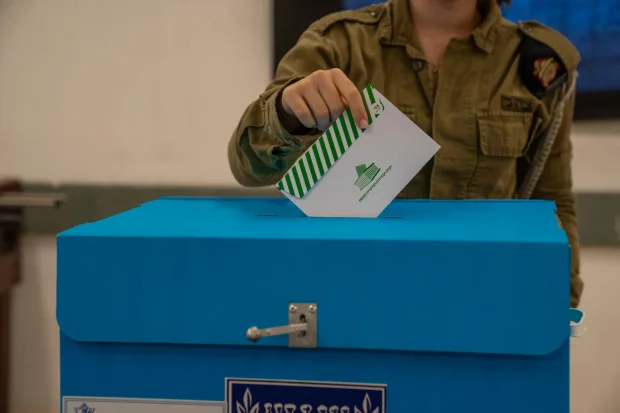
The last votes that could change everything – Israel awaits count of 600,000 'double envelopes'
Election uncertainty weighs on shekel as Israeli stocks fall
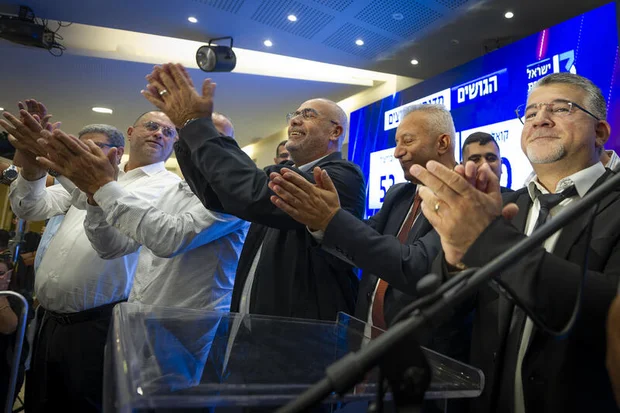
Historic Arab voter turnout: Results for Ra'am, Joint List shatter records but could harm chances to replace gov't