US cautions Israel about next steps in war against Hamas, ahead of Israel’s entry into southern Gaza
Biden administration officials press for more humanitarian aid, less civilian infrastructure destruction
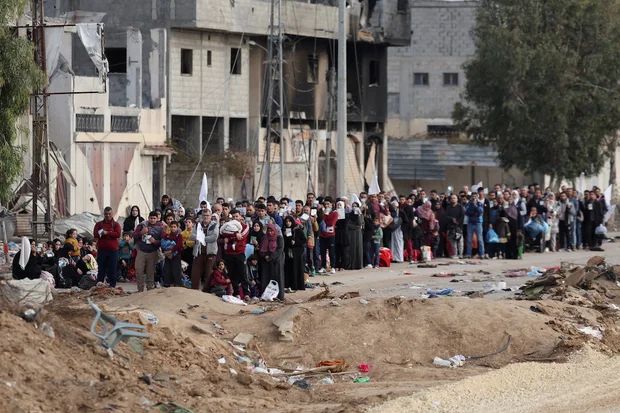
A senior United States government official told the media last night: “You cannot have the sort of scale of displacement that took place in the north replicated in the south.”
The statement came as part of a call with journalists discussing additional efforts to increase humanitarian aid to the Gaza Strip.
“It will be beyond disruptive,” the American official said. “It will be beyond the capacity of any humanitarian support network, however reinforced, however robust to be able to cope with. It can’t happen.”
Two officials spoke on condition of anonymity with several U.S. news outlets about the Biden administration’s concerns regarding the resumption of the war effort by Israel.
According to the senior official, the message was conveyed to Israel to carefully plan the military operation in the southern Gaza Strip to prevent the uprooting of residents from homes and to ensure no harm to United Nations shelters, infrastructure, and hospitals.
The official was quick to clarify that the U.S. is not trying to stop a resumption of the war effort against Hamas.
“To reiterate what you’ve already heard from the president, from other senior officials of the government,” the official stated. “We want the objectives of this campaign, the elimination of Hamas as a governing – as a threatening – force in Gaza and the threat to Israel, ended.”
The officials said the Biden administration is asking Israel to commit to “areas of deconfliction.”
“What we are discussing is not the safe zone, the humanitarian zone, that almost a month ago was proposed by the government of Israel,” the official said.
“What we are talking about are practical arrangements on the ground, multiple arrangements, what you might call areas of deconfliction.”
The U.S. will also begin direct aid flights on military aircraft to northern Sinai starting Tuesday. The aid will be focused on providing medical supplies, food, and winter clothing.
The White House is also asking Israel to allow an increase in the quantity of humanitarian aid and fuel entering the Gaza Strip, exceeding the current agreement which has allowed some 240 trucks each day to enter Gaza. It would reportedly like to see 300-400 trucks per day, which would require a significant increase in the number of inspections required at the crossings.
The official said that the increased level of humanitarian aid to Gaza must continue even after the current temporary pause in fighting and the hostage arrangement.
"The aid and fuel entering are not linked to the release of captives,” the official stated.
Saying that the truce was being used to bring in more aid, the official added: “When the ceasefire ends, we have made it clear that this level of aid or higher must be maintained," the official said.
Israel and Hamas agreed to two more days of a pause in fighting in exchange for the release of more hostages.
Popular article:

interview Easter message of resurrection hope amid war at Jerusalem's Garden Tomb

biblical commentary Let my people go: a Passover message for today

4 IDF soldiers killed, 2 wounded in fighting in southern Lebanon, as Israel eliminates dozens of Hezbollah terrorists

Receive latest news & updates
A message from All Israel News
Help us educate Christians on a daily basis about what is happening in Israel & the Middle East and why it matters.
For as little as $10, you can support ALL ISRAEL NEWS, a non-profit media organization that is supported by readers like you.
Latest articles:
With over 85% of votes counted, Israeli elections end without clear path to viable coalition
Trump to impose unity government on Israel? - Reports claim US president pushing for government without controversial ministers
US tells Gulf nations to prepare for possible military campaign in Iran following midterm elections
The last votes that could change everything – Israel awaits count of 600,000 'double envelopes'

Election uncertainty weighs on shekel as Israeli stocks fall