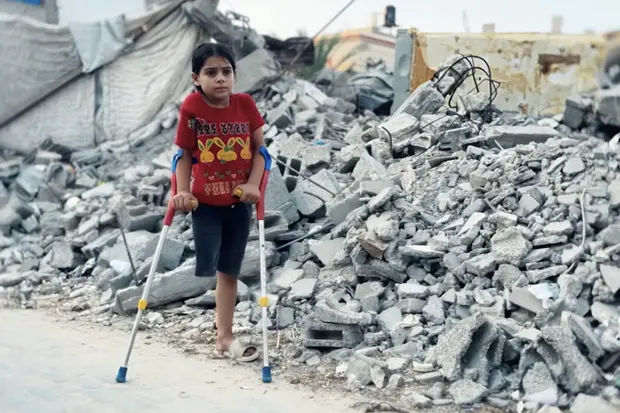











The story behind IHRA definition of antisemitism, now adopted by 48 countries
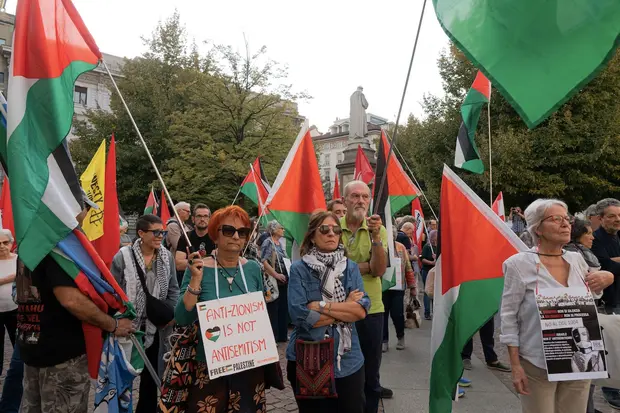
The International Holocaust Remembrance Alliance (IHRA) working definition of antisemitism was originally developed as a non-binding tool to identify modern forms of Jew-hatred. Since its introduction in 2005, it has been adopted by 48 nations and various international institutions and universities.
Michael Whine, one of its co-authors and co-founder of the United Kingdom's Community Security Trust (CST), discussed the story behind the IHRA definition in an interview with The Jerusalem Post.
Between 2003 and 2004, the European Monitoring Center on Racism and Xenophobia (EUMC) asked Jewish communities across Europe to report incidents of antisemitism. Whine said the IHRA definition of antisemitism was created to address the lack of a universal understanding of contemporary Jew-hatred and how it was being manifested in society.
“They were getting back responses which in essence said: ‘we know what antisemitism was between 1933 and 1945, but now we’re not so sure. If somebody daubs 'Death to Israel' on a synagogue, that’s antisemitism. But if they daub ‘Death to Israel’ on a wall around the corner, is that just graffiti or is it anti-Zionism or is it antisemitism? We don’t know what you mean by antisemitism,’” Whine recalled.
The American Jewish Committee (AJC) subsequently worked with the EUMC to develop a shared definition. Jewish and non-Jewish academics from around the world were invited to help draft a proposal.
However, Whine said the initial drafts were too lengthy and academic, making them impractical for the intended purpose of helping law enforcement and human rights professionals identify antisemitism.
“They wanted a definition that was of practical use. I used to say that it was needed for the police on the street, and that if the policeman could understand what we meant by antisemitism, then he could record it,” Whine explained.
Whine and the other co-authors – Rabbi Andrew Baker, Deidre Berger and Kenneth S. Stern – came together in Vienna, Austria, to finalize the definition, substantially revising an initial draft prepared by Stern.
The resulting IHRA working definition includes 11 examples of antisemitism, seven of which relate to Israel. These include holding Jews collectively responsible for the actions of the Israeli government, using antisemitic tropes against Israel and denying the Jewish people the right to national self-determination in their ancestral homeland.
Critics argue that the definition can restrict academic freedom, legitimate criticism of Israel and advocacy for Palestinian Arab rights. However, the document distinguishes between criticism of Israeli policies and antisemitic conduct, including denying the Jewish people their right to self-determination.
Stern supports the IHRA definition but has also accused “right-wing Jews” of “weaponizing it.” Looking back, Whine acknowledged that the definition was never intended to become law.
“It wasn’t meant to be legislated. No one was being forced to adopt it. But then it sort of took on a life of its own, which was probably more than we, the drafters of the document, had intended,” he said.
Despite the criticism, Whine believes it has been useful. “I don’t regret it. I think it’s proof of the fact that what we had produced was good. It met the government’s needs.” Last week, Italy became the latest country to adopt the IHRA definition of antisemitism into legislation.
Whine defended the definition against claims that it restricts legitimate criticism of Israel, pointing to the range of expertise among those who developed it.
“I think that view is used as an excuse by malign interests to criticize the definition and its use, to say that we’re shutting down discussion about Israel. We’re doing no such thing,” he said.
“Israel can fight its own battles. It doesn’t need us to fight them,” he added.
Popular article:

interview Easter message of resurrection hope amid war at Jerusalem's Garden Tomb

biblical commentary Let my people go: a Passover message for today

4 IDF soldiers killed, 2 wounded in fighting in southern Lebanon, as Israel eliminates dozens of Hezbollah terrorists

Receive latest news & updates
A message from All Israel News
Help us educate Christians on a daily basis about what is happening in Israel & the Middle East and why it matters.
For as little as $10, you can support ALL ISRAEL NEWS, a non-profit media organization that is supported by readers like you.
Latest articles:

Worship on the Mt of Olives: Christian pilgrims, artists gather overlooking Jerusalem

Iranian-linked terror operations in Europe increasingly target Jews – report

Israeli envoy Danon accuses UN humanitarian chief of misrepresenting Gaza aid deliveries
‘Our story was never told’: Hen Mazzig recalls exodus of 850,000 Jews from Arab lands

Somaliland’s first ambassador to Israel outlines vision for strategic partnership in trade, technology, security