The arrival of Ramadan sparks tensions in Israel, raises national security concerns
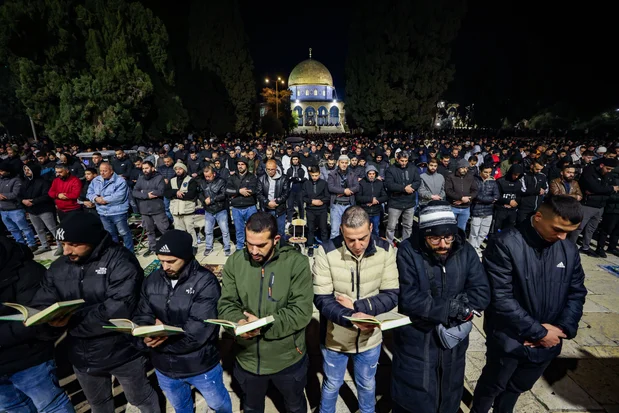
Ramadan officially began on the evening of Friday, Feb. 28 and will end on March 29. It is the ninth month of the Islamic lunar calendar. For observant Muslims, Ramadan is a sacred month of fasting to commemorate the first revelation of the Quran to the Prophet Muhammad by the angel Jibril (Gabriel).
All adult Muslims are required to fast from sunrise to sunset during Ramadan, as it is one of the five pillars of Islam. The five pillars are the fundamental practices required of every Muslim, which include: declaring the Shahada (faith declaration), performing daily prayers, giving charity (zakat), fasting during Ramadan, and making the pilgrimage to Mecca (hajj).
Muslims observe the fast by refraining from food, drink, smoking and sexual activity from sunrise to sunset. Those with medical conditions, as well as pregnant or breastfeeding women, are exempt from fasting.
The fast is broken at sunset with a meal called Iftar, typically shared with family or the community. Muslims can eat at any time during the night until the pre-dawn meal, known as suhoor.
Observers of Ramadan consider this high holiday an ideal time for giving gifts, enhancing self-discipline, doing good deeds, and dedicating oneself to studying the Quran.
In recent years, Ramadan has been linked to violence in Israel, particularly around Jerusalem's Temple Mount (Haram al-Sharif, meaning the Noble Sanctuary), creating tension in many Arab communities. Palestinians have sometimes barricaded themselves in the Al-Aqsa Mosque with explosives and rocks, leading to violent clashes with police trying to remove them.
Due to the ongoing war in Gaza and the uncertain ceasefire arrangements, which appear fragile at best, Israel has decided to, once again, restrict access to the Temple Mount during Ramadan, allowing entry only to Arab-Israeli Muslims.
Although Jewish visits to the holy site are allowed during the first 20 days of Ramadan, access is typically restricted during the last 10 days. This period includes Laylat al-Qadr, the most holy night of the year in Islam, which makes it a particularly sensitive time for security concerns.
Last year, Israel’s then-National Security Minister Itamar Ben Gvir requested to visit the Temple Mount during the last 10 days of Ramadan.
The visit led to heightened tensions and concerns over potential escalation of violence, with Palestinian leaders and others in the Arab world viewing it as an infringement on Muslim rights and a political move that could inflame the ongoing Israeli-Palestinian conflict and war in Gaza.
Popular article:

interview Easter message of resurrection hope amid war at Jerusalem's Garden Tomb

biblical commentary Let my people go: a Passover message for today

4 IDF soldiers killed, 2 wounded in fighting in southern Lebanon, as Israel eliminates dozens of Hezbollah terrorists

Receive latest news & updates
A message from All Israel News
Help us educate Christians on a daily basis about what is happening in Israel & the Middle East and why it matters.
For as little as $10, you can support ALL ISRAEL NEWS, a non-profit media organization that is supported by readers like you.
Latest articles:

Trump to impose unity government on Israel? - Reports claim US president pushing for government without controversial ministers
US tells Gulf nations to prepare for possible military campaign in Iran following midterm elections

The last votes that could change everything – Israel awaits count of 600,000 'double envelopes'
Election uncertainty weighs on shekel as Israeli stocks fall
Historic Arab voter turnout: Results for Ra'am, Joint List shatter records but could harm chances to replace gov't